
The rudder steers the ship. Attached to the rear keel with hinges, the rudder seems like a simple part to create. However, getting the rudder to look proper based on the time frame is a little more difficult than it looks. I referenced both Pastor’s book on Columbus’ ships as well as Mondfeld’s book on historic ships to model my rudder for the Santa Maria.
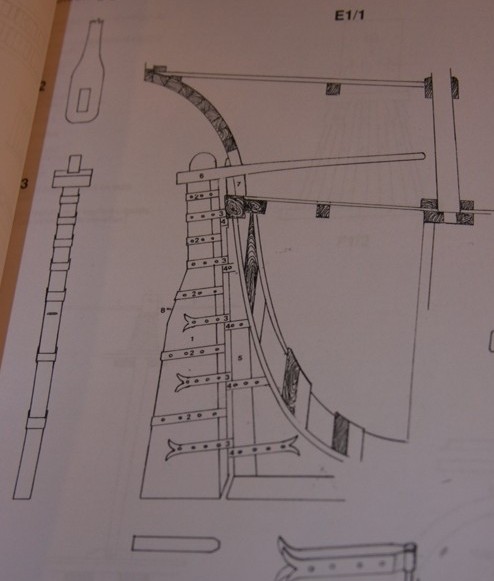

Early rudders were made from two pieces of wood wrapped together and attached with metal strips. There is a main part of the rudder and a smaller strip called the “bearding”. More strips then make up the hinges. It is also important for the angle of the bearding strip to match the angle of the ship’s keel so it all fits together and works smoothely.


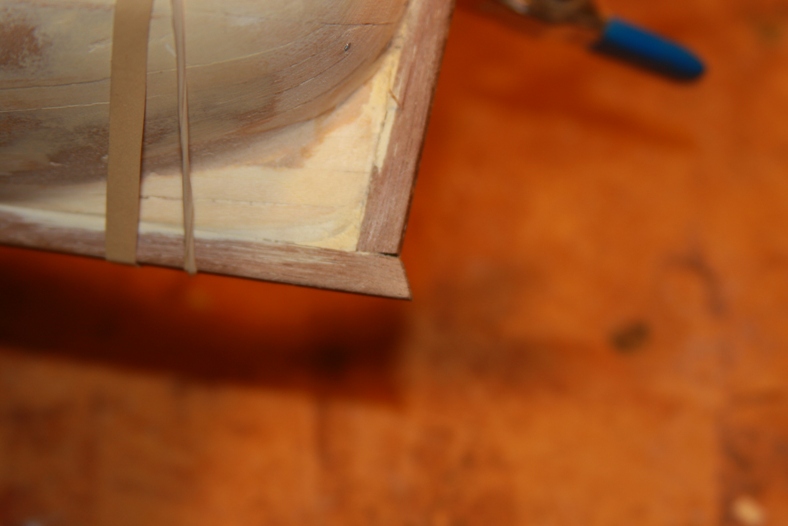
Brass strips are carefully cut and glued into place to attach the bearding to the rudder. I also added glue, to ensure that the pieces fit properly together. More brass strips are then cut and bent into the shape of the hinges. The angles and bends must be exactly right to make a good fit.


After all the strips are in place, holes are very carefully drilled for the nails / rivets. This is a very delicate process and I went through 3 broken drill bits getting these holes in place. Nales / rivets are trimmed so only the heads are available with about 1 mm of nail so they don’t go all the way through the rudder. They are nailed and glued in place.


After everything is constructed, the entire rudder is blackened using the chemical oxidation process. I also touched up the area with flat black paint. The wood is treated with dark stain then coated with tung oil and polyurethane for protection.

 The Lehman Shipyard