The capstan, or capstan wench, is a vertical-axled rotating machine used to apply force to ropes, cables, and hawsers. The principle is similar to that of the windlass, which is a horizontal version mostly used to raise and lower the anchors.
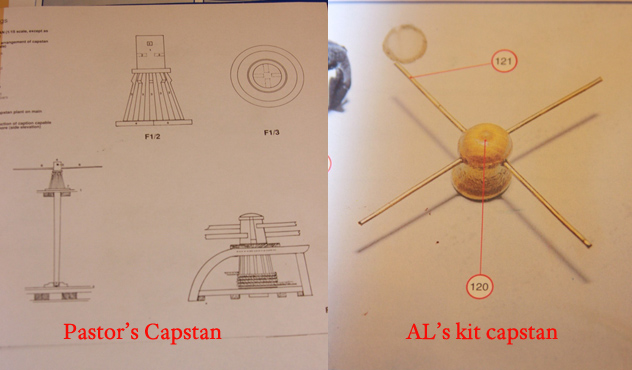
In its earliest form, the capstan consisted of a timber mounted vertically through a vessel’s structure which was free to rotate. See the illustratoin on the left. Levers, known as bars, were inserted through holes at the top of the timber and used to turn the capstan. A rope wrapped several turns around the drum was thus hauled upon. The two pictures above compare an actual capstan from a 15th century Nao vessel, while the right picture is what was supplied in the kit.
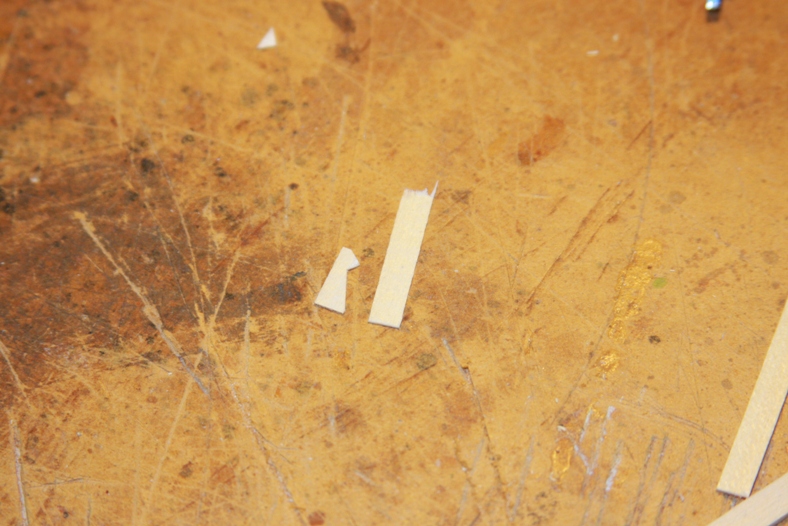
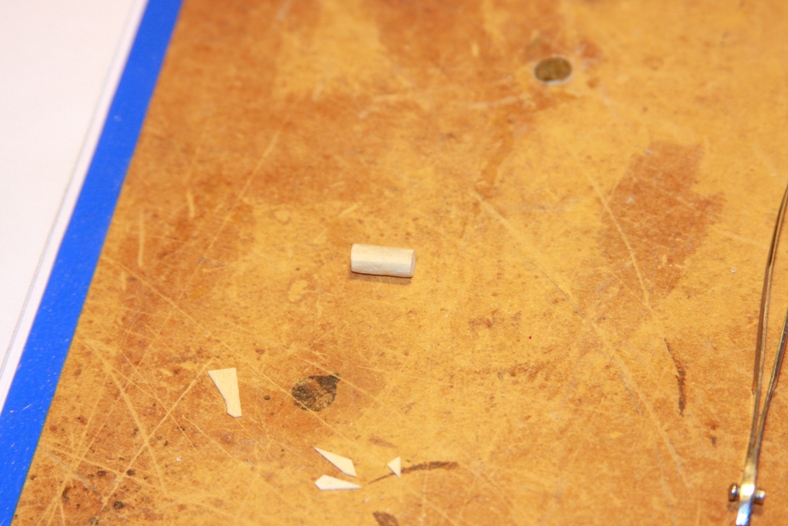
I actually tried (and failed at) several different methods before coming up with this version of the capstain. I ended up cutting very small (5mm) pieces from some leftover sapella wood. I then cut and trimmed a 5mm dowel and sanded it. I glued the sapella pieces to the dowel. For the top of the capstain, I trimed and used the original piece from the kit because I preferred the shape.
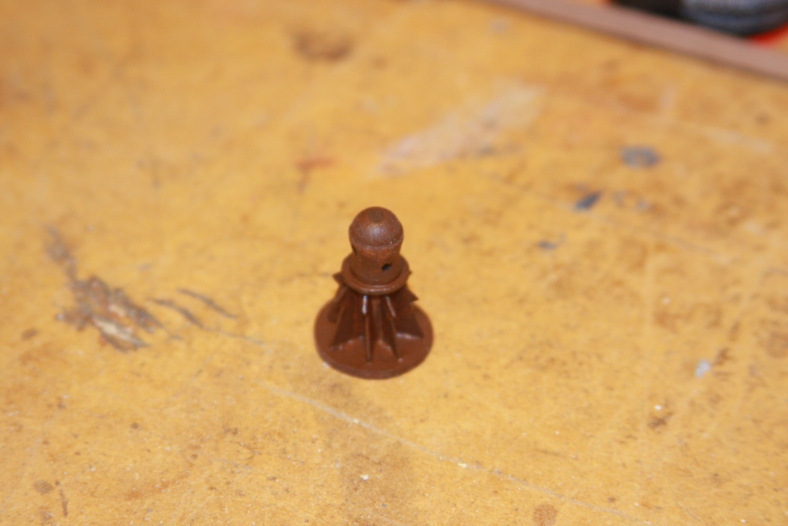
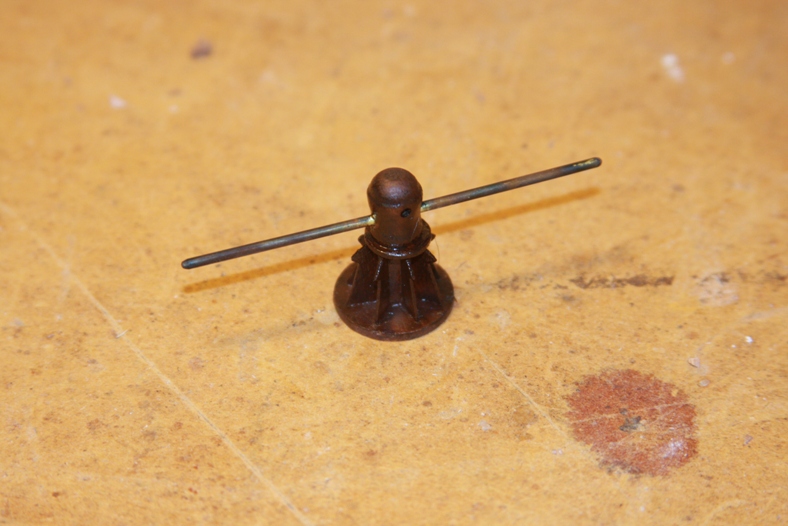
I cut and sanded to small discs of different sizes to separate the parts of the capstan and glued them all together. I needed to use different types of wood to formuate the pieces, and they all ended up being different colors and grains. So I painted the entire capstain and stained it to even out the colors. Finally, the bars are brass dipped in the patina to color it.
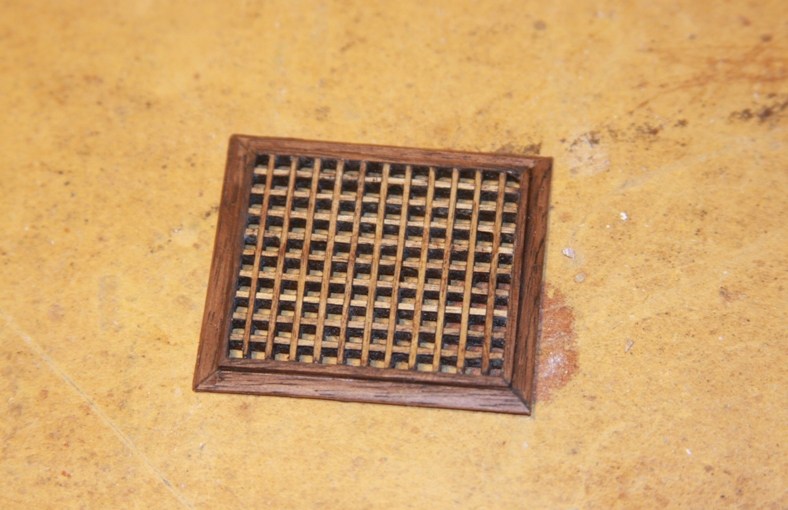
Similar to the forward main grate, the stern main grate needed to be constructed. The kit I’m using didn’t even have a main grate toward the stern, pobably because it’s not easily seen while on display. I need to get all of these main deck fixtures completed before I can mount the quarterdeck.
You may recall I fashioned the foward deck with locked doors (see this entry: Deck Fixtures & Accessories) but I will make the rear grate more traditional cross-hatch.
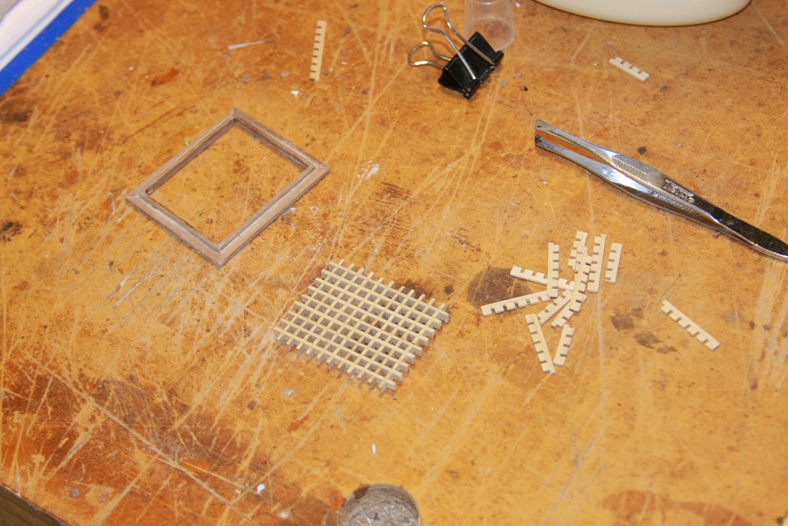
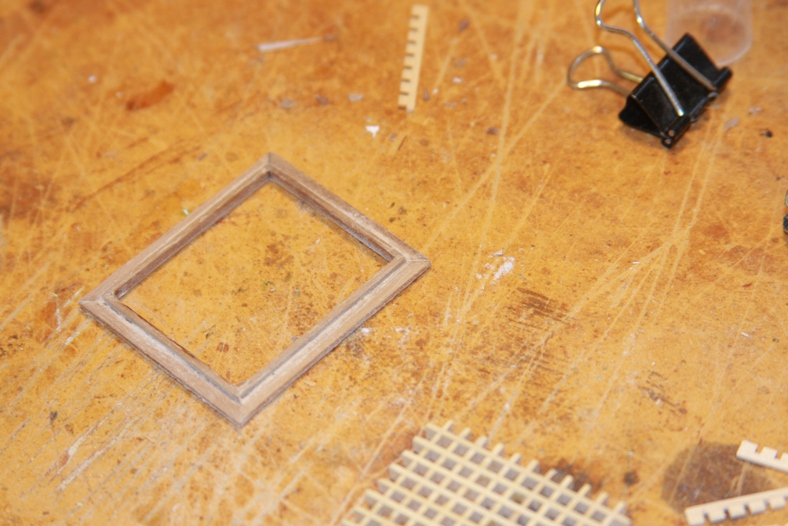
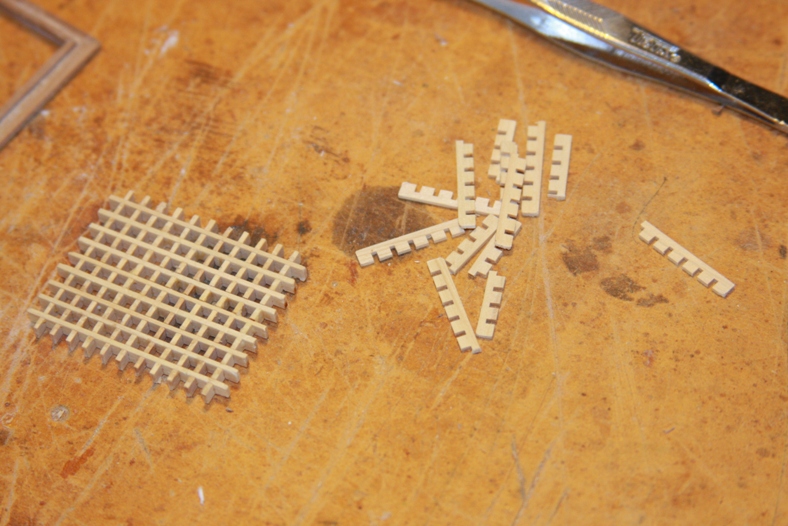
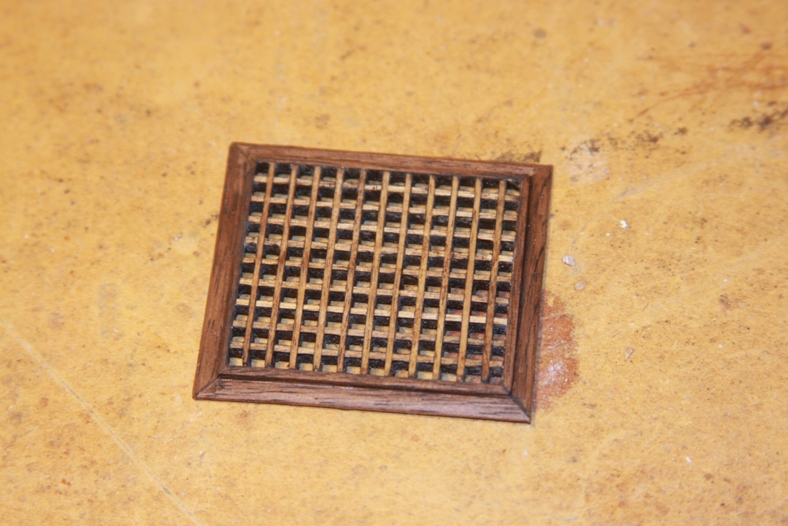
I used the same process as the foward hatch, putting together eight small walnut pieces miter’d at the corners. Then I cut and moutned the cross hatch wood. Finally, staining the entire piece.
 The Lehman Shipyard