
The process for planking the quarterdeck and the poopdeck is the same as planking the main deck. Each plank is trimmed on the sides with a black permanent marker to create the “tar” that kept the deck waterproof.
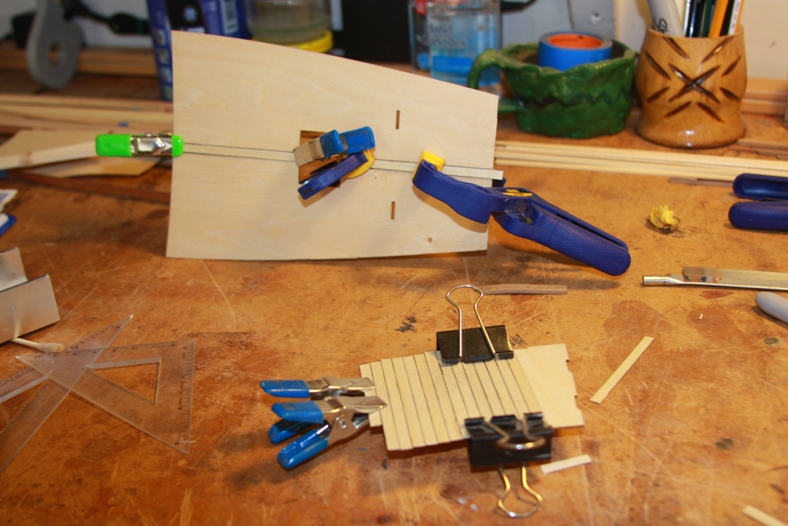
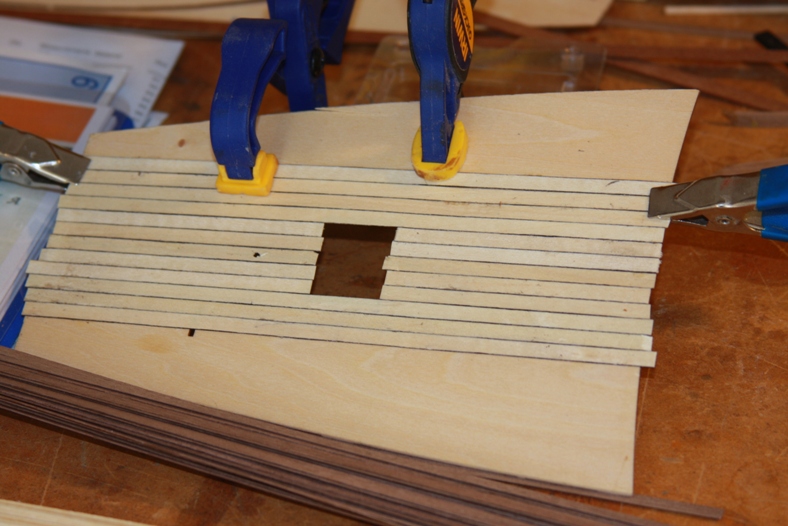
After the deck planks are glued in place onto the false deck, then are trimmed and sanded. The main deck then needs “camber”. This is the roll in the deck that allows the water to flow to each side then drain out of small holes called “scuppers”. I created the camber of the main deck by soaking it, then carefully bending it around a plank of wood. Keep in mind that this camber is much more severe than the deck will be on the ship, but it will flatten a bit when put in place.


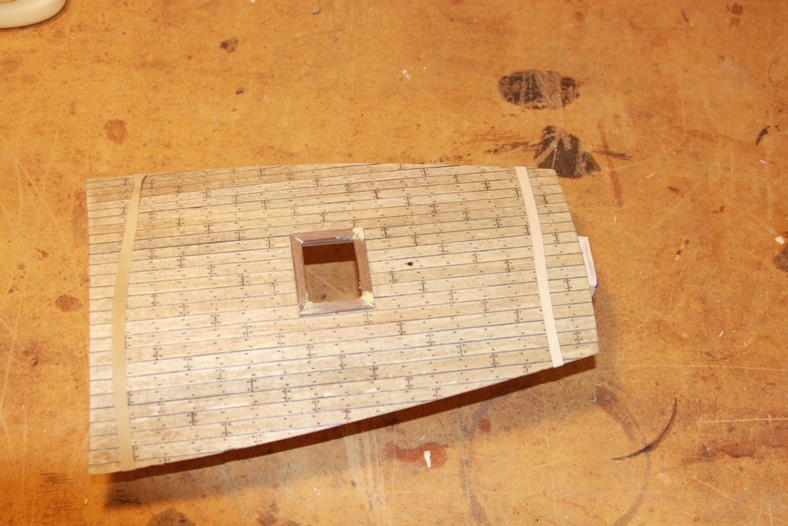
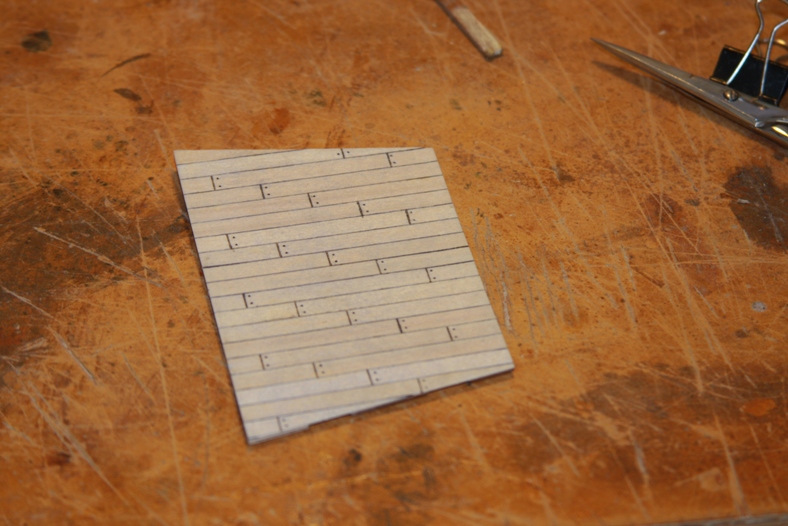
The poop deck is planked in the same manner. Then the ‘trenails’ are drilled and the butt planks are cut. The deck is then bordered with walnut trim. This deck (the highest deck and furthest astern) will be removable to see inside the captain’s cabin.


I’ve added a “railing” to the rear half of the ship. This will facilitate mounting the quarterdeck. The main deck is then trimmed with a stringer that runs along the port and starboard to link the deck with the bulwarks. The “scuppers” mentioned above will be cut along this stringer. Then, stanchions are mounted along the bulwarks. These vertical strips of wood strengthen the ship’s hull.
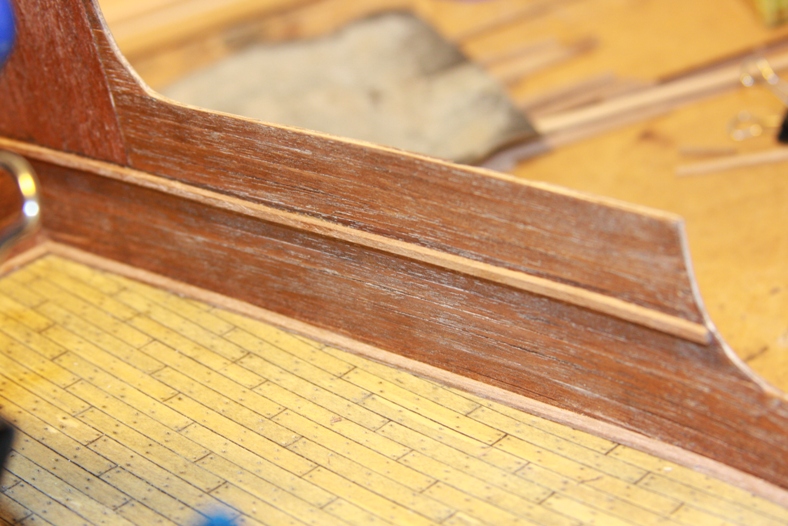


I’ve created these stanchions out of mahogony instead of the walnut that the rest of the parts are made of. This will give the deck a little bit of contrast.
 The Lehman Shipyard