
Although most of the research I’ve read indicates that the Santa Maria was by all accounts a very basic vessel, many of the models being manufactured and displayed have an overwhelming amount of embellishments and accouterments common to Spanish vessels. However, many of these details were not evident until decades or even centuries later. I have chosen to keep this version of the Santa Maria realistic, but I am taking some small liberties that have not been well documented. For instance, I wanted to include more decorative windows on the rear of the captain’s cabin that were likely present.
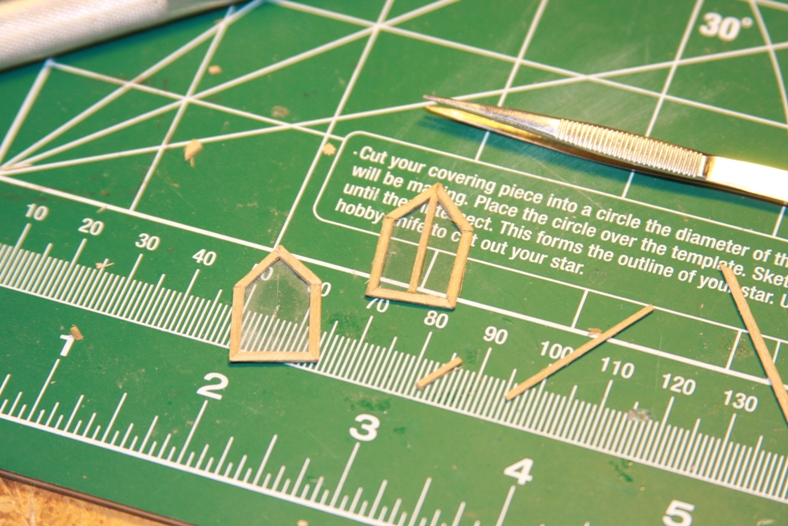
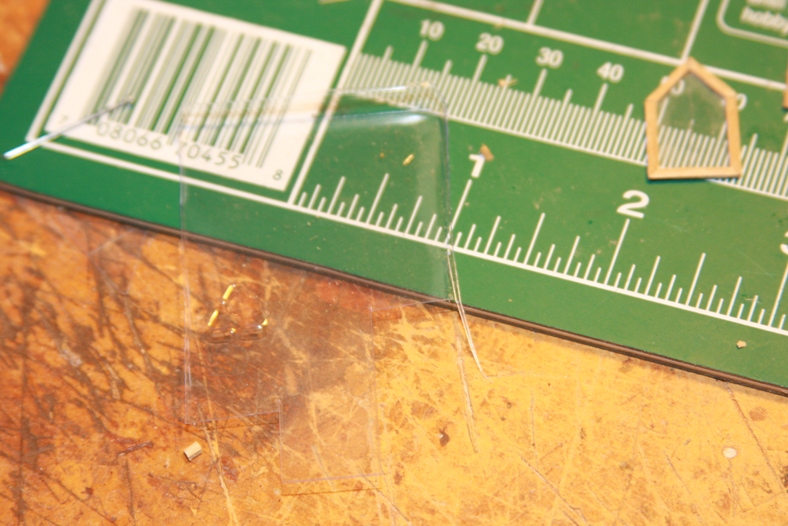
I framed the windows with 2mm X 2mm strips cut and glued. Then I covered them with “glass” made from the plastic container that held some screws. I scored the glass carefully with an older, dull Xacto blade being careful not to pierce all the way through the glass.
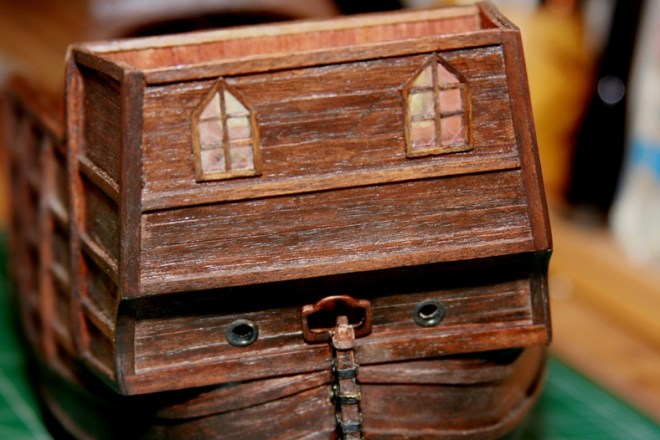
I then stained and mounted the windows to the rear of the captain’s cabin trying my best to match the coloring as closely as possible on the outside, while maintaining a mahogany color on the inside of the cabin, a location which would most likely have been more decorative.
A very tedious task that I had been putting off was the deck railings. Like the bow of the ship, the poop deck railing consists of stanchions, railings, then wooden slats.
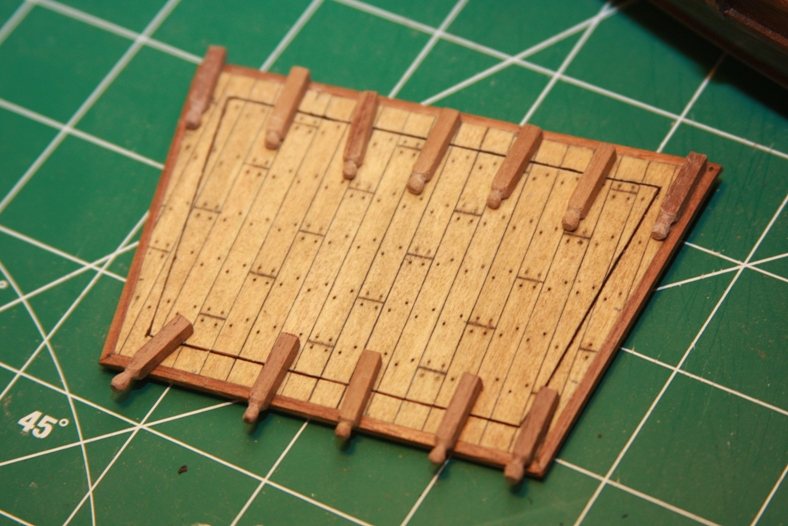
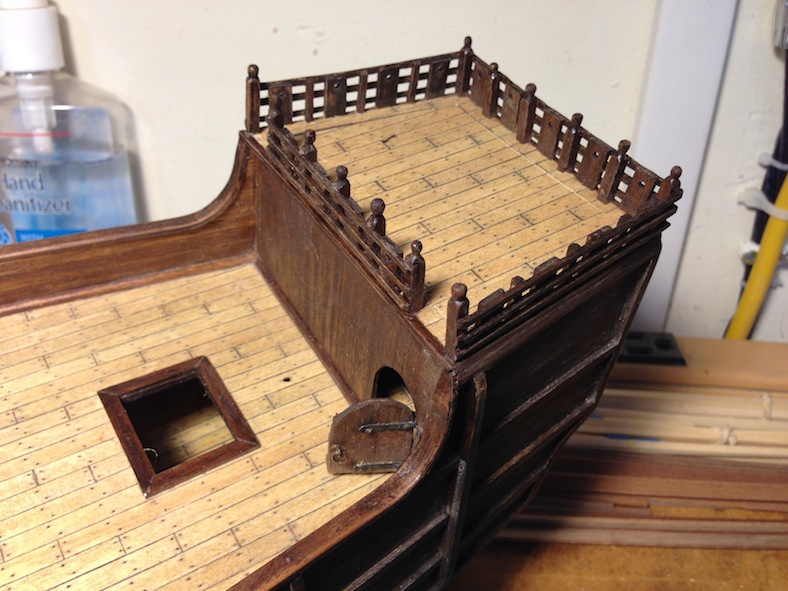
Each stanchion needs to be cut precisely then notched, rounded and sanded. Each stanchion mounted on the sides of the poop deck are the same absent the rounded top. More stanchions are then cut and prepared for the quarterdeck railings.
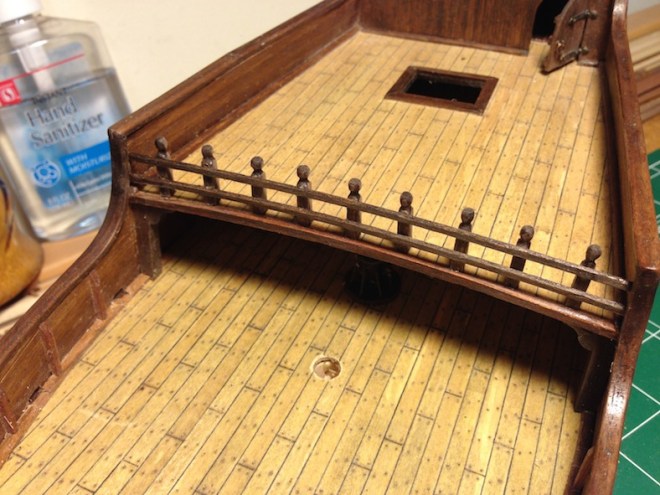
Rather than just gluing each stanchion to the deck (which would be terribly unstable), I followed the same protocol as the bow and fitted the poles with a pin to hold them in place.
 The Lehman Shipyard