
Although the Xavier Pastor book I have been continually referencing lists the Santa Maria as most likely having a single turn-crank water pump, every other reference I’ve seen has shown a more traditional pump-handle style water pump. Often times there are two, as in later ships. When it comes down to it – I think the pump-style handle looks better, so I went with that.
Then I came across this research from a fellow shipbuilder from “Vanguard of Empire – Ships of Exploration in the age of Columbus” by Roger C. Smith.
“Fifteenth and sixteenth century ship’s pumps consisted of three main components: a pump shaft, a piston rod and valves……early suction pumps worked on the simple mechanical principle of drawing water up through a tube…… with a one way valve.The pump shaft was fashioned from a a straight tree trunk …or fashioning a tube of individual planks, like the staves of a barrel…..The base of the pump shaft in the bottom of the bilge was fitted with a foot valve made up of short baulk of bored wood fitted with a leather flapper valve on top……..Water usually exited the pump tube through a hole in its side near the top above deck level.
On the fourth voyage, Columbus was forced to stand for Jamaica, “especially since the ships were so eaten by shipworms, that day and night we never stopped pumping water with the three pumps. If one broke down, kettles were substituted for the job while it was being fixed. Despite these efforts, the caravels could not be kept afloat and at God’s mercy, we beached in Jamaica.”
To build my water pump I started with a 5mm diameter dowel and thin basswood strips.
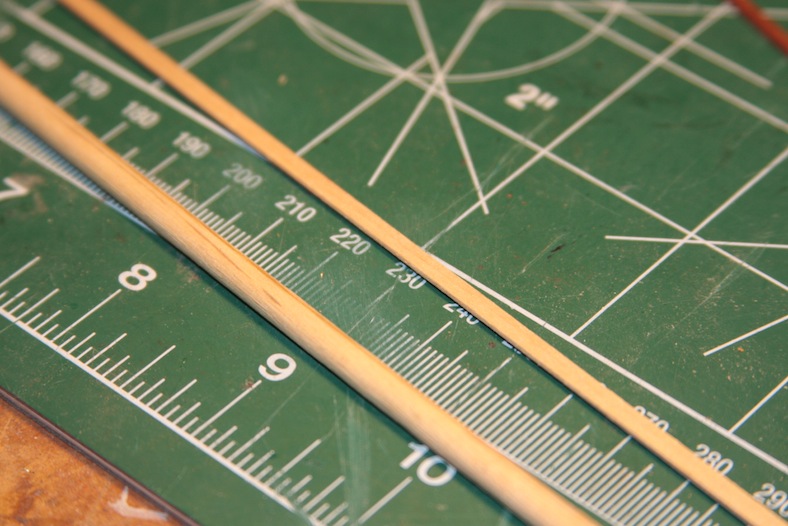
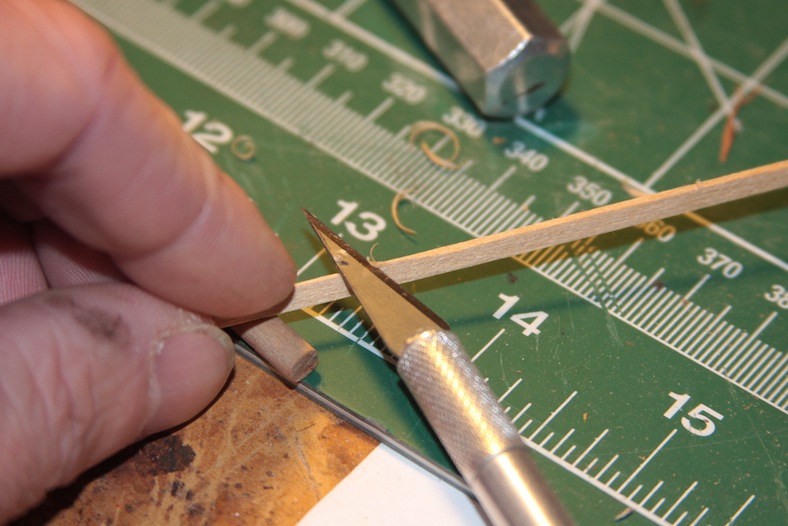
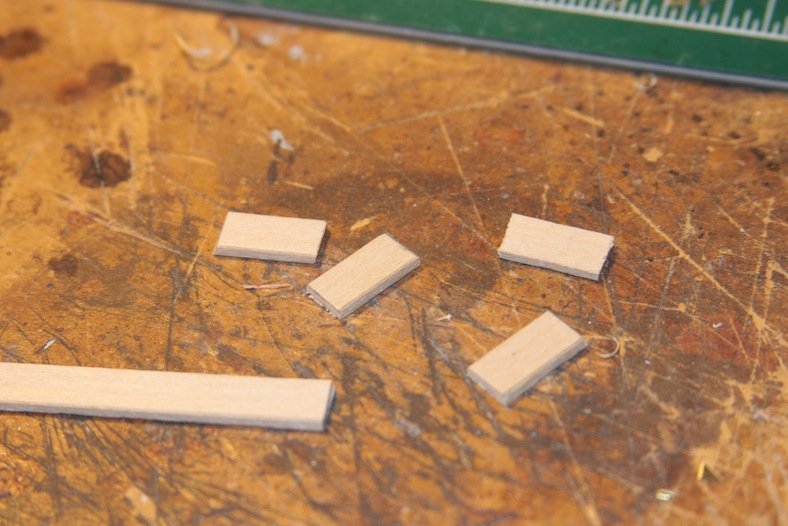
I trimmed the sides of the basswood strips at a 45 degree angle so they would fit together mitre’d nice and snug. I then cut them at 15mm lengths and glued them around the dowel to create the base of the pump. I went with this idea to create a solid base that wouldn’t collapse when I started working on it.

I then hollow out the base of the pump with a drill. The base is made from a 10mm dowel of walnut with the center drilled out at 5mm to accept the base of the water pump. Of course the sides of the base are sanded and beveled.
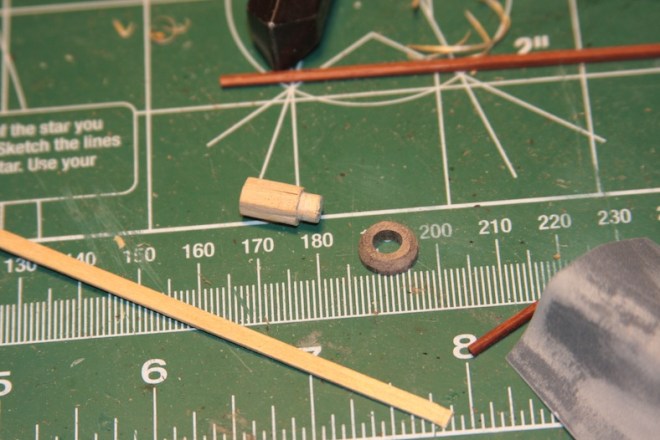
The spout of the pump is a 2mm dowel of walnut with the end drilled out hollow first with a 1mm hand bit, then with a 1mm etching bit for a dremel at low speed.
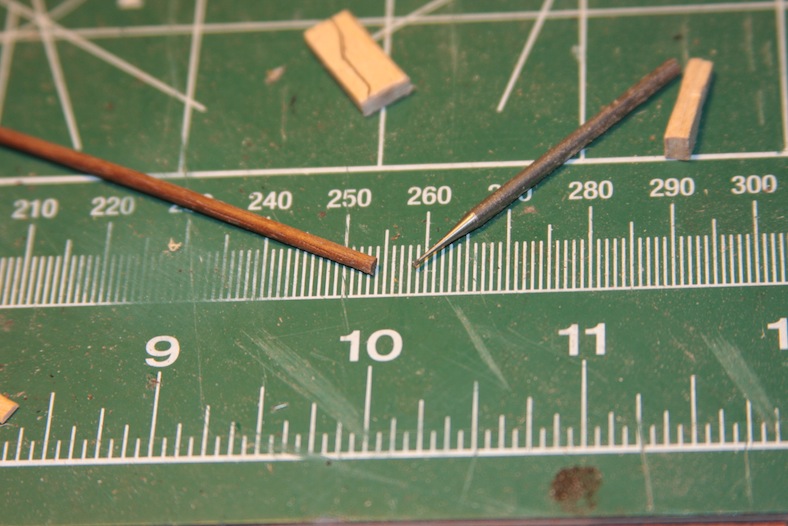
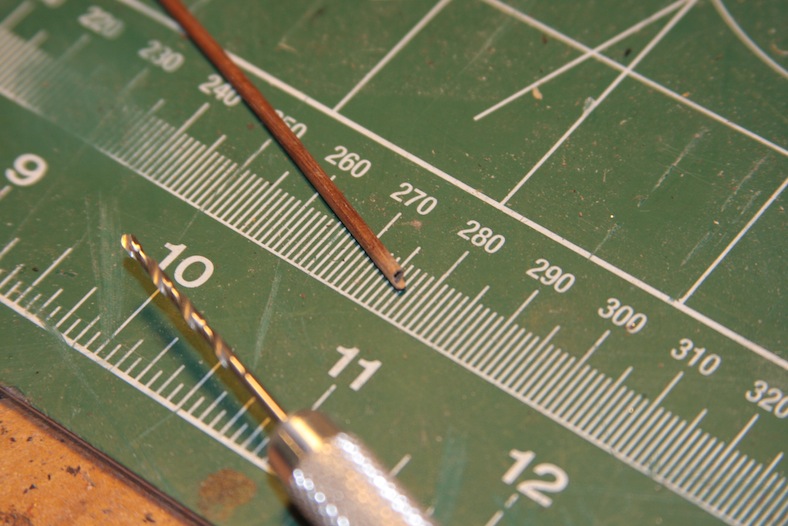
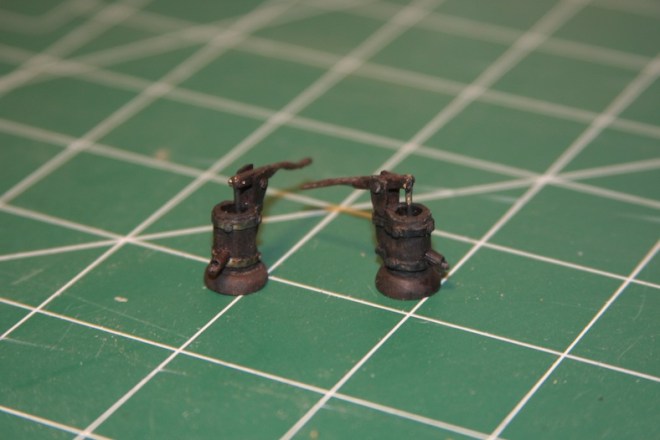
The handle of the pump is created from two strips of 2mm x 2mm square walnut sanded and etched out. They are based in 3mm x 3mm square walnut strips sanded to fit the side of the pump. Then the pieces all put together initially and then stained.
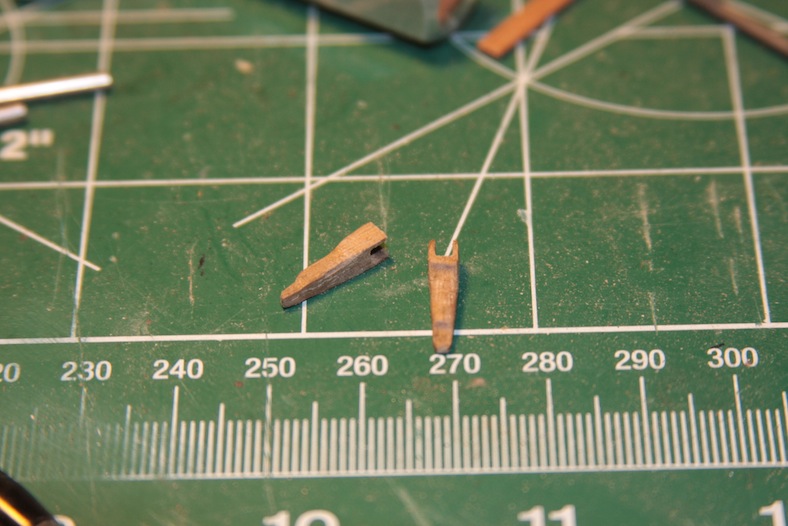
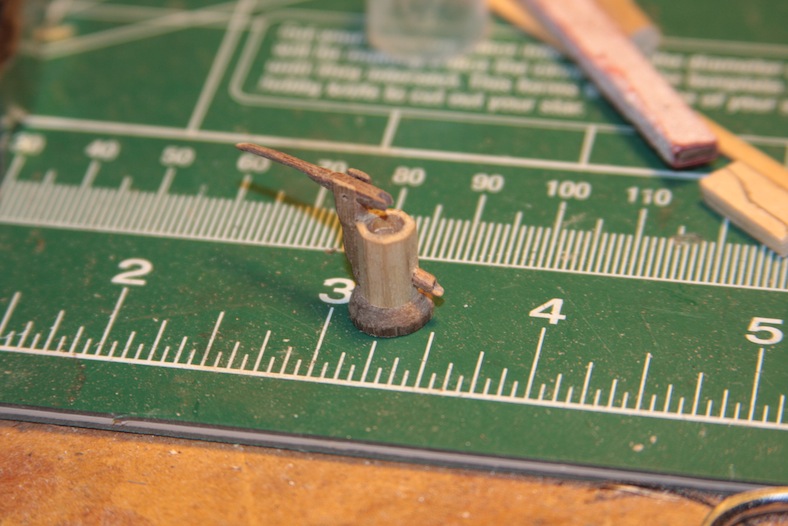

The pump mechanism and the strips around the pump are made from a scrap brass dowel and scrap brass flattened pieces. I flatten the end of the brass dowel out by putting it between the flat areas of a pair of pliers and striking it with a hammer.

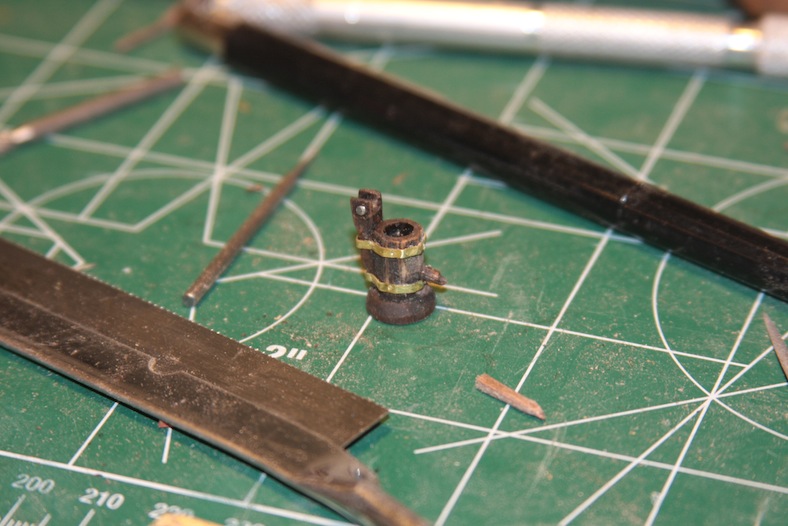
All of the strips, the handle, and the pump mechanism are attached using a touch of glue, and then firmly attached using pins with the heads sanded down. Finally the pumps are re-stained, and the brass pieces are given a layer of patina.
 The Lehman Shipyard