
The purpose of the shrouds is to provide masts with lateral support. As a relatively small ship, the Santa Maria most likely had six pair of shrouds on the main masts that were then secured to the channels using deadeye blocks. The shrouds and ratlines are often the most recognizable and visible part of a ship and model. Throughout history the image of sailors or pilots climbing up and down ratlines are forever immortalized in movies and our imaginations.
There is some question as to the type of deadeye blocks that are used on the Santa Maria or other ships of the time. Once again, some subjective judgement is necessary in this area. While it appears to be clear (from a Flemish carrack 1480 model and others) that earlier deadeyes were triangular or ‘pear shaped’ it is not clear at which point deadeyes moved from being an open hole, to the three holes that become the norm. Based on the premise that the Santa Maria was an older, existing ship that was purchased, and some input from Xavier Pastor’s research, I decided to go with an open hole version.
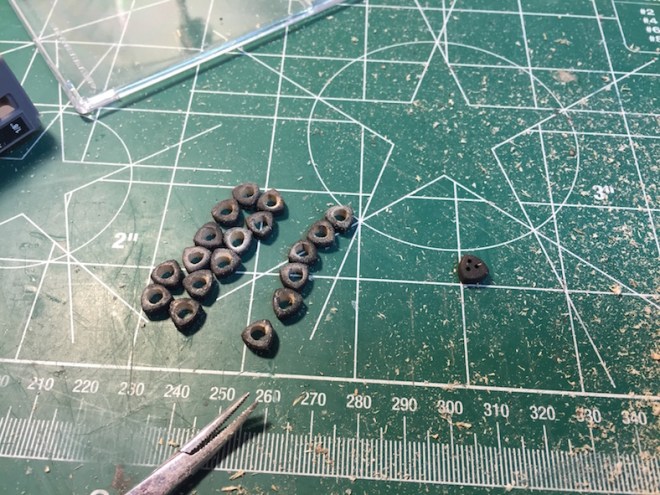
So, step one was to drill out the triangular deadeyes and open them up. Always a delicate process, I held the deadeyes steady with suture clamps, then drilled them out with a dremel. Any drilling is always followed up with some soft sanding.
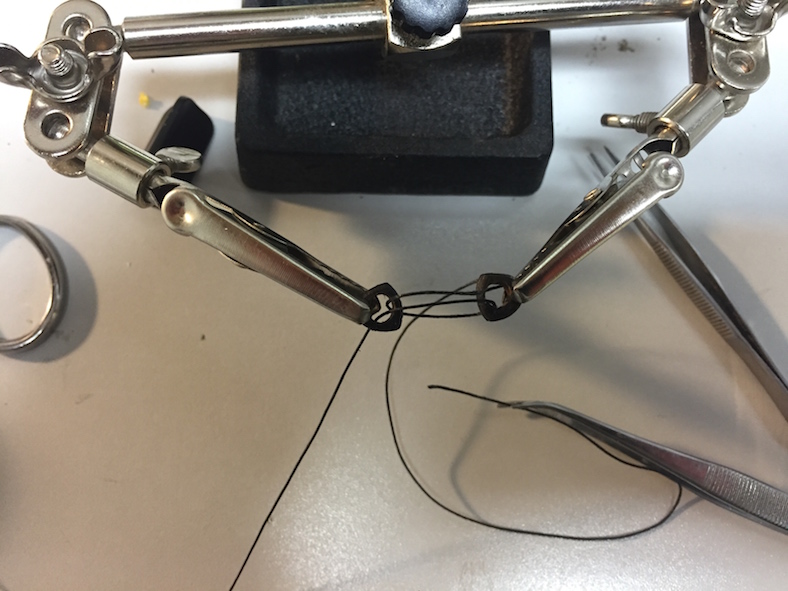
Step two is to rig the deadeyes. I used my handy soldering clamp to keep the distance between the deadeyes consistent. The process is a bit dodgy, since each time you tighten the ropes, the deadeyes have a tendency to squeeze together closer regardless of how tight the clamps are. This is less likely in the newer, three holed deadeyes.
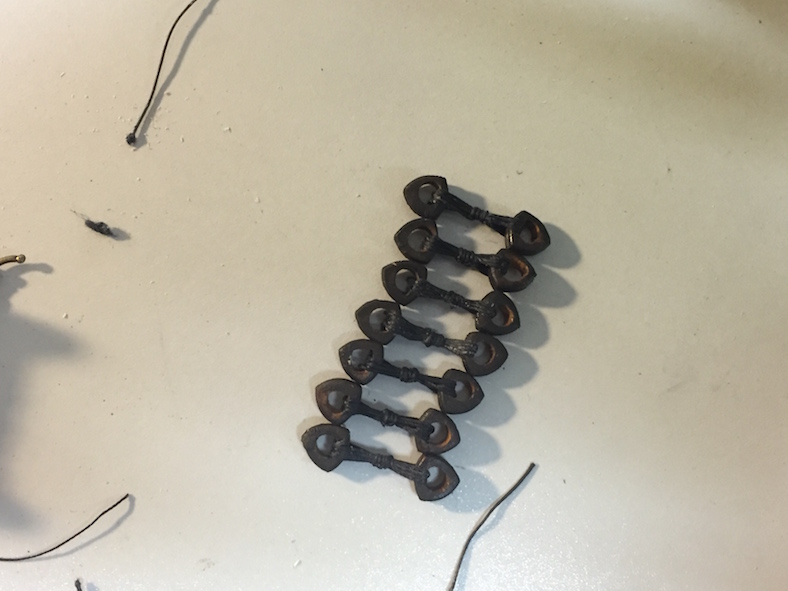
Once the deadeyes themselves are rigged, they are attached to the channels. First, holes are drilled in the channels, eyes inserted, then those eyes are attached to the wales of the hull. The amount of tension on the shrouds or backstays was tremendous, so it was important for them to ultimately attach to the strongest part of the hull.
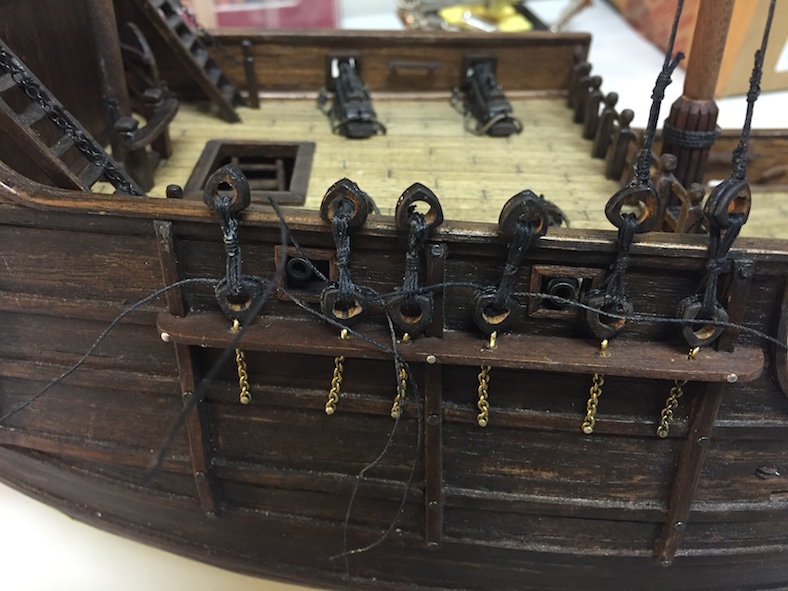
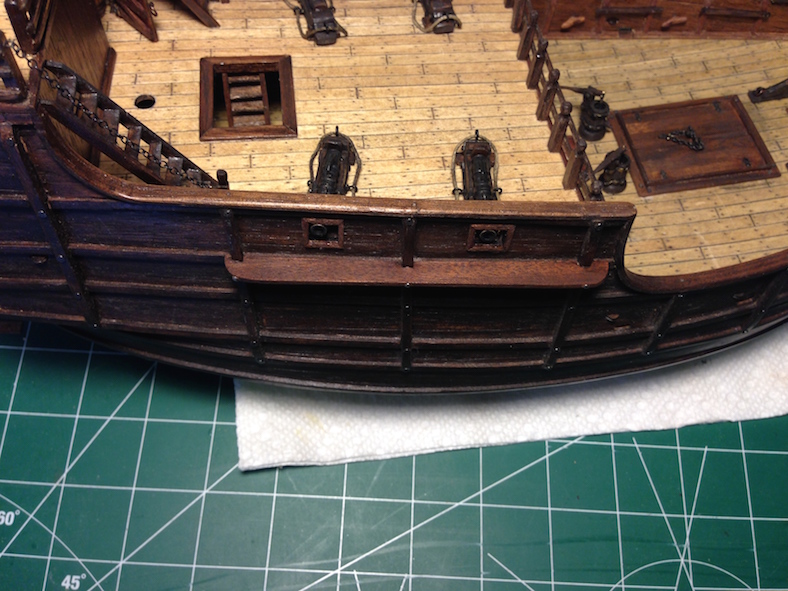
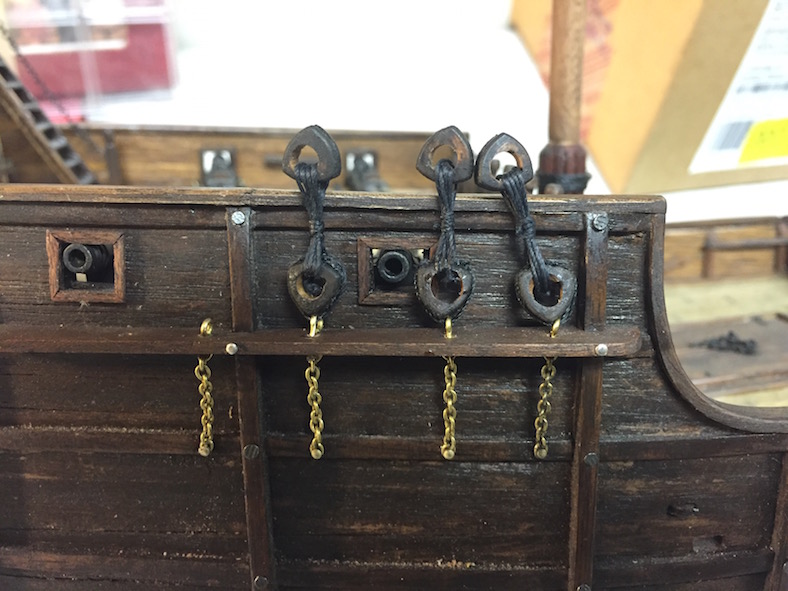
The deadeyes are then attached to the eyes. Once again, it’s important to wrap and tie them evenly so the lengths of the deadeyes and shrouds remain consistent. The shrouds themselves are wrapped around the main mast through the crow’s nest and ganged together in pairs. After wrapping around the mast, an eye is seized in to them middle of the rope. The eyes are looped over the mast alternately so that both part and starboard side are evened out and the tension from the shrouds is consistent to both sides of the ship.
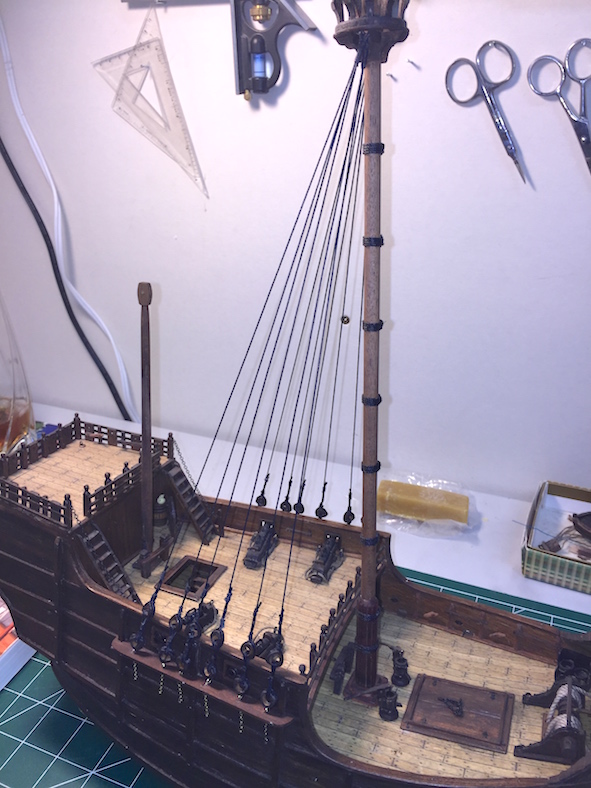
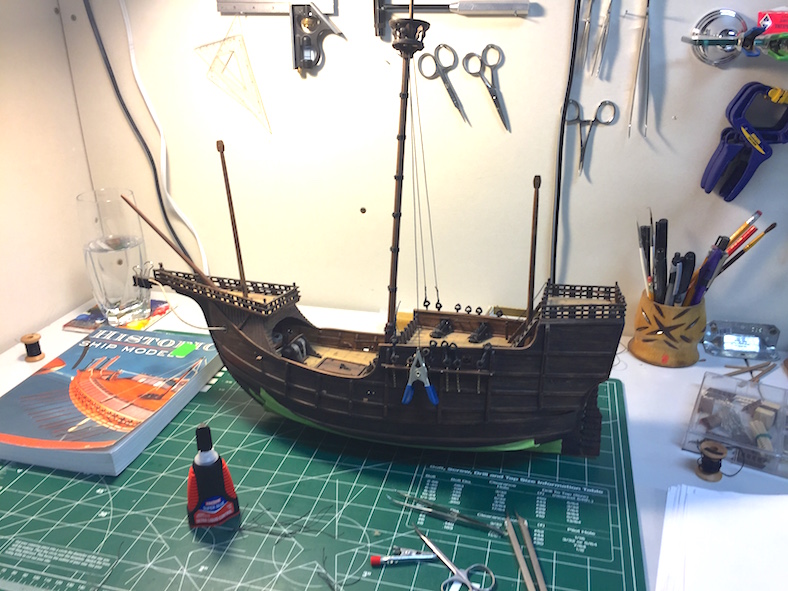
The shrouds are attached to the deadeyes by looping around the block an seized at the top. This allows for varying tension on the shrouds based on wind and sailing conditions. The fitting of the ratlines to the shrouds (known as rattling down) is one of the most tedious tasks of the build. Although there are quite a bit fewer ratlines in older ships such as the Santa Maria, there are still about 450 individual knots in both shrouds.
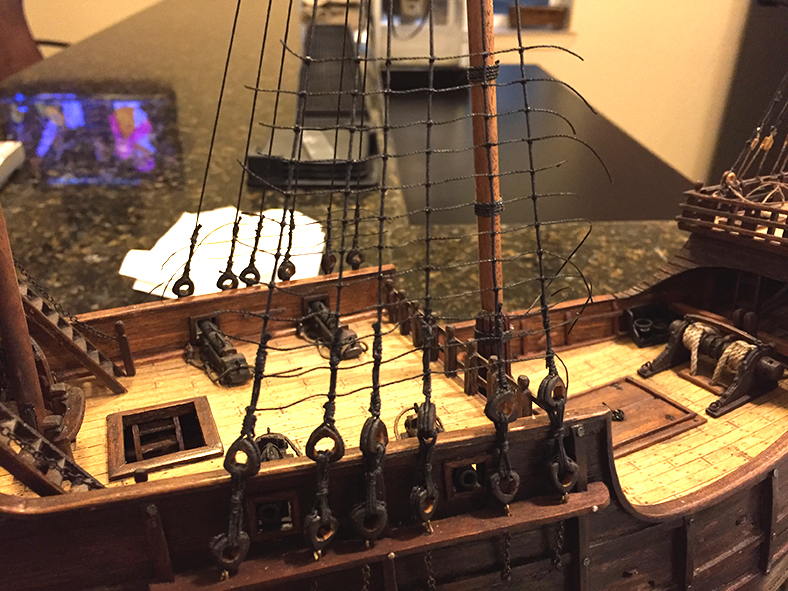
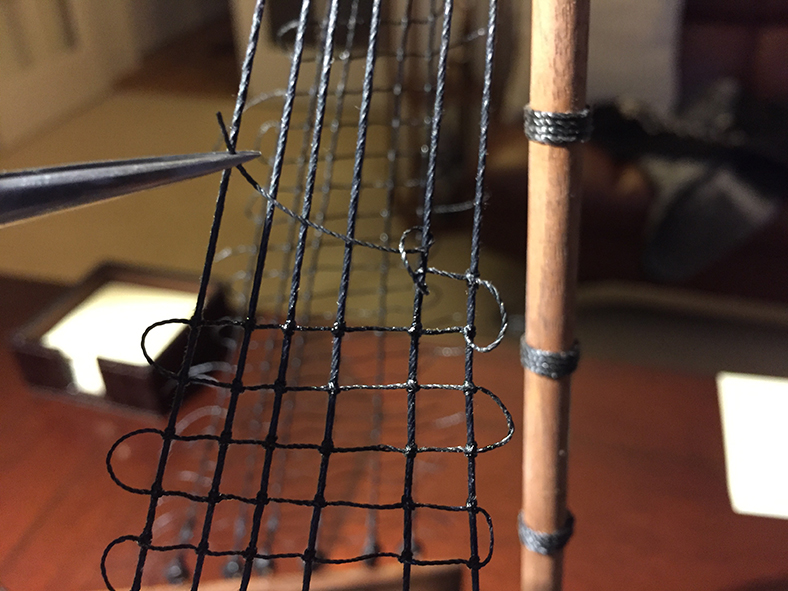
Each knot is a clove hitch, which provides some flexibility but maintains its tension when pulled. Each knot must be tied with the same level of care to maintain the symmetry of the ratlines – as once again, the ratlines are one the most visible aspects of the model an any flaws are more noticeable than other aspects of the ship.
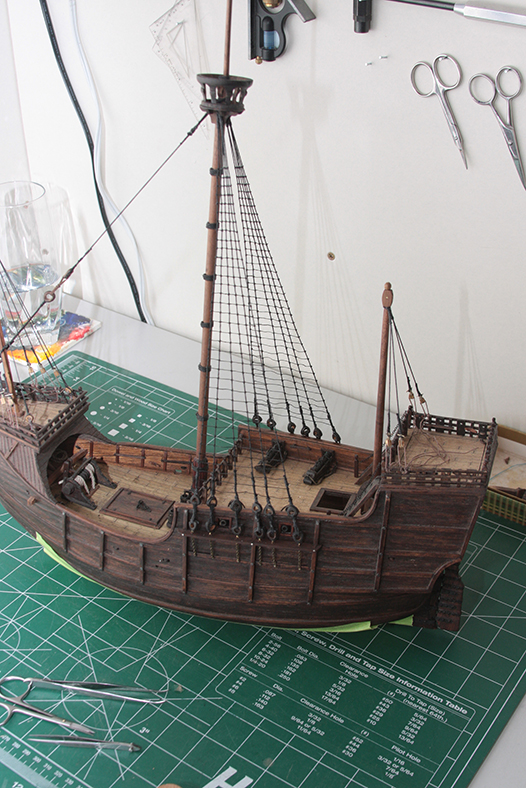
Finishing the ratlines is an important step and, I believe, is a moment when the overall model really starts to take shape and look like a ship.
 The Lehman Shipyard