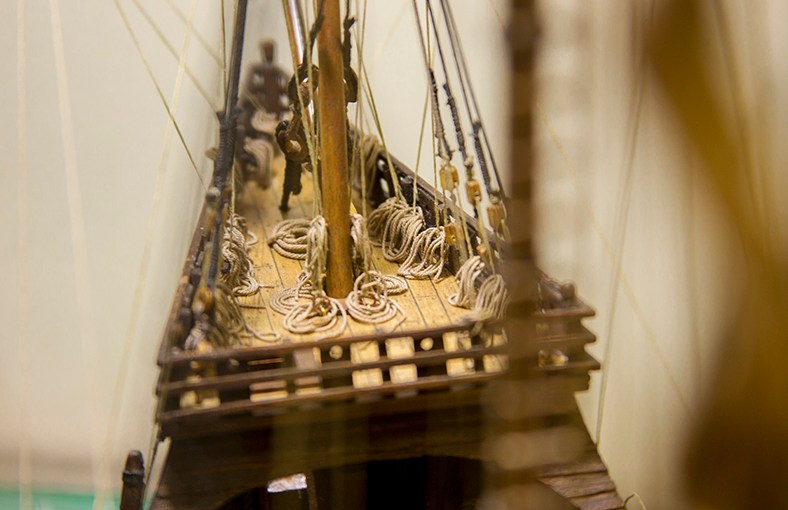
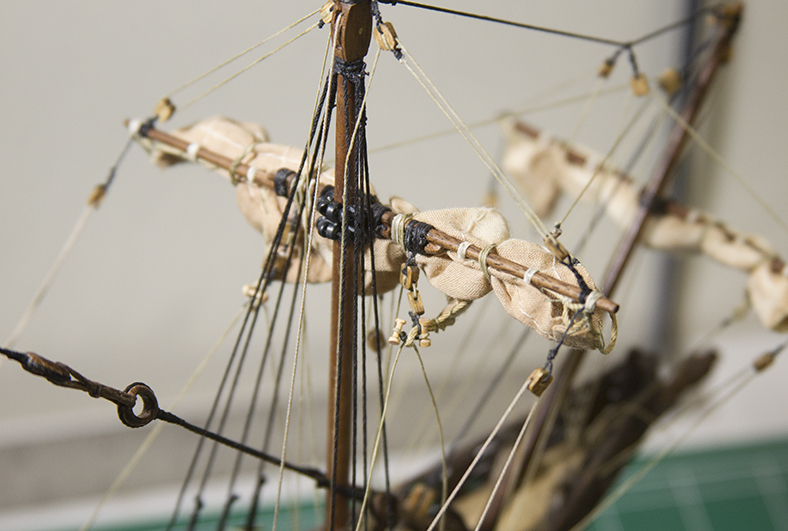
The Foremast is the front mast of the ship located on the foredeck. Once again, the yard itself is attached to the foremast using a parrel made up of trucks (small round balls) and ribs (larger spacers). The Parrel is tightened and loosened with the parrel rope rigged to a tacked and the halyard. The Halyard runs up the mast first, through a sheave pulley at the top of the mast, then down the rear of the mast and attached to a deck railing.
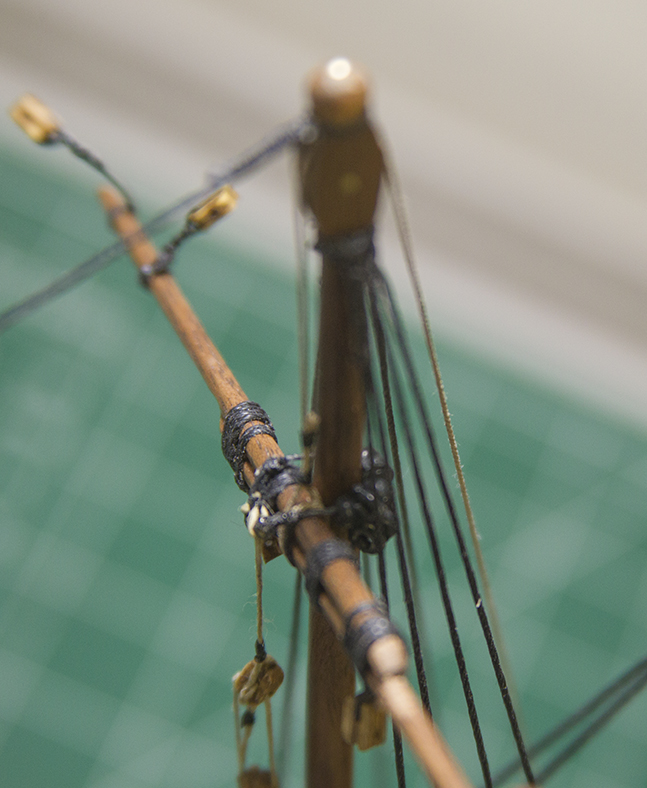
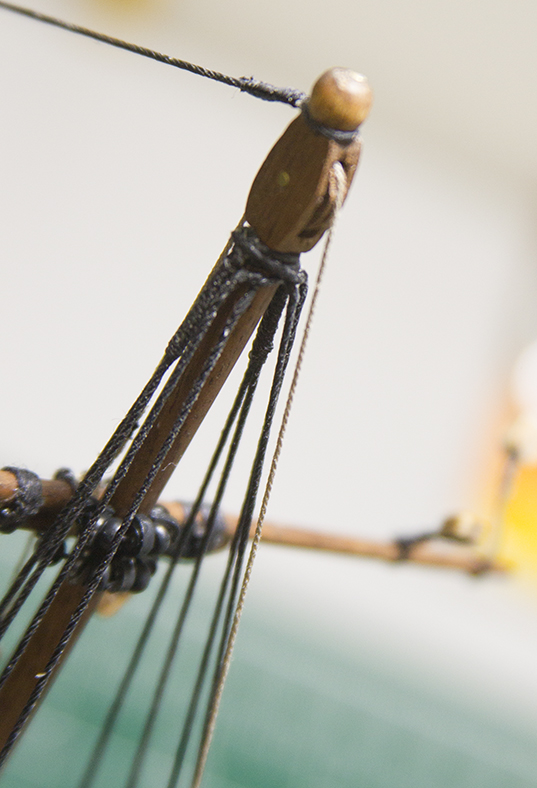
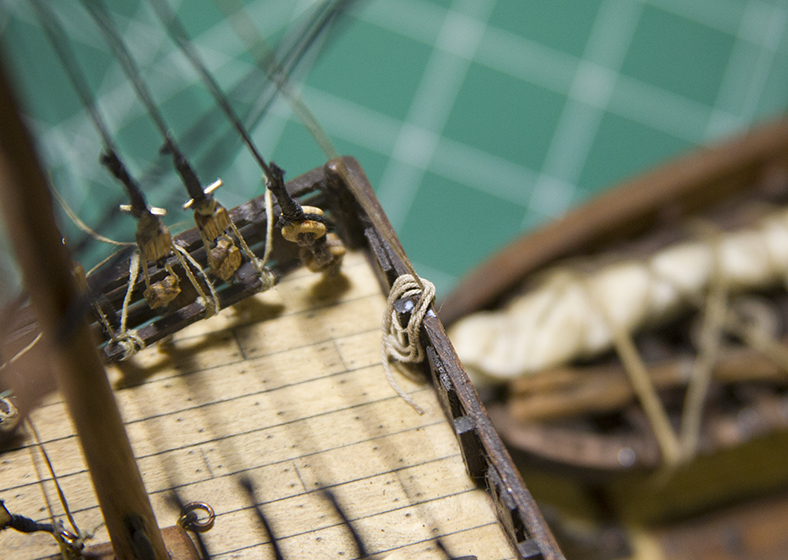
The yard is held in place and adjusted with rigging called “lifts” that run from the yard arms to the mast (attached with blocks) then down to the deck of the ship. The sail is attached to the yard with “robands” – simple strips of rope. The sails are then held in place and manipulated with a series of running rigging attached to the sides and the corners of the sails. The sides of the sails are attached with “bridles” and adjusted using a “bowline.”
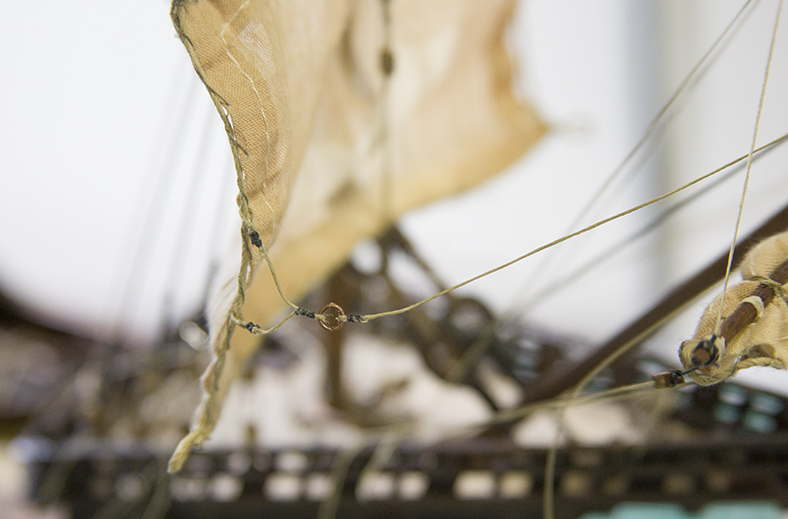
The corners of the sails are called “cringles” and are held in place and adjusted using “tacks” and “sheets” hooked into the cringle using “toggles” or small dowels. A small block is then run up to the top of the sail with a “clewgarnet” – a rope using to raise and lower the corner of the sail.
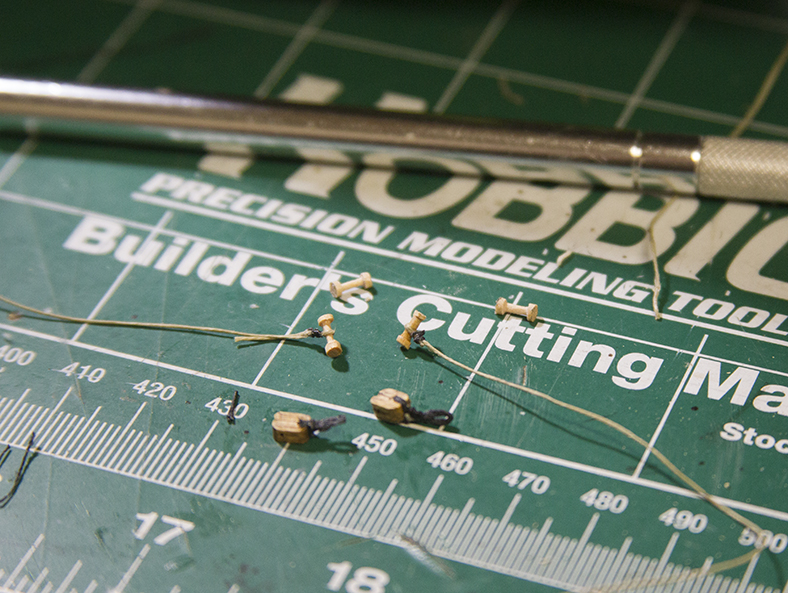
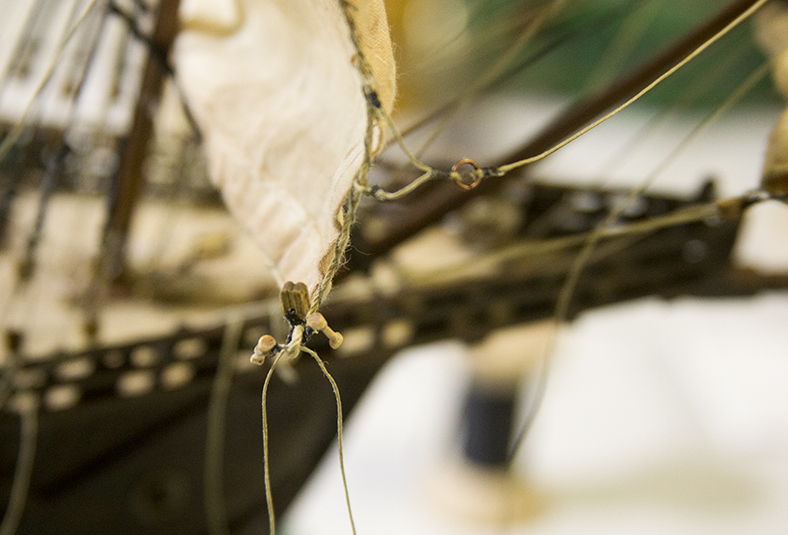
All of the rigging is then tightened and run to various blocks and rails laid out on the foredeck. Once the sails are raised, they are then furled and attached to the yard.
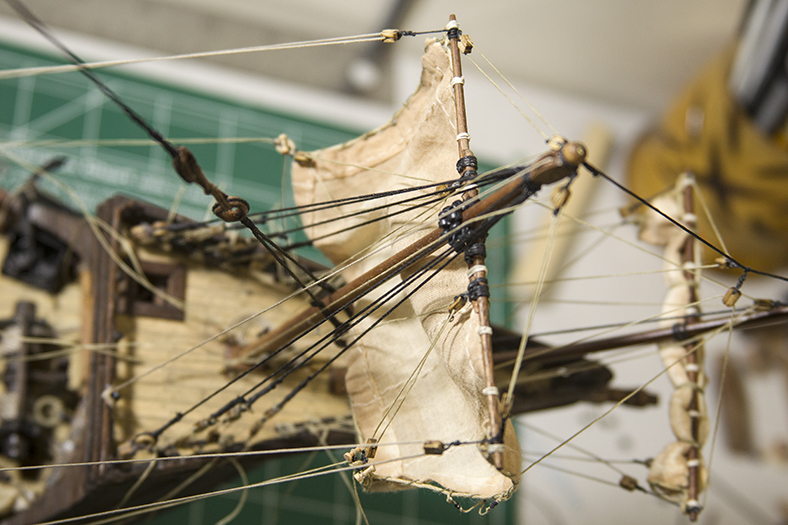
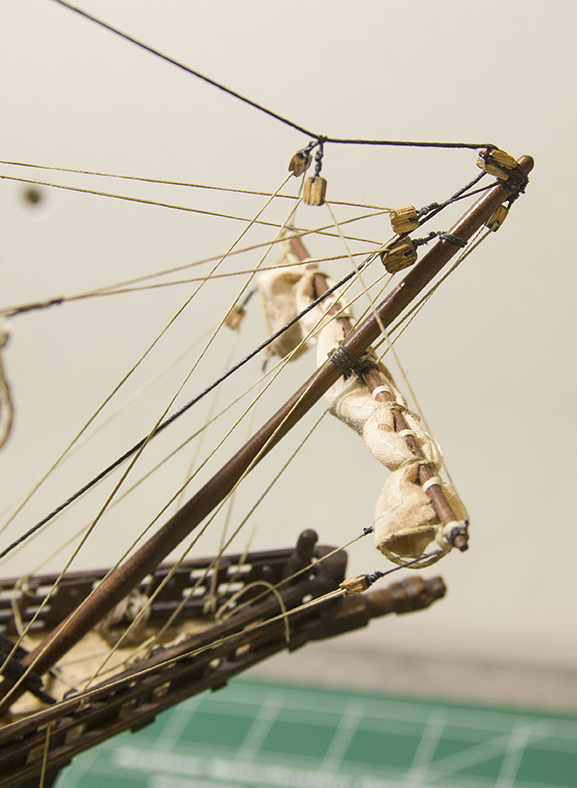
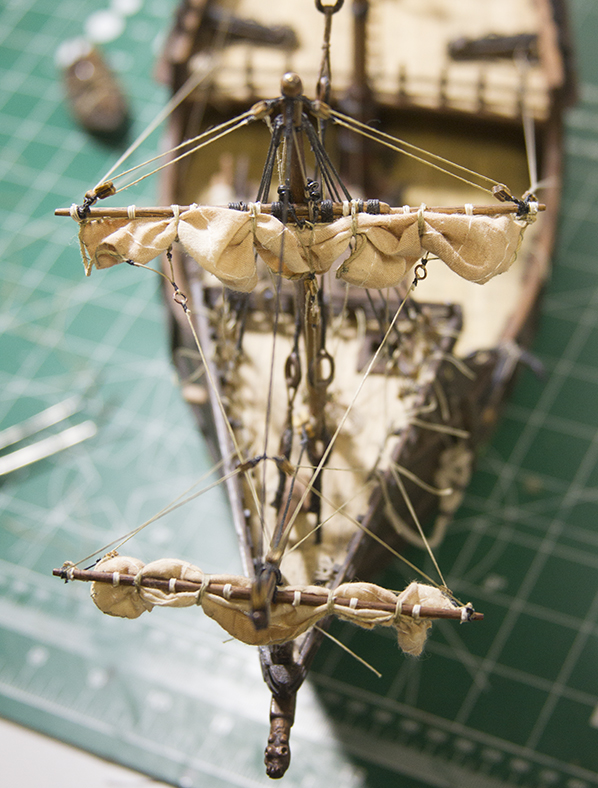
The spritsail assembly is the small mast and yard that stick out the front of the ship. It is rigged similarly to the other yards and masts, with a couple of additional elements that allow it to be specifically manipulated to catch wind.
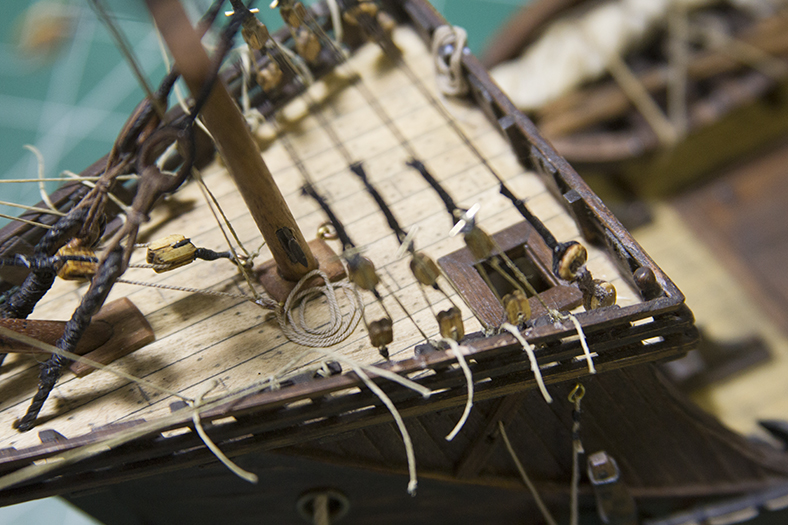
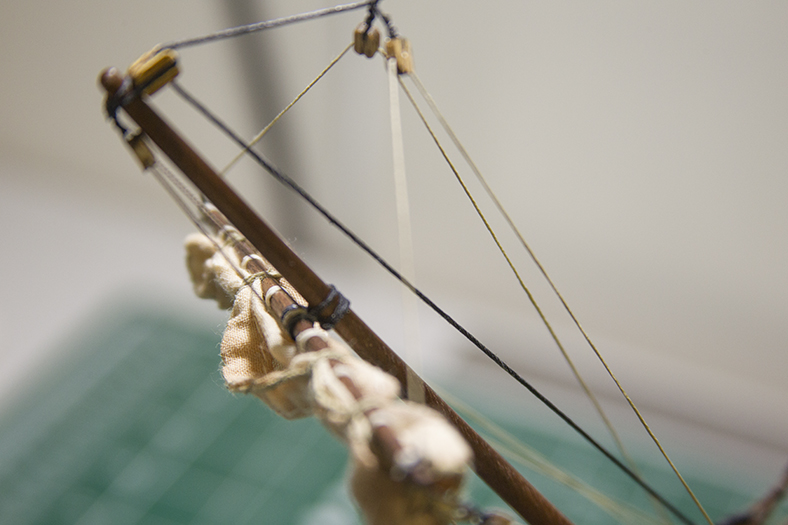
The lifts are attached by blocks to the Mainstay, then run to the foredeck and coiled. Since a lot of the running rigging, not only from the spritsail – but also the foremast and even mainmast, is attached through the bowsprit to the foredeck, it becomes a spiderweb of carefully orchestrated rigging. When trying to rig with accuracy, it’s vital to keep an eye on all the lines to ensure that they don’t physically overlap and always remain functional.
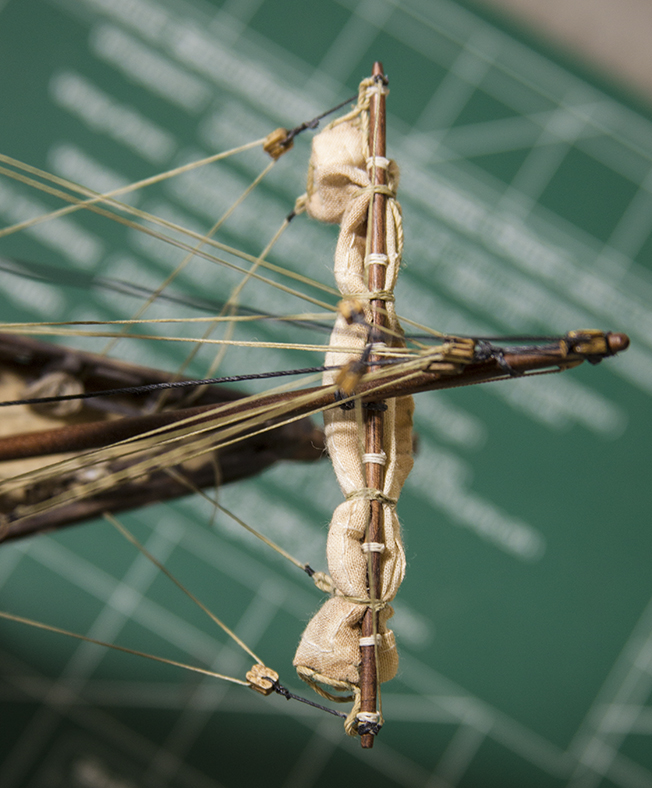
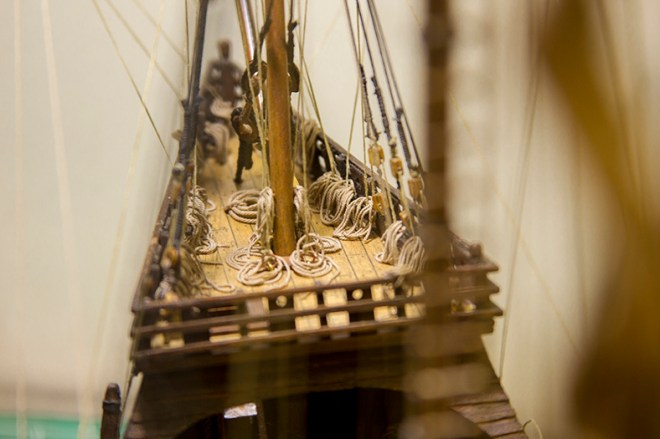
With all that rigging culminating in one relatively small location, the resulting “spaghetti” that ends up on the deck is chaotic at best. I’ve chosen to coil the ends of the rigging in a little more haphazard manner, hopefully giving her an “underway” look.
 The Lehman Shipyard