
The main mast running rigging is usually the most complicated on the ship. Because the yard itself and the sail are both so large, the rigging needed to keep everything in place – particularly under heavy winds – is heavier and more intricate. However, the basics are the same as the other yards and sails.

The parrel is essentially the same as the other yard, with the exception of the size of the ribs and trucks. There are also three rows of ribs as opposed to two. As with the other parrels, they are attached to the yard in the front with a tackle that runs to the deck.

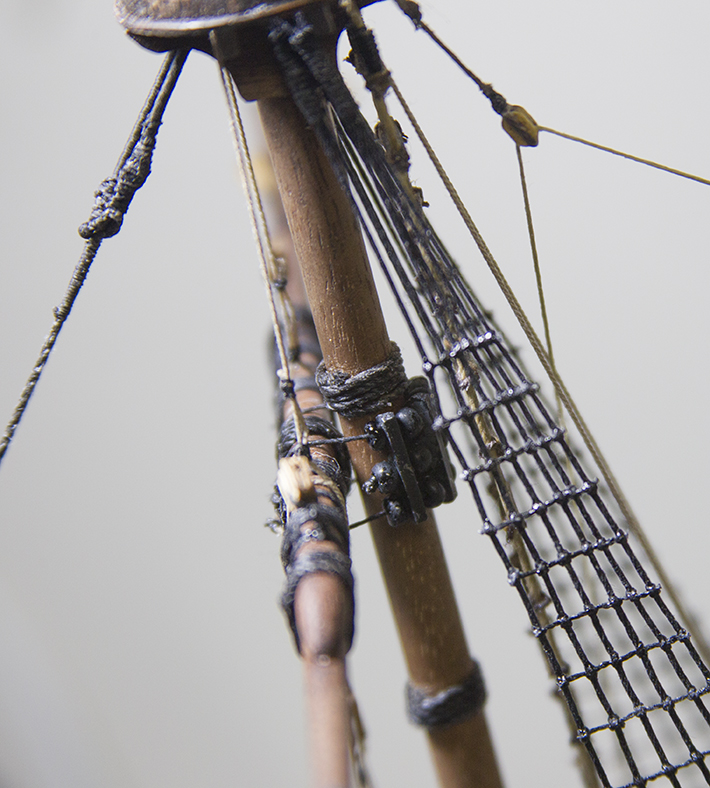

As the main yard is so much larger than the other yards, the method of raising and lowering it is much more complicated. The Halyard becomes a more intricate rig. The yard itself is held using two ropes called a “Tye” which runs up through a double sheave at the base of the topmast.
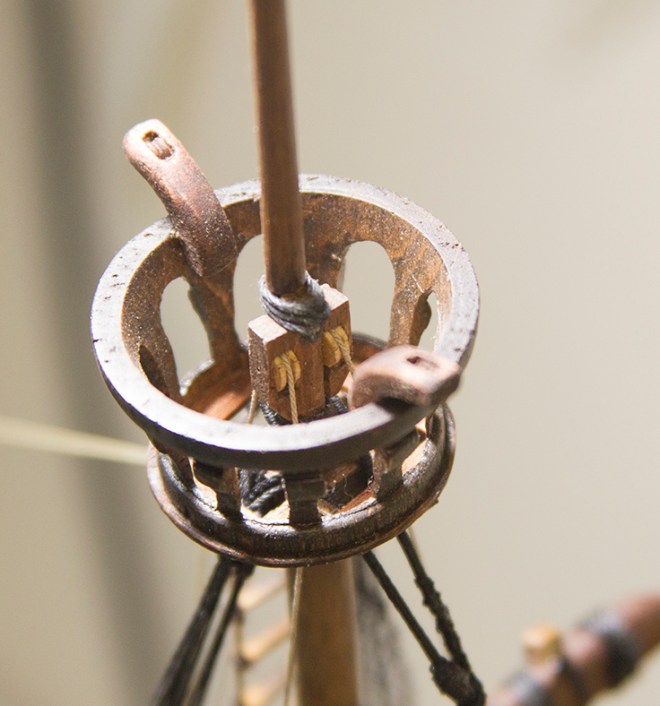
The tye then runs to a Knighthead” where the halyard is rigged. The knighthead assembly is made up of two pulleys called the “ramhead” at the top and a “knight” attached to the deck. A single halyard is wrapped through the pulleys several times to hold the main yard in place.
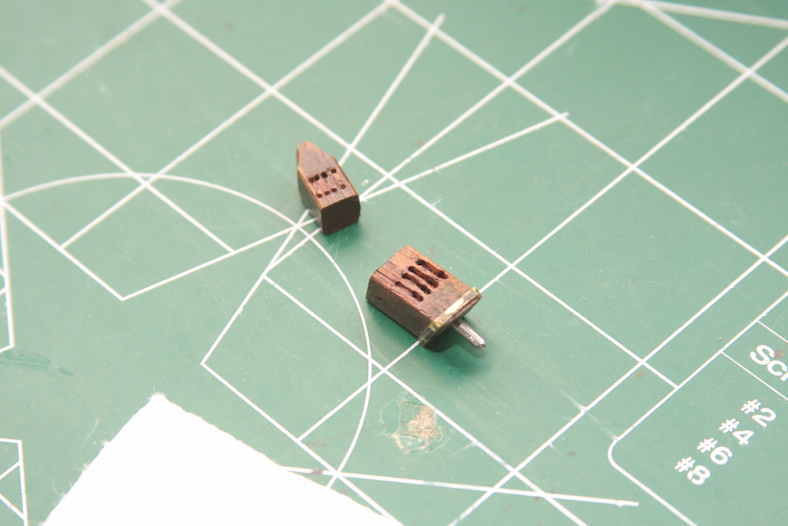
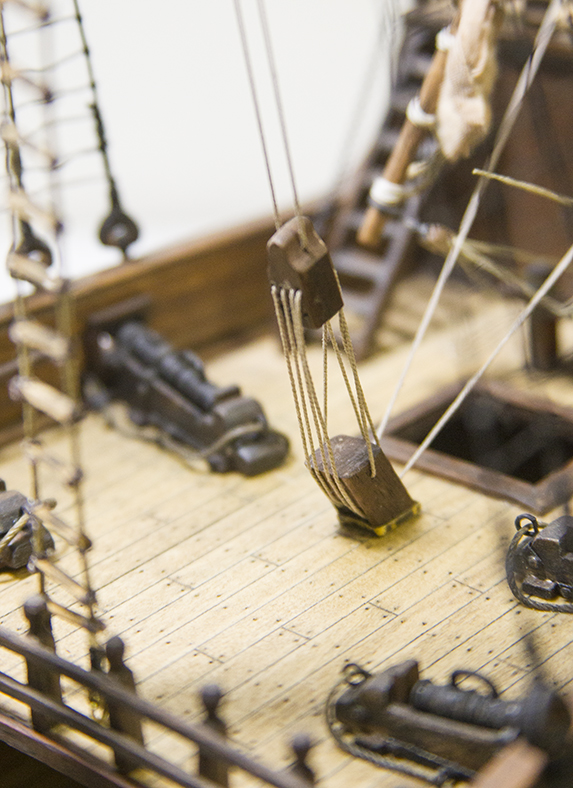

The force endured by the main yard and main mast would have been terrific depending on the level of winds propelling the ship. This complicated rigging would have lessened the force on the resulting ropes to make them much more manageable.
The yard itself was held up by “lifts” just as the other yards. However, the lifts for the main masts are essentially doubled through two sets of blocks instead of the on set. Once again, this split the resulting force and pressured put on the ropes and blocks.
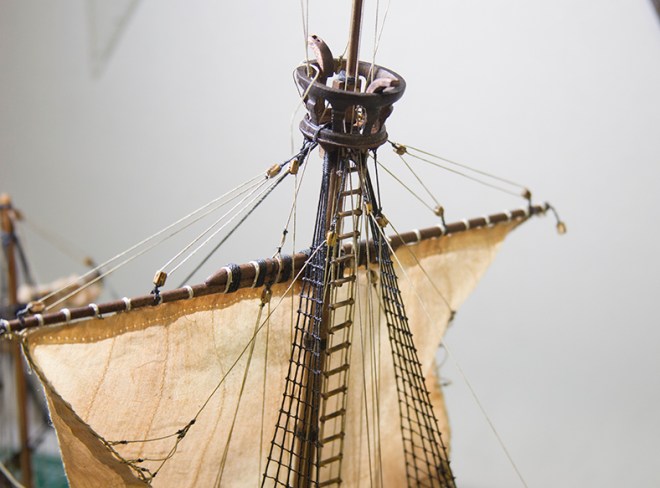
The bridles on the main mast also needed to be doubled up. The two “bridles” were run toward the fore of the ship and rigged to the bowsprit. Three more lines called “martnets” were run upward along the aft of the sail to blocks attached to the crow’s nest.
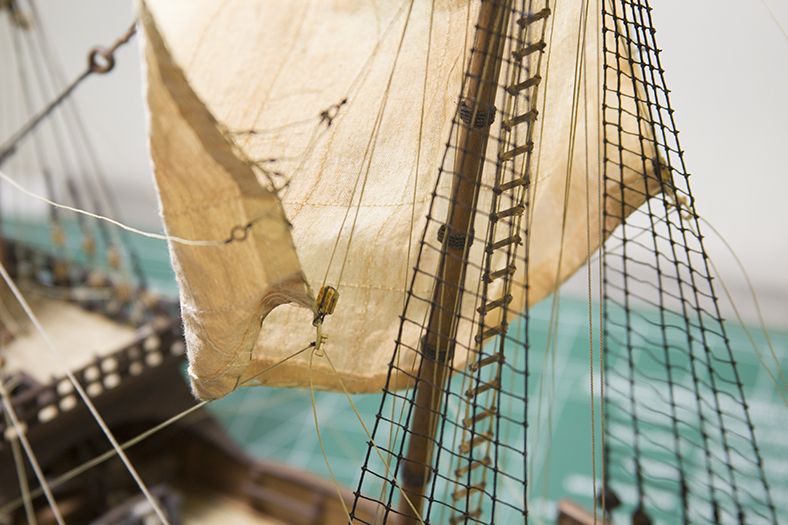
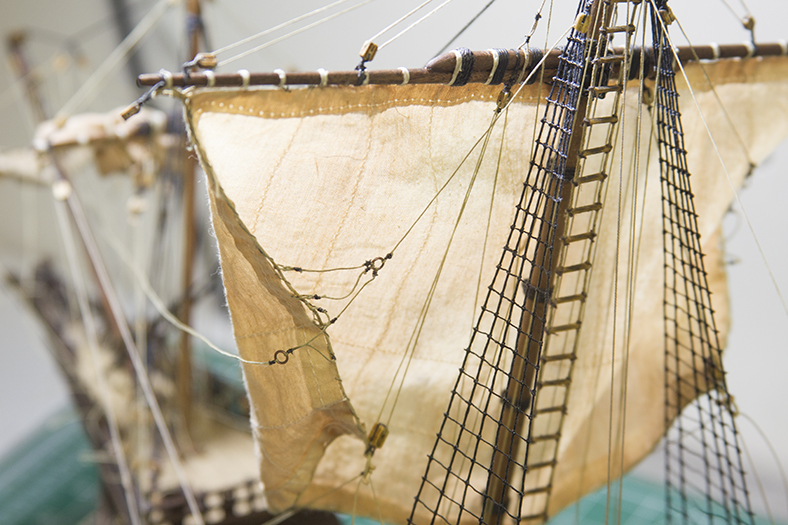
The tacks (running to the fore) and the sheets (running to the aft) were attached to the cringles (corner of the sail) using toggles. There is some contradiction in Pastor’s book whether they were attached using blocks or toggles – but as I liked the look of the toggles and wanted to remain consistent, I went with them.
The block attached to the cringle runs the clewgarnet up to the assembly under the crow’s nest, then down to the deck fittings.
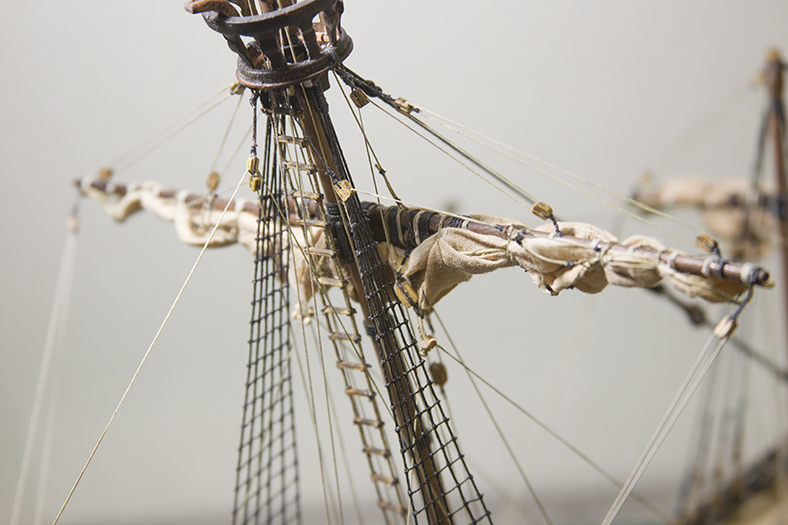
After the main sail was rigged in place down, it actually was quite difficult for me to decide to furl it. It looked very appealing down. However – were I to leave it down, it would have also required resewing the sail – as I did not attach a lower bonnet (which would have been included in a fully lowered mainsail).
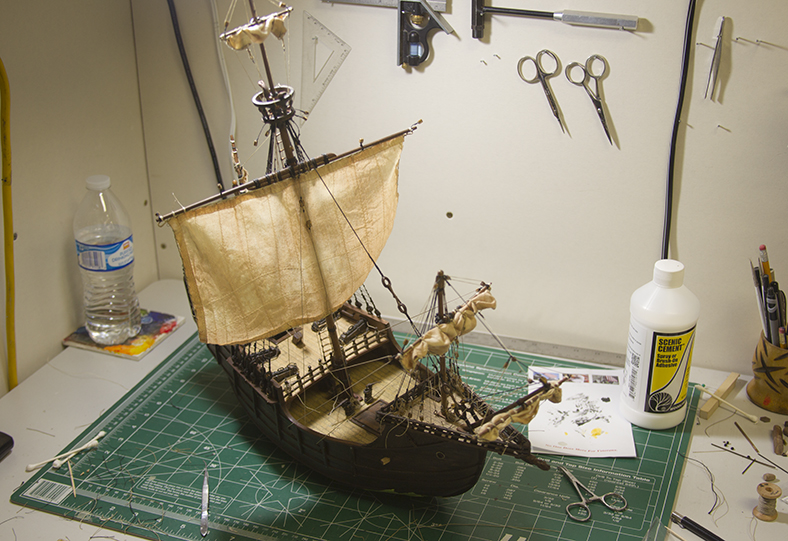
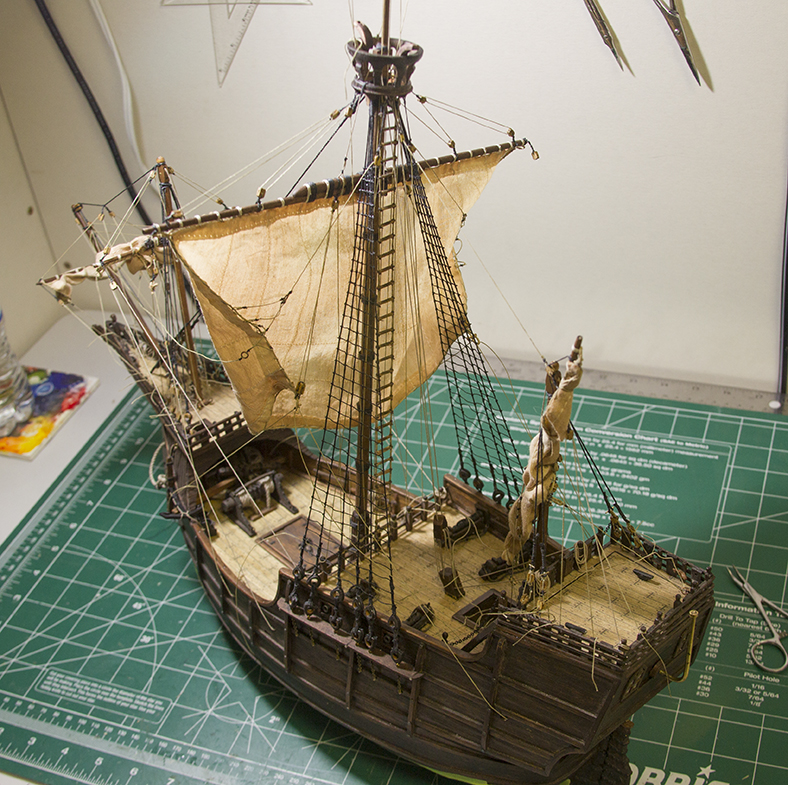
I decided to wait until after I rigged the topsail before making my final decision. The topsail (the yard and sail above the crow’s nest) is the easiest and least complicated to rig. The parrel is a basic strip attached to the yard, then run through a sheave in the mast itself. The sheave is created by VERY carefully drilling out the mast, then cutting off a thin dowel.


The rig goes through the sheave then runs down through the crow’s nest to the decking. Only two lifts attach the yard to the top of the mast with blocks, then run to eyelets inside the crow’s nest.
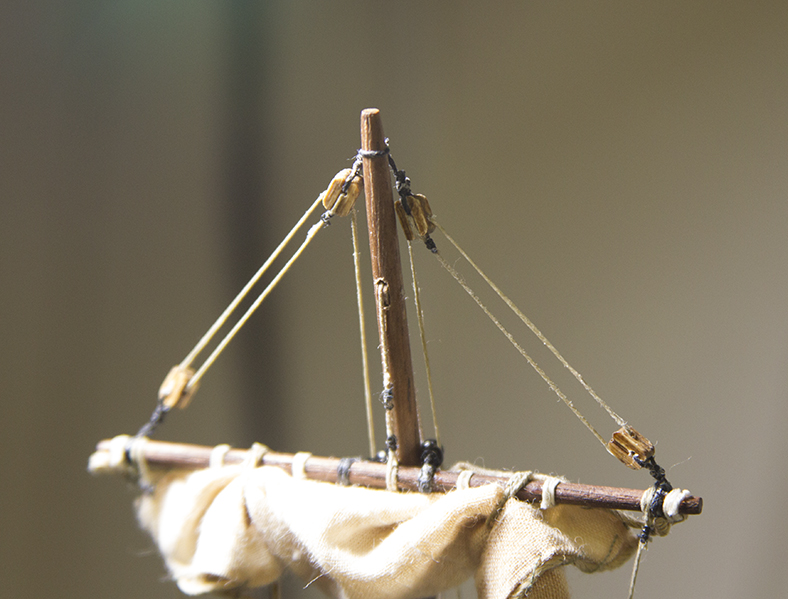
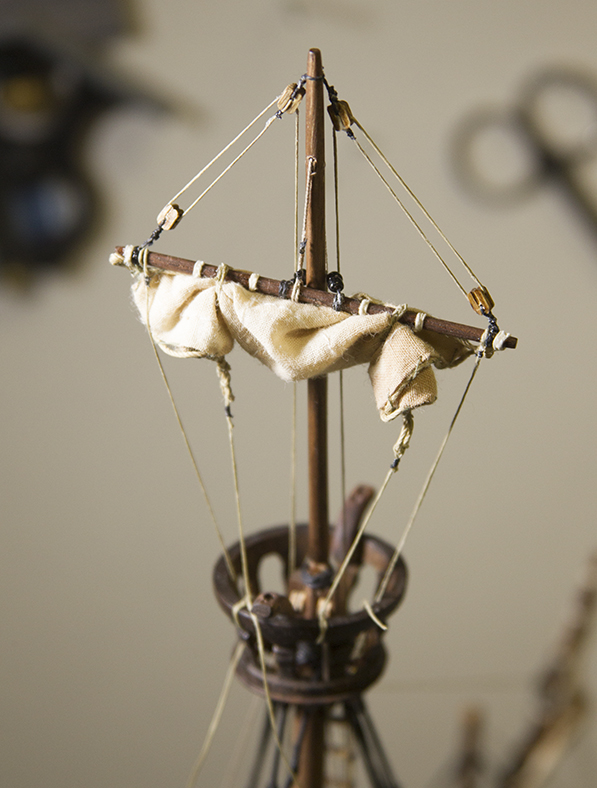
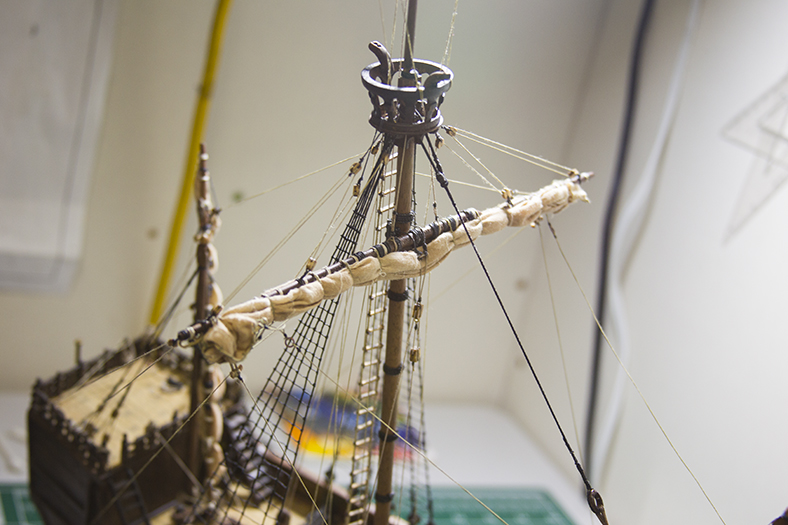
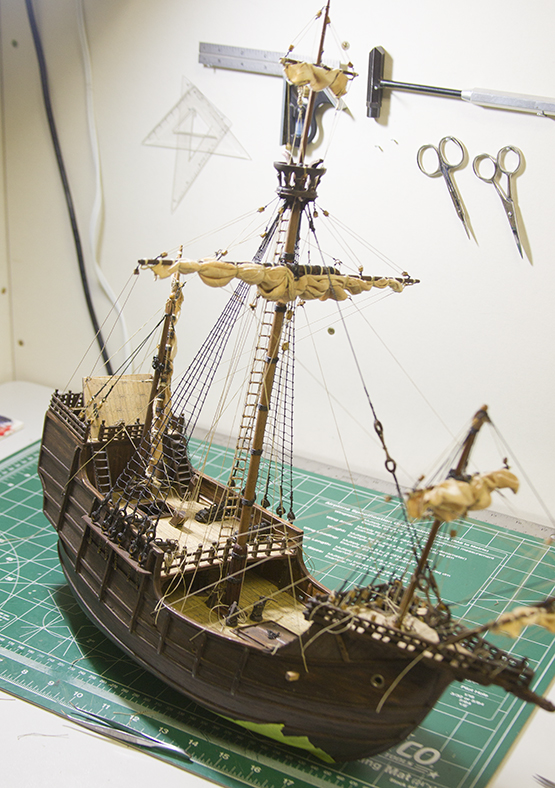
After rigging the topsail, and being able to adequately compare the look of the main sail down and furled, I decided to stick with my original plan. This was also influenced by the opinion of my lovely wife who also preferred the look of the ship with the sails furled.
So, I re-rigged the main mast and furled the sail.
 The Lehman Shipyard