
The running rigging on a ship consists of ropes, pullings and blocks that sailors use to raise and lower the sails, as well as adjust the yards – the crossbeams attached to masts that hold the sails.
Running the rigging is one of the most tedious yet fun aspects of a model for me. It represents a turning point in the process when you are closer to the end of the build than the beginning. Although there are certain “rules” with regard to running the rigging, there really isn’t a specific order. Regardless of which masts or sails you start with, there’s always a lot of running lines through and around one another.
Prior to starting the running rigging, I stained the sails to give them an aged look. To achieve this look, I soaked them in tea over night.
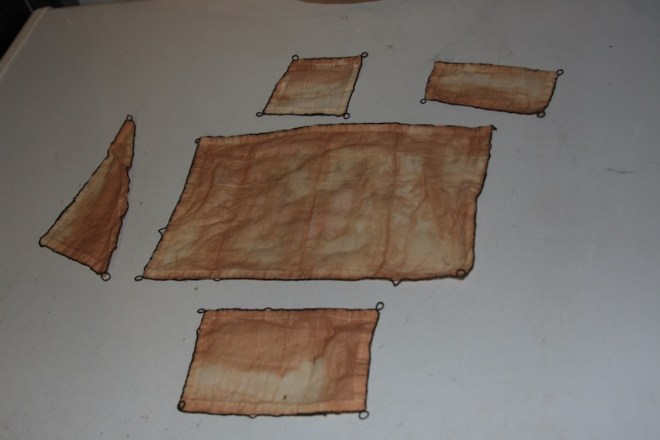
It’s also important to note that this is the first build where I’ve chosen to rig the sails “furled” – wrapped up onto the yard and unused. I felt that the only way to achieve the proper and accurate look of this was to rig them down, then actually use the rigging to raise them and furl them afterward. I think that gives me a good idea of how they would have appeared when raised by sailors while underway.
I followed Xavier Pastor’s rigging models, along with my aforementioned schematic to cleats and rails. I decided to start with the mizzen mast. Since I have a poop deck that raises and lowers, I had to come up with ways to run the rigging in a traditional manner, while incorporating the very NON-traditional aspect of having a deck actually move out the way!
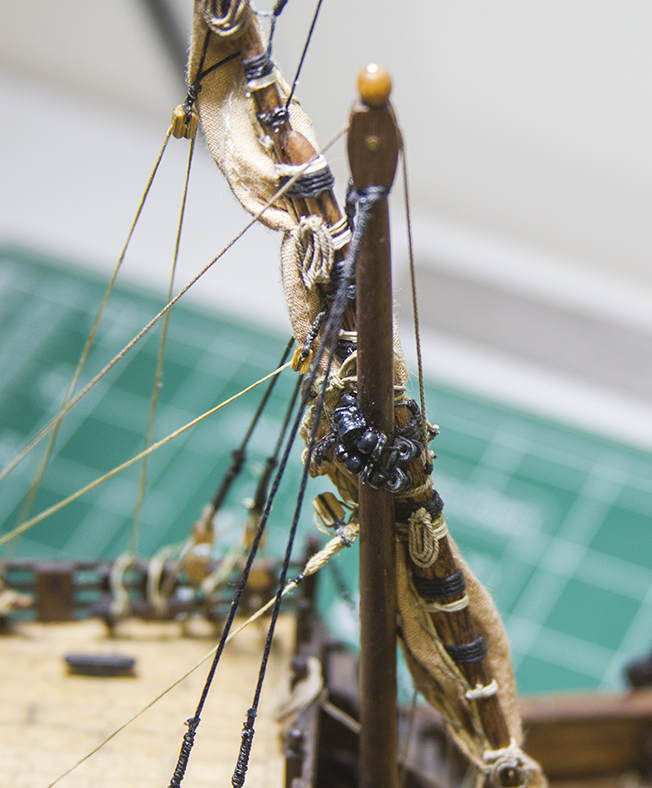
The yard is attached to the mast using a “parrel.” The Parrel is essentially cylindrical objects strung around the mast with guides in between. The parrel lets the yard “roll” up and down the mast when the rigging is pulled.
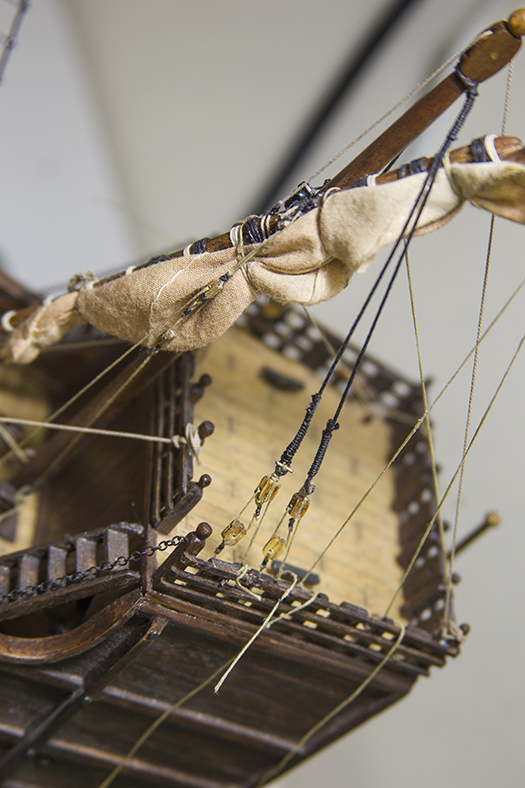

The parrel is attached to the yard in the front using two blocks rigged together to form a pulley. The pulley is controlled by the “halyard” line, which actually raises and lowers the yard. The Parrel itself is wrapped around the yard and looped together. This process either looses or tightens the parrel as the yard is raised and/or lowered.
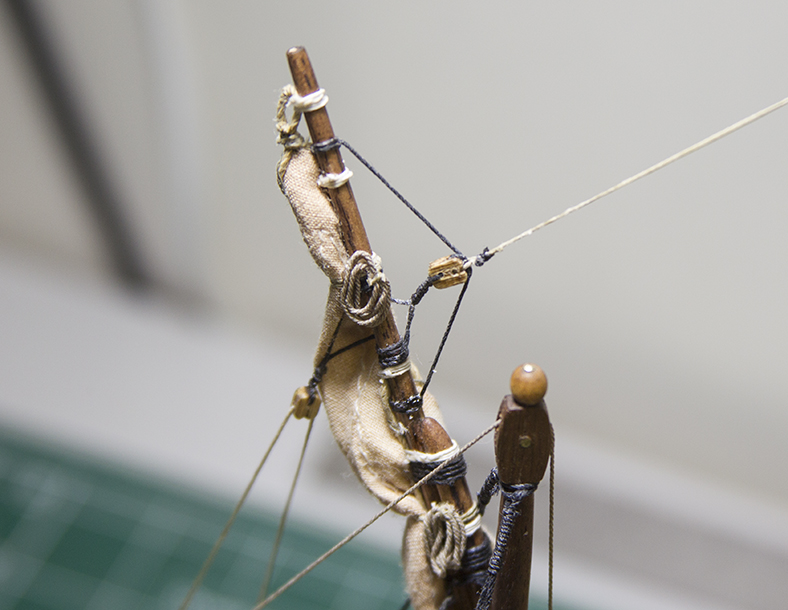
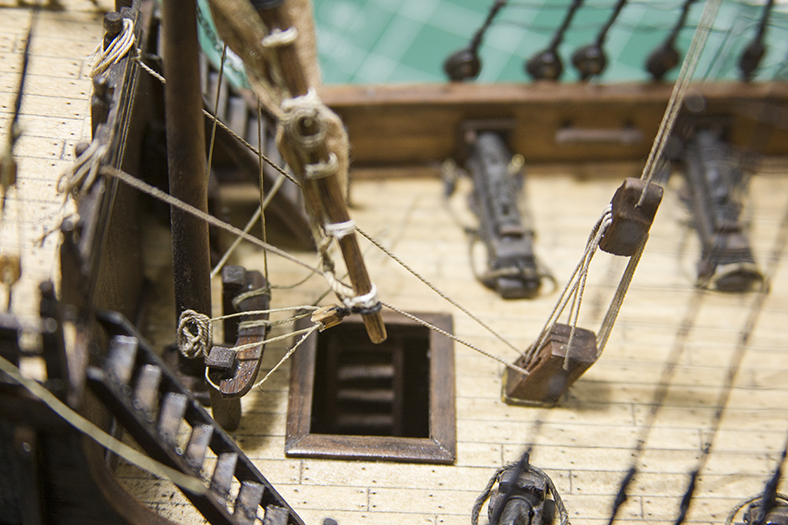
The top of the mizzen yard is attached to the main mast with a rig called the “lift”. The bottom is attached to the the deck of the ship at a couple of different points with “tacks” – in my case it is attached the rear rail. The mizzen is unique because of the angle in which it is attached to the mast, as well as how it’s used. It is essentially part of the ship’s “steering system” and aids the ship when guiding the wind.
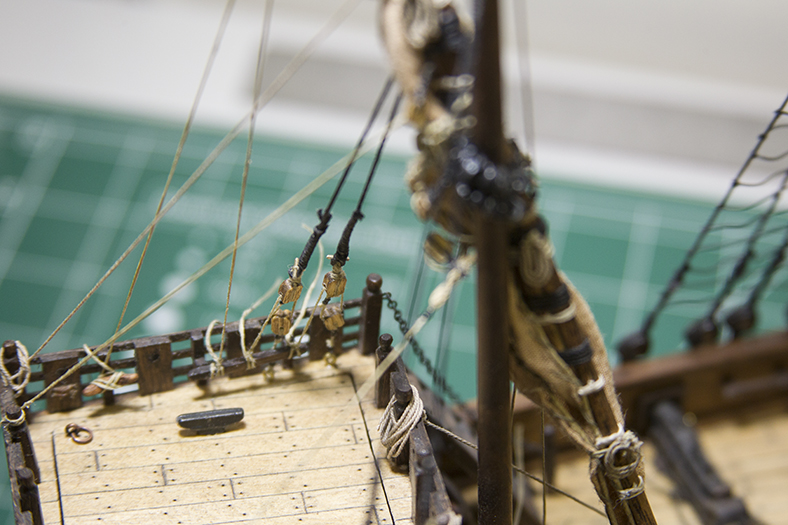
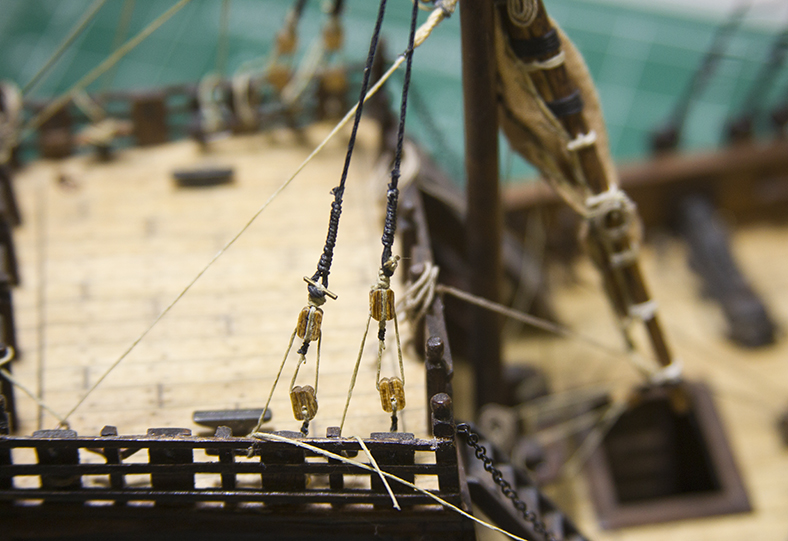
The rear shrouds (the standing rigging which hold the mast to the ship) are attached to the deck with eyelets. This became rather challenging when it came to keeping them far enough out of the way to allow the poop deck to be raised and lowered.
 The Lehman Shipyard