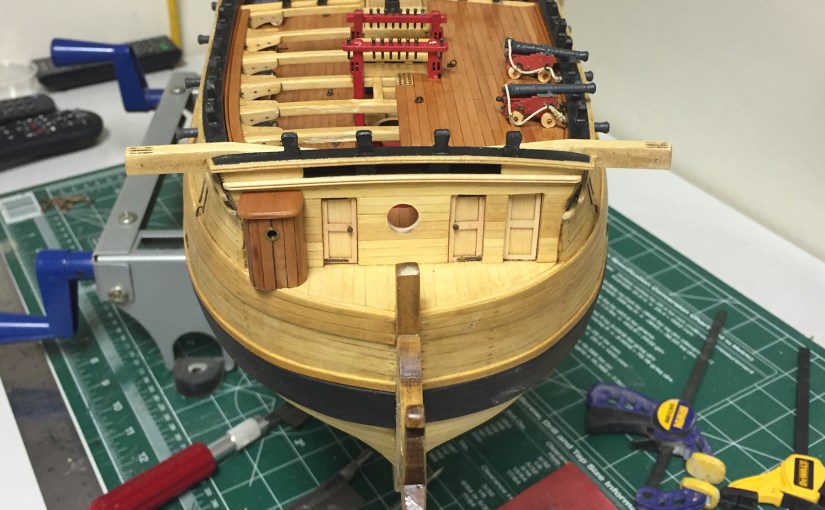
Progress has been difficult in 2016. As my business travel seasons kicks into full gear, the progress on the ship happens in spits and spurts. But I remain persistent.
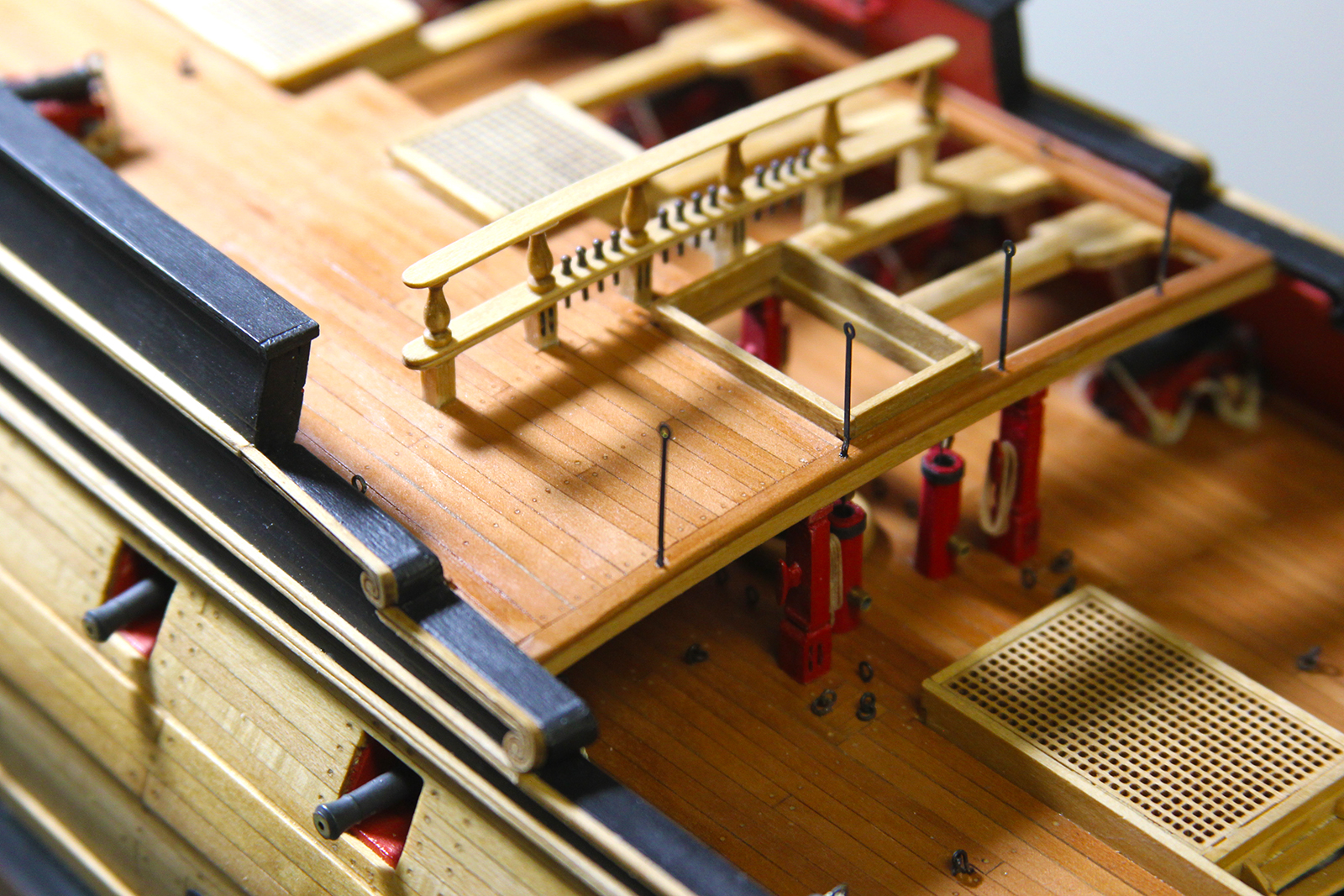
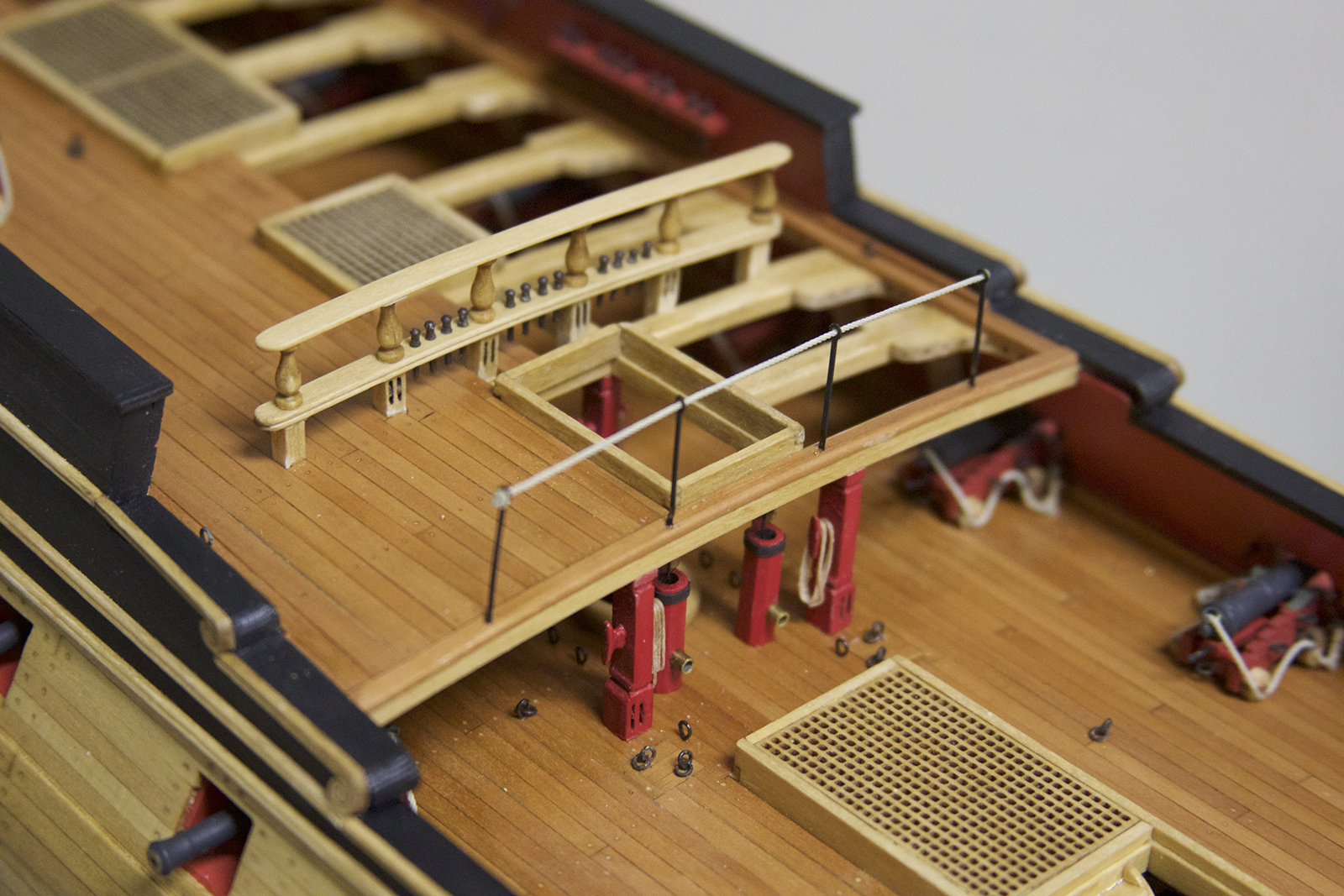
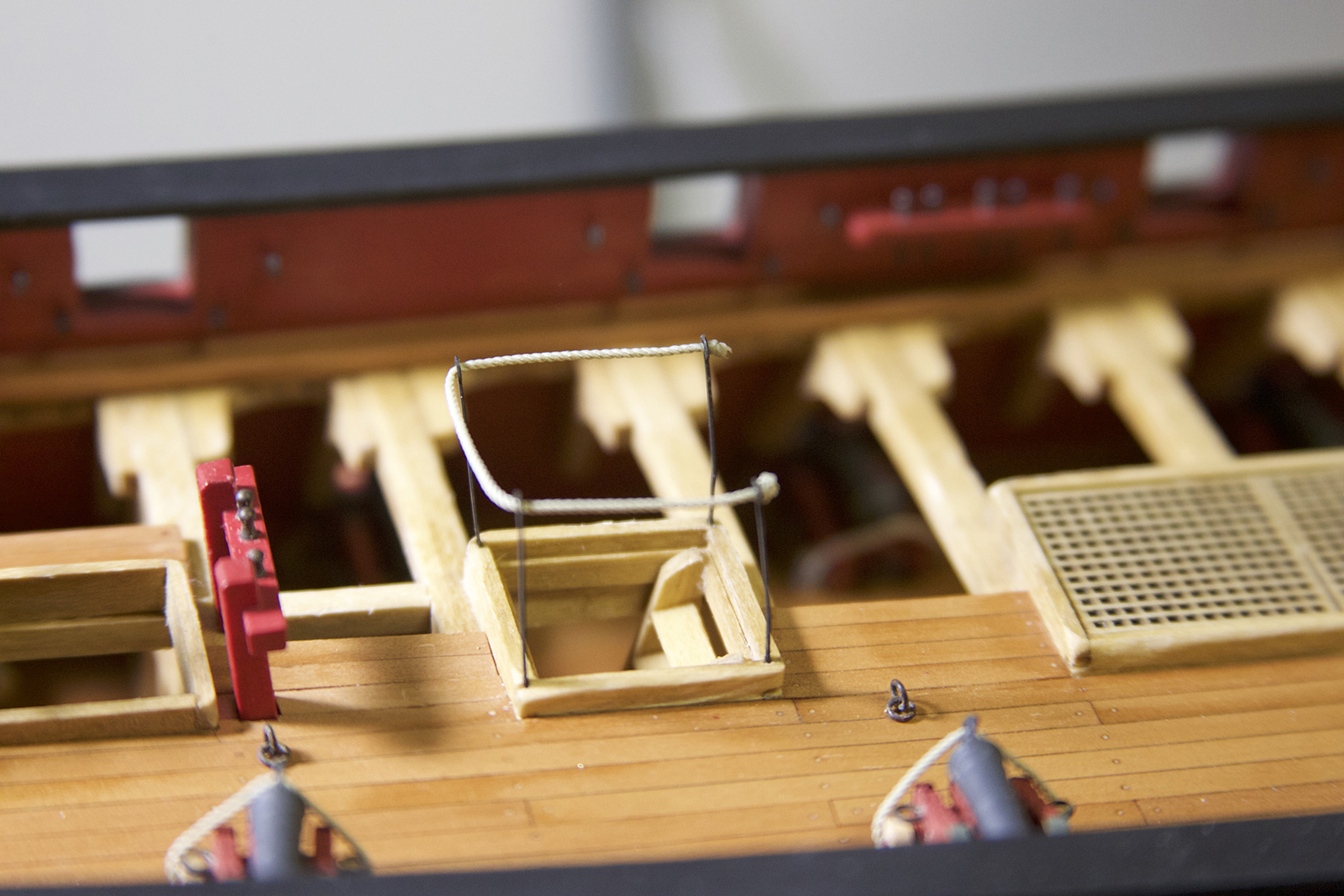
I started with an easy updates that included blacked brass posts and rope rails. The rails were either rope, or metal; in this case Augie had already opted for rope on the lower decks, so that’s what I continued with on the main & upper decks.
Next up is the bow of the ship, and firstly the catheads. Although this was a pretty macro process if you will, the catheads needed to be fitted perfectly snug, and it involved cutting out a portion of the bulwarks – which is always a bit nerve-wracking.
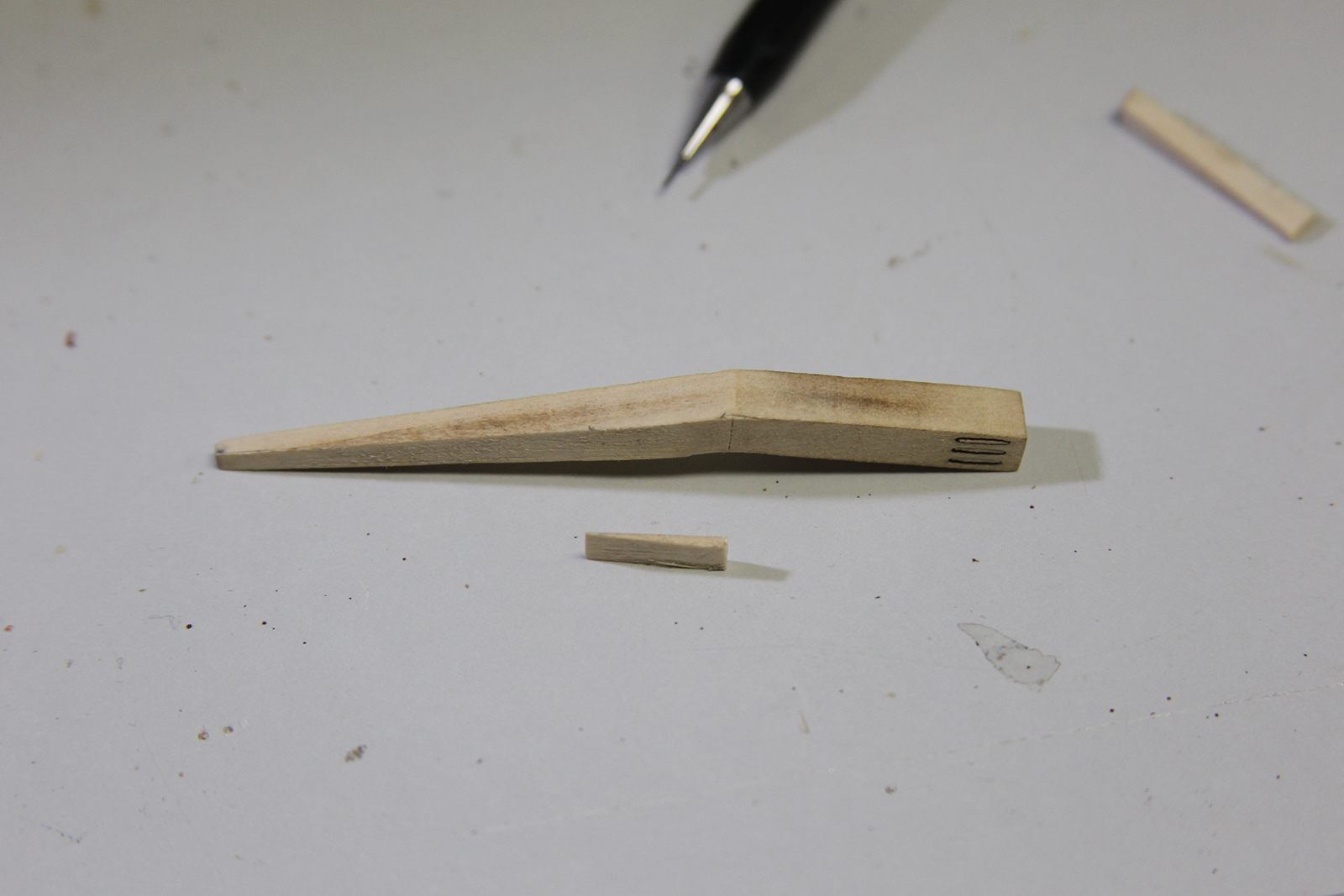
First, the catheads themselves are cut out of the laser-cut molds, and shaped. A bit of the bottom has to be wedged off to match the slope of the deck.
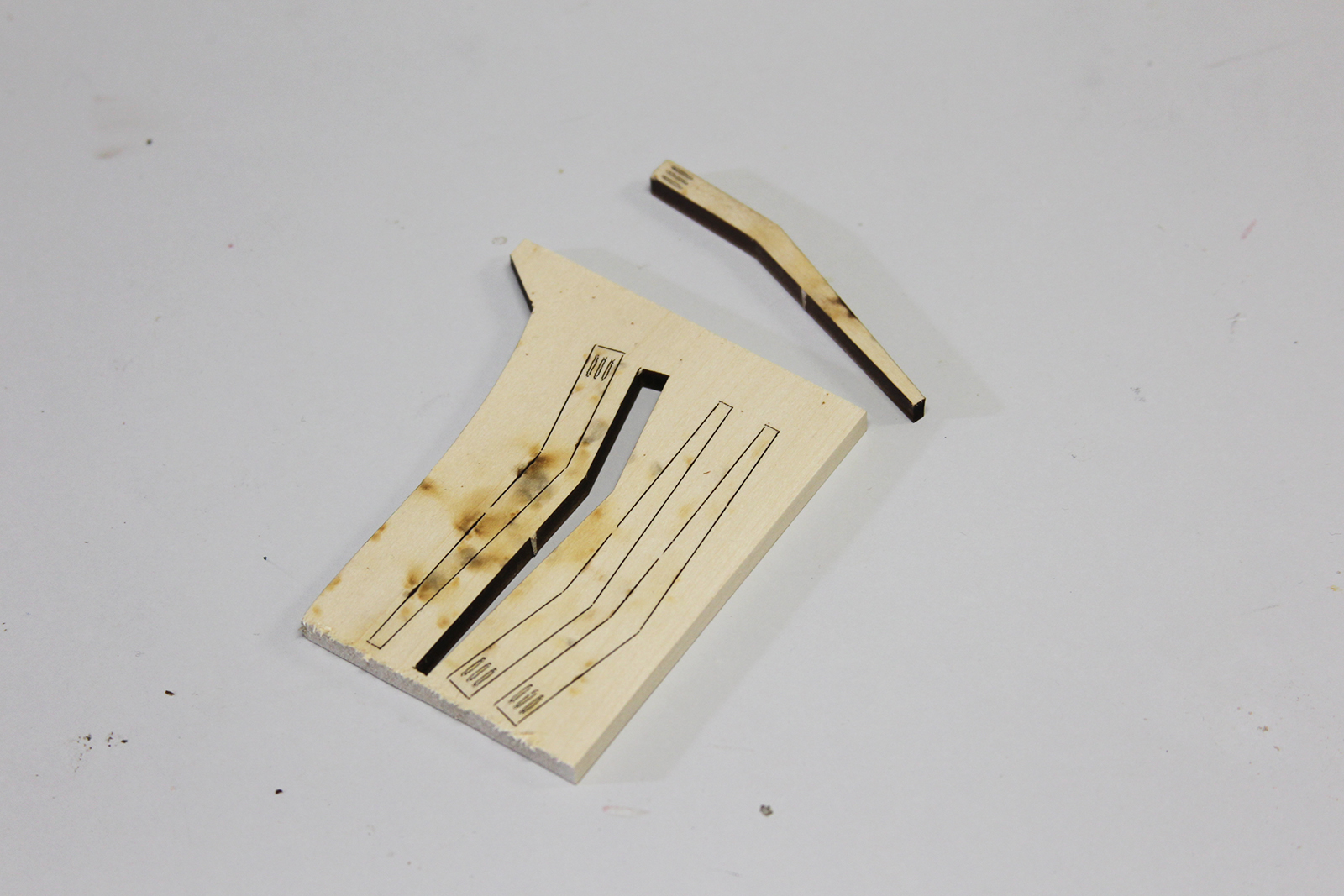
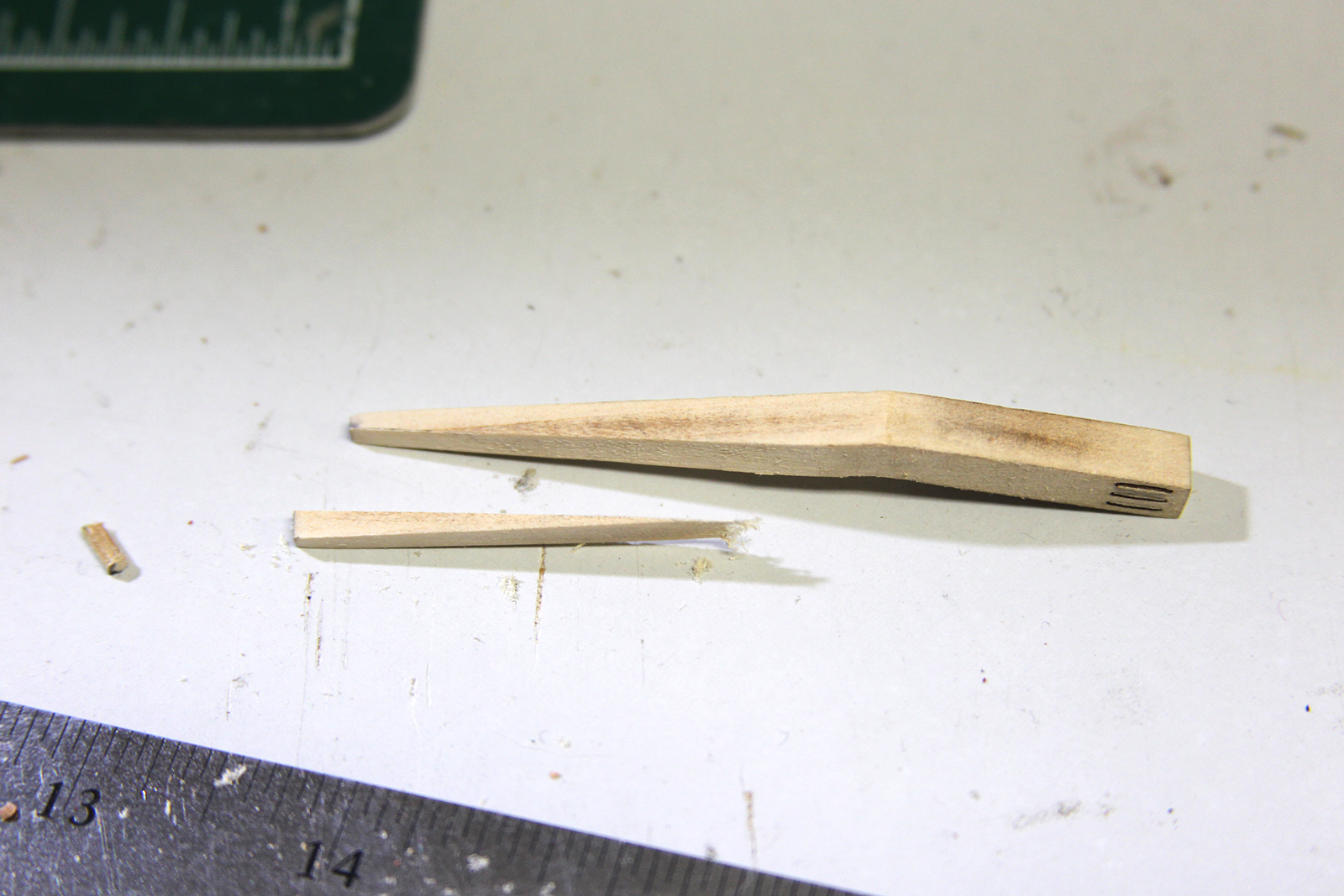
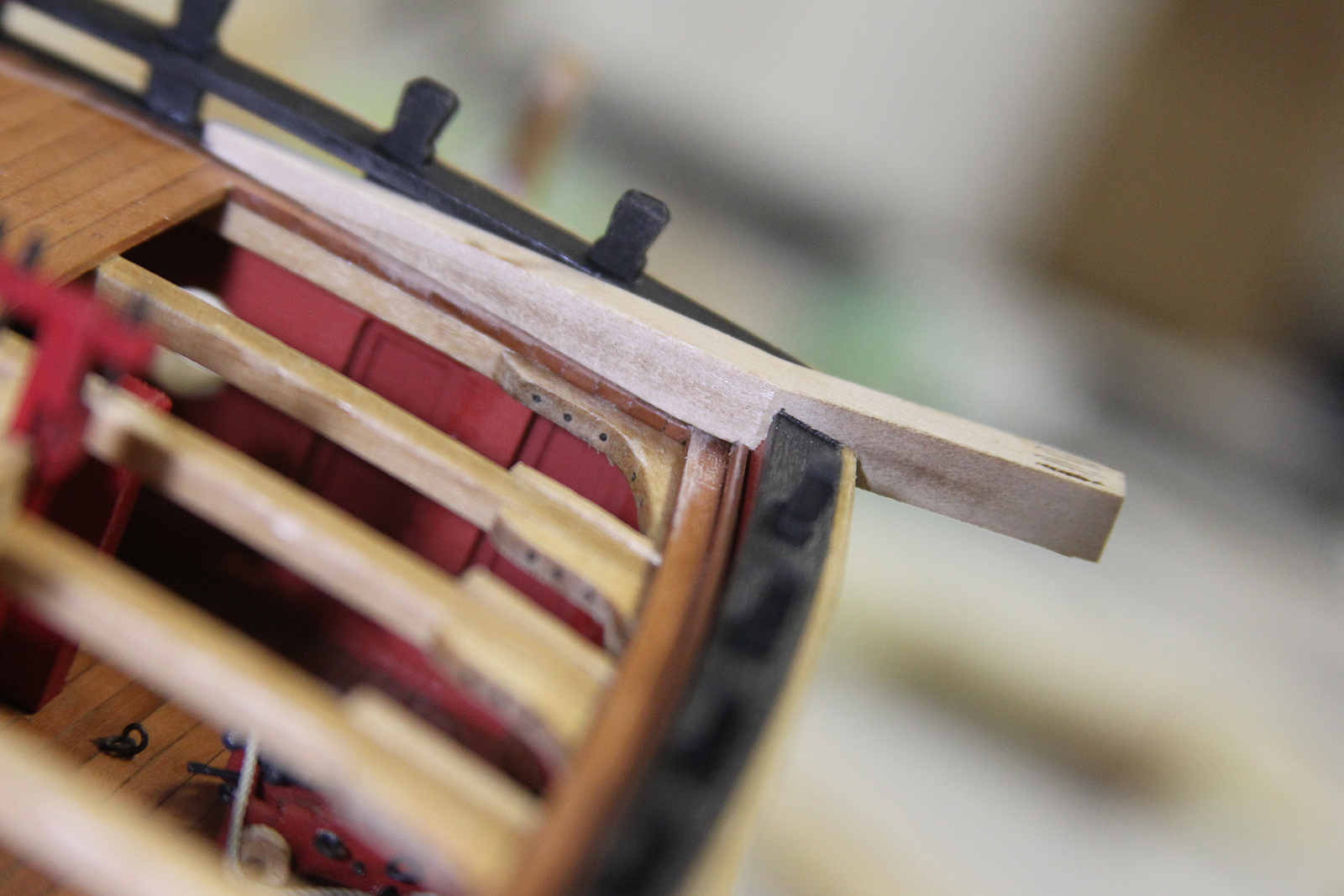
Next comes the delicate process of cutting out and fitting the catheads into position. The trick here is to cut out the rail smaller than necessary, then slowly file out and sand the slits until the catheads fit as snug as possible.
There was a lot of delicate sanding a tiny bit at a time with varying sandpapers and files, then fit the cathead, then sand some more. A patient process to be sure.
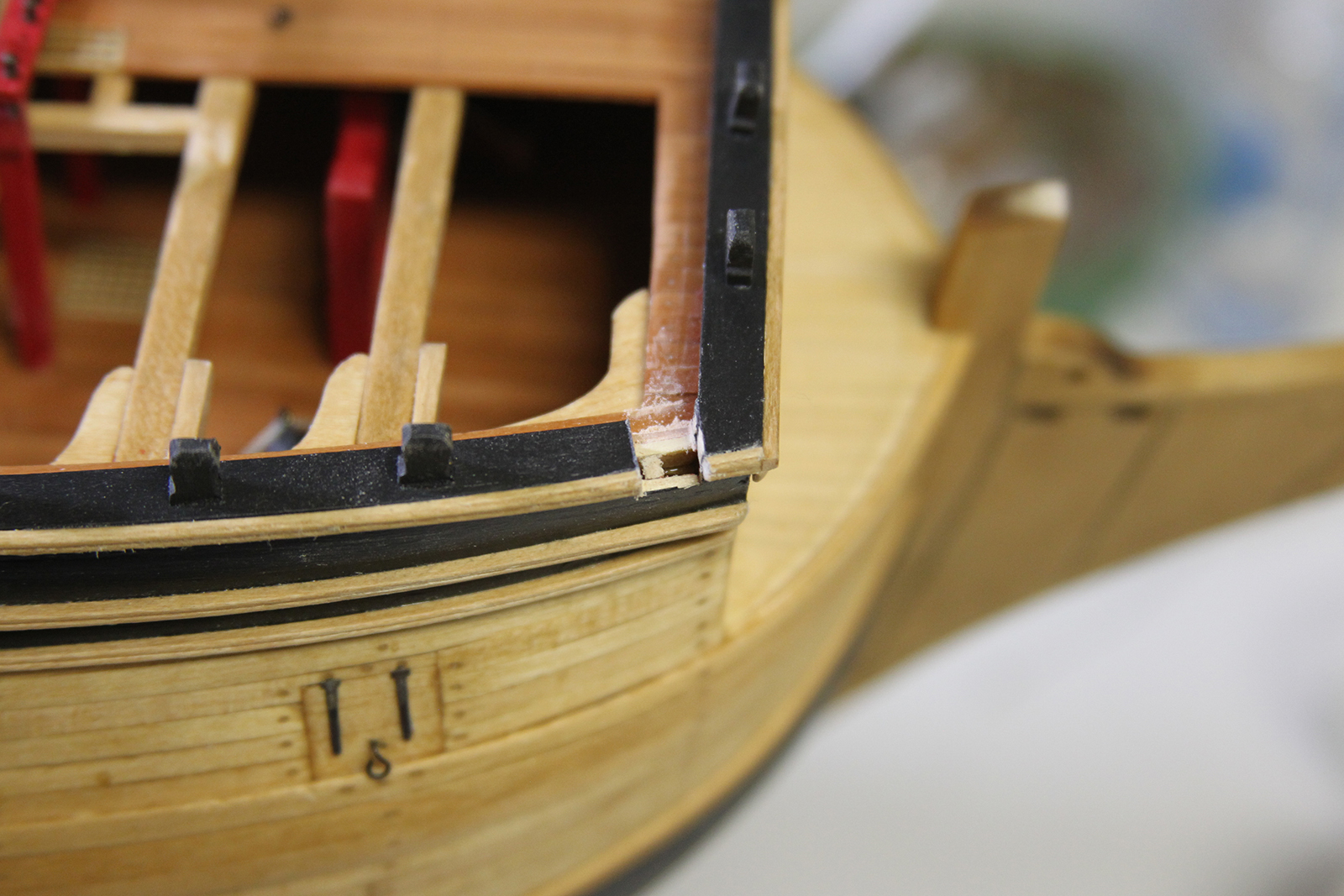
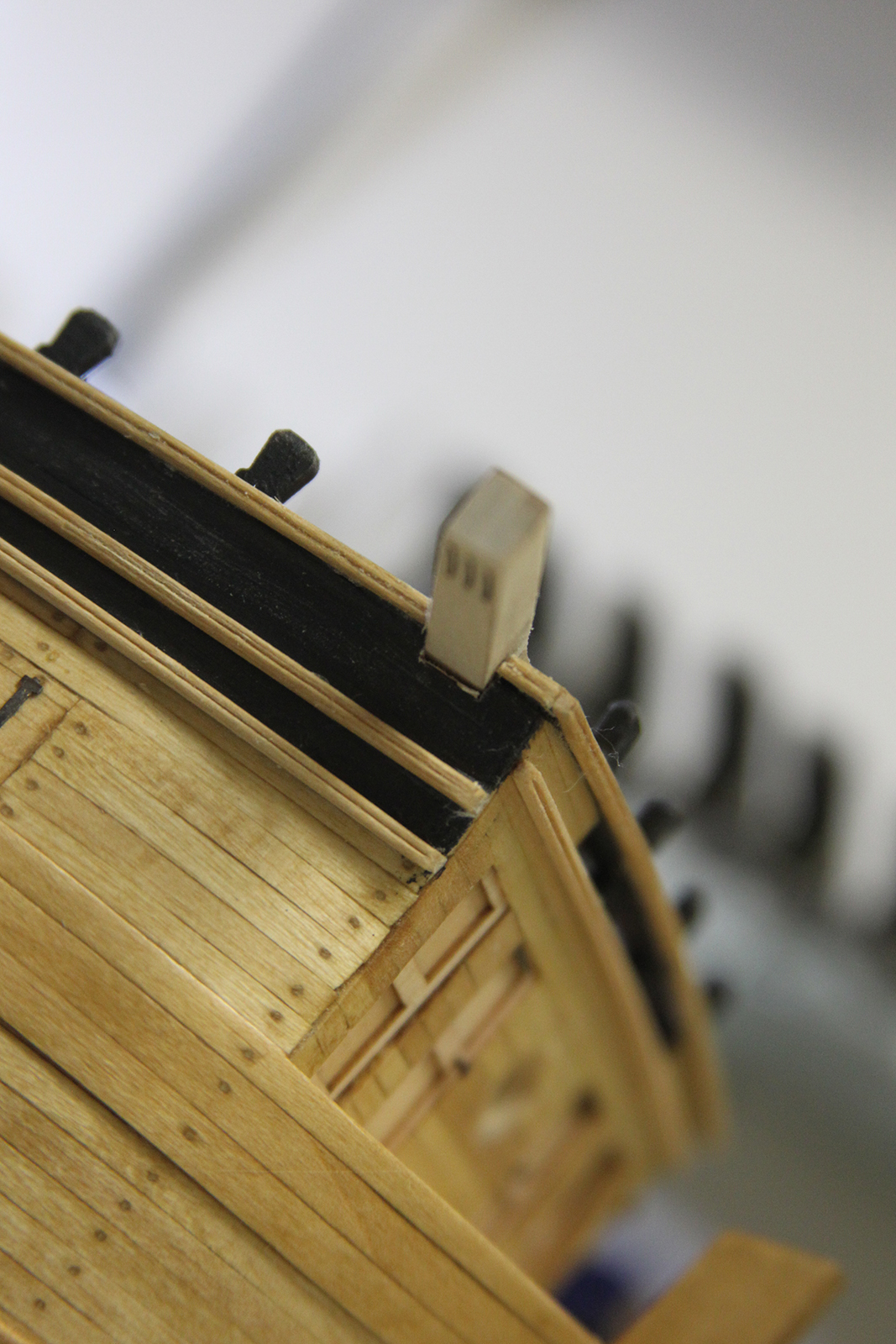
T he bottom of the cathead doesn’t quite fit the edge where the deck meets the side of the ship. So, a smaller wedge is cut and glued to match the edge of the deck where the planking and the bulwarks meet.
The slots for the sheaves (small pulleys) were already cut out from the catheads, which made things much easier. However, I wanted to accurately represent the sheaves themselves. First, I sanded down a strip of boxwood as thin as I could without compromising the integrity of the wood.
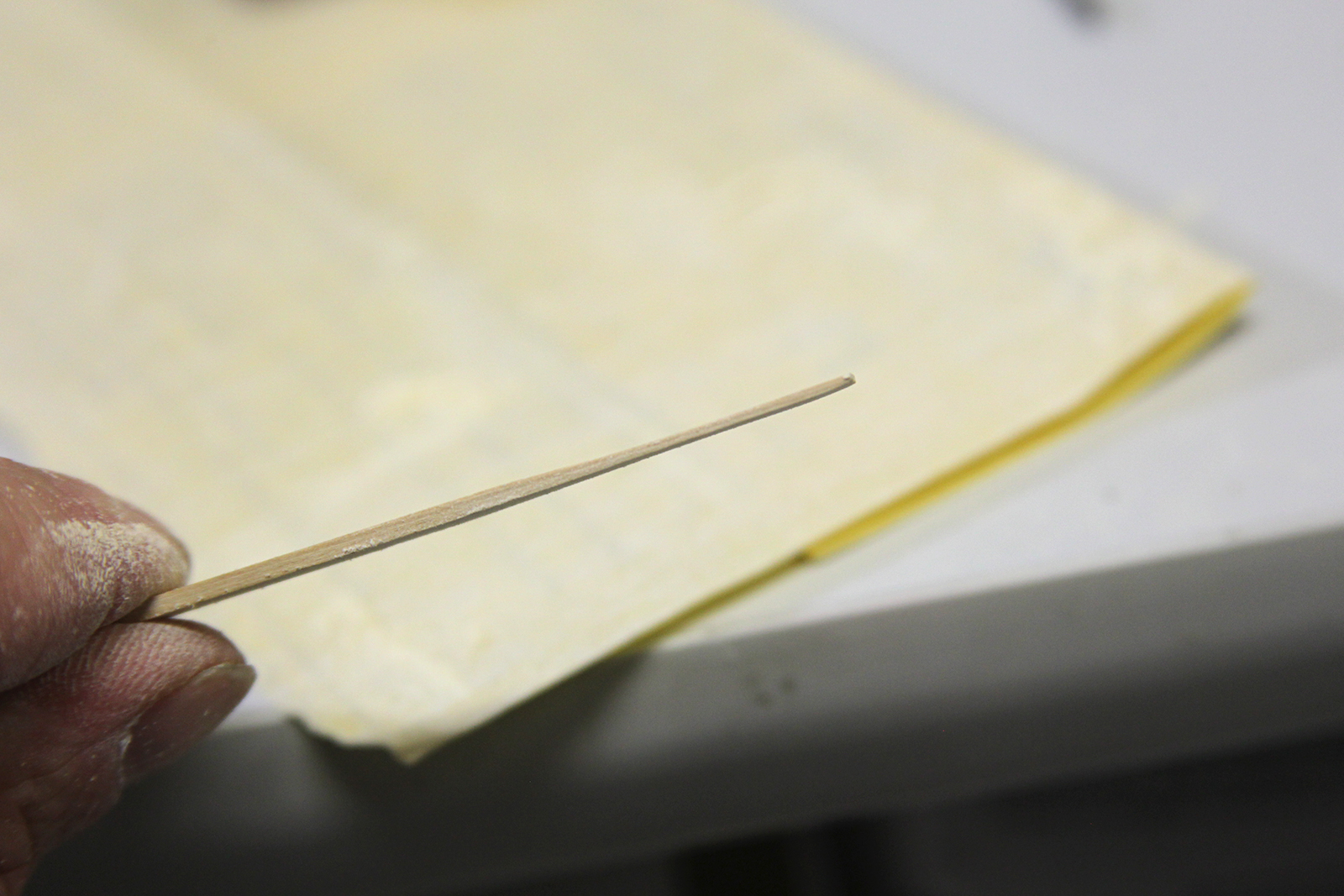
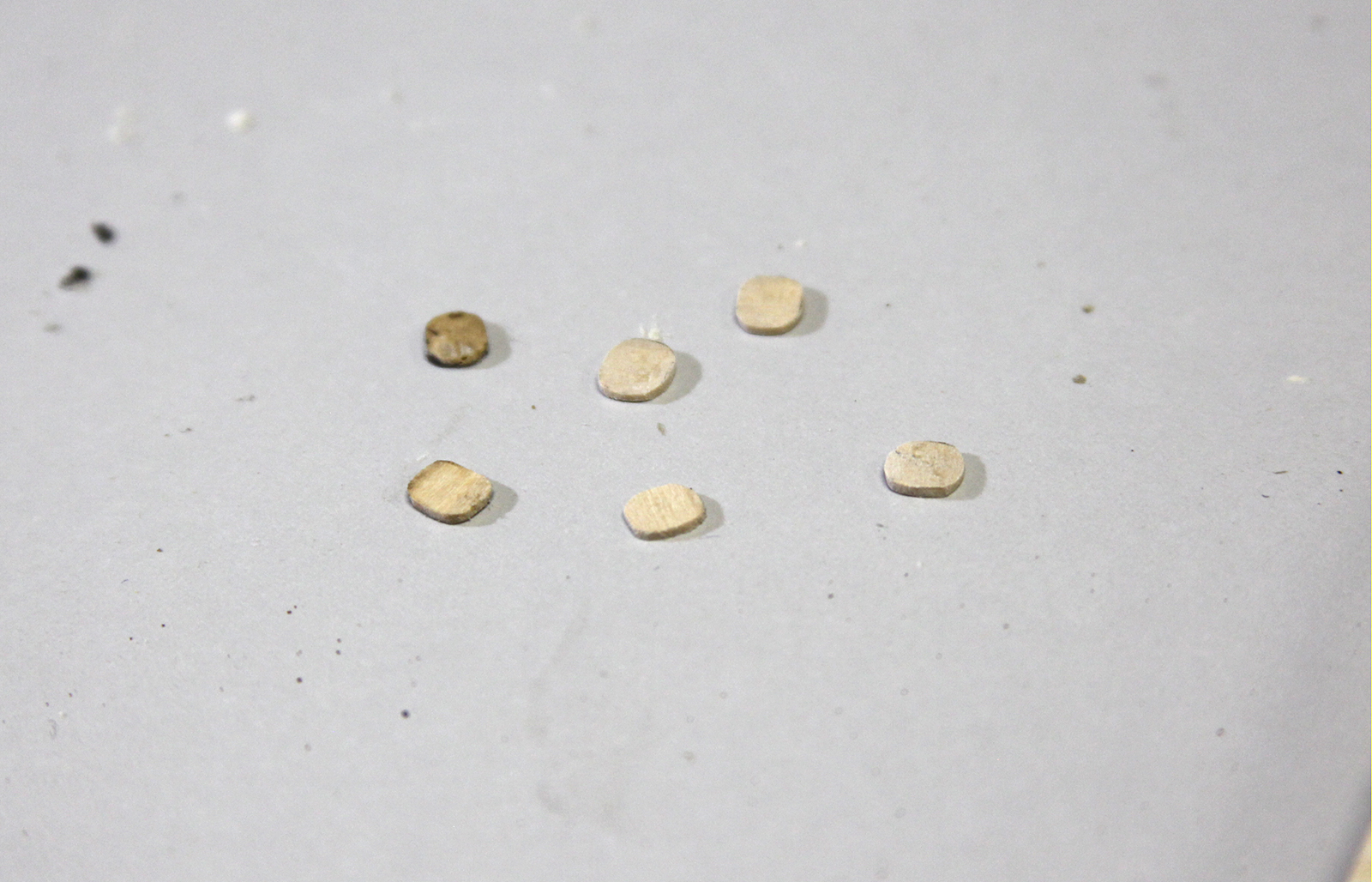
Although the original sheaves would have obviously been round, that didn’t look quite right. So my simulated sheaves ended up being sort of a squared off oval. This gave the final look a more accurate feel.
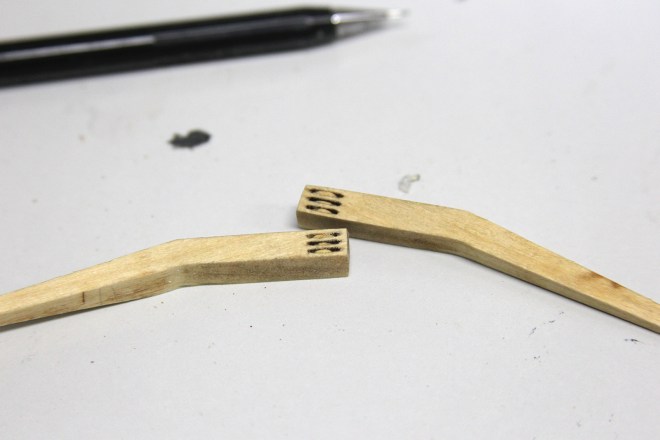
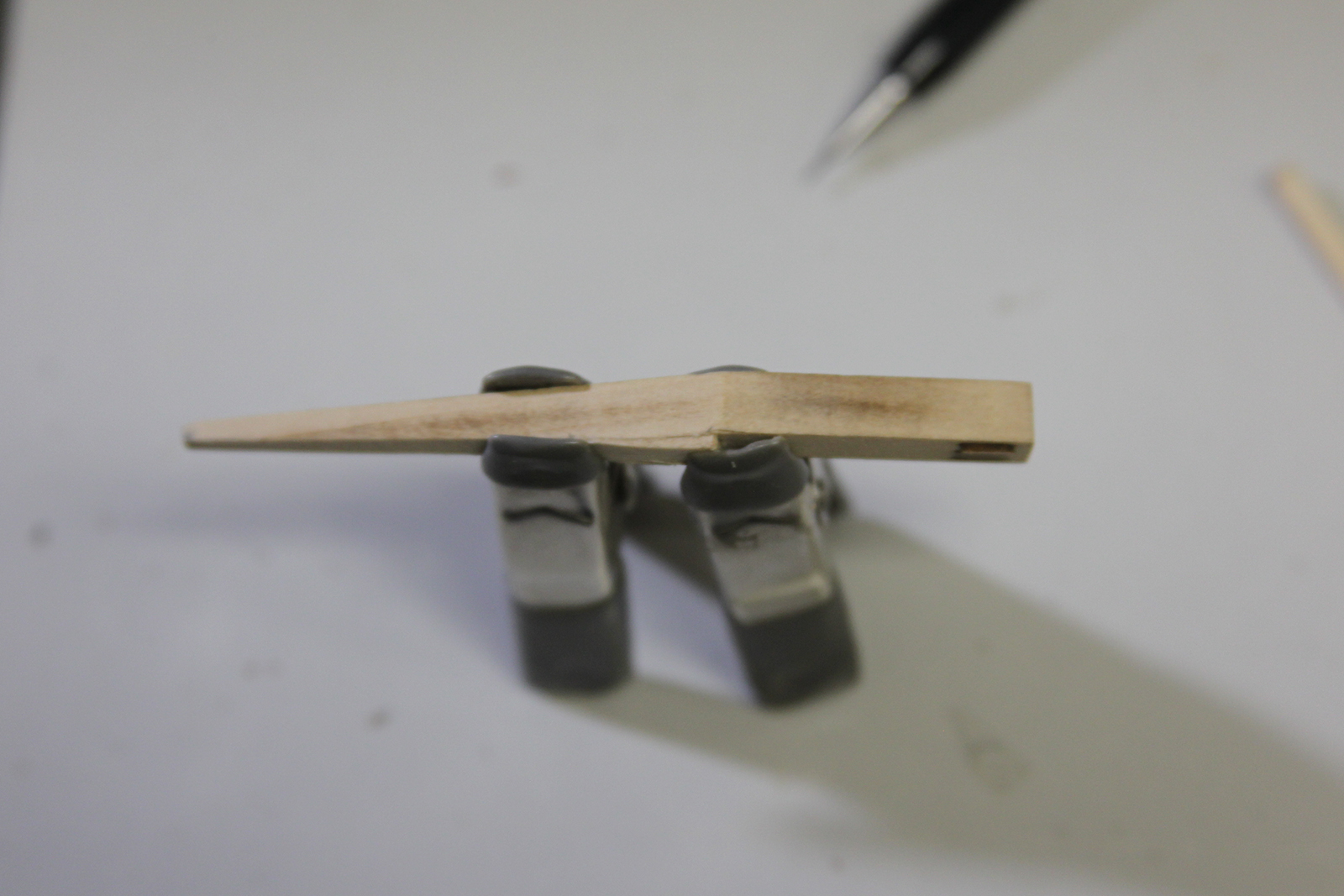
Finally, the catheads themselves were carefully glued into place and clamped until they dried. Since the port and starboard sides of the ship were not exactly symmetrical, it took some sanding and fitting to get the catheads to look as even as possible.
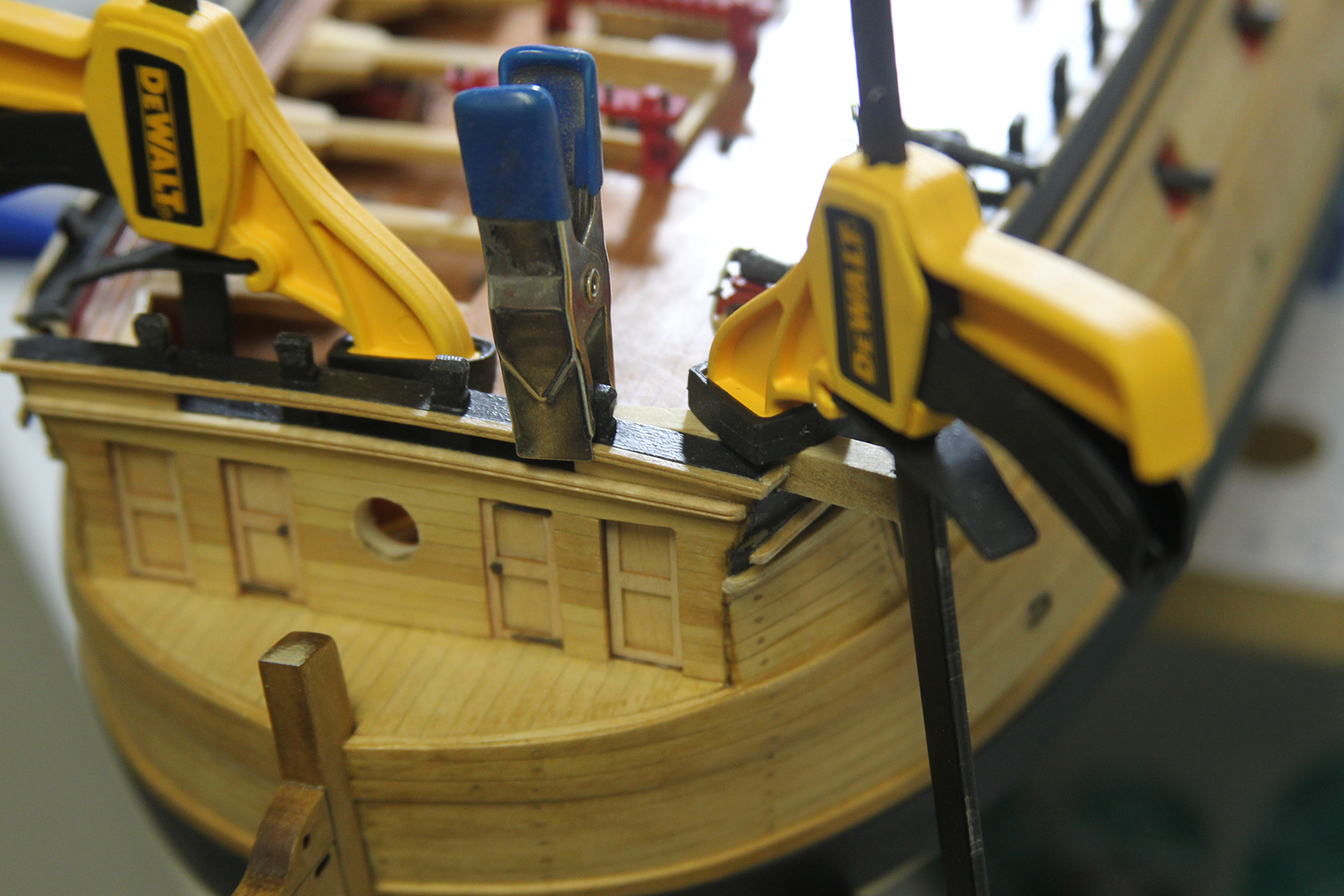
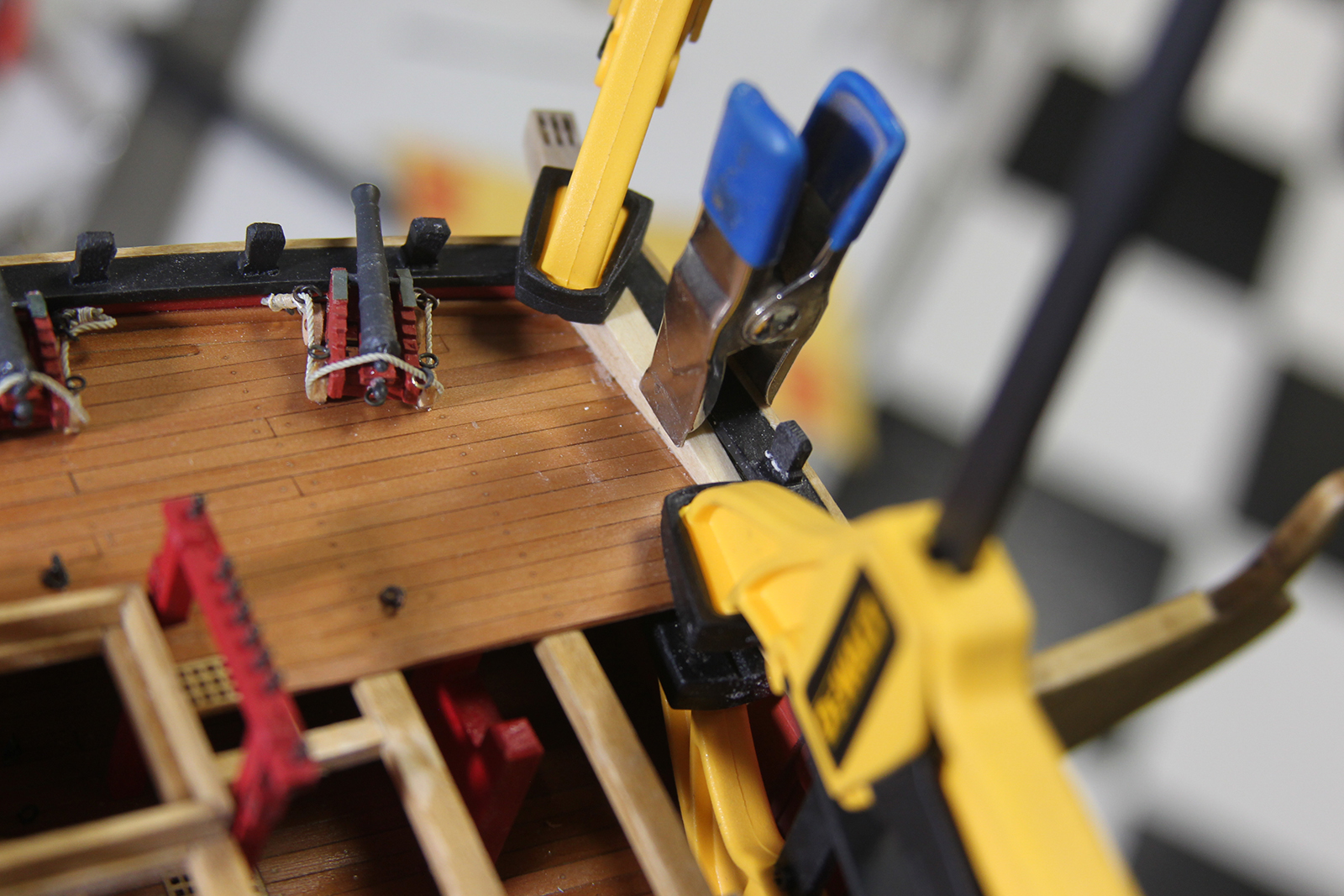
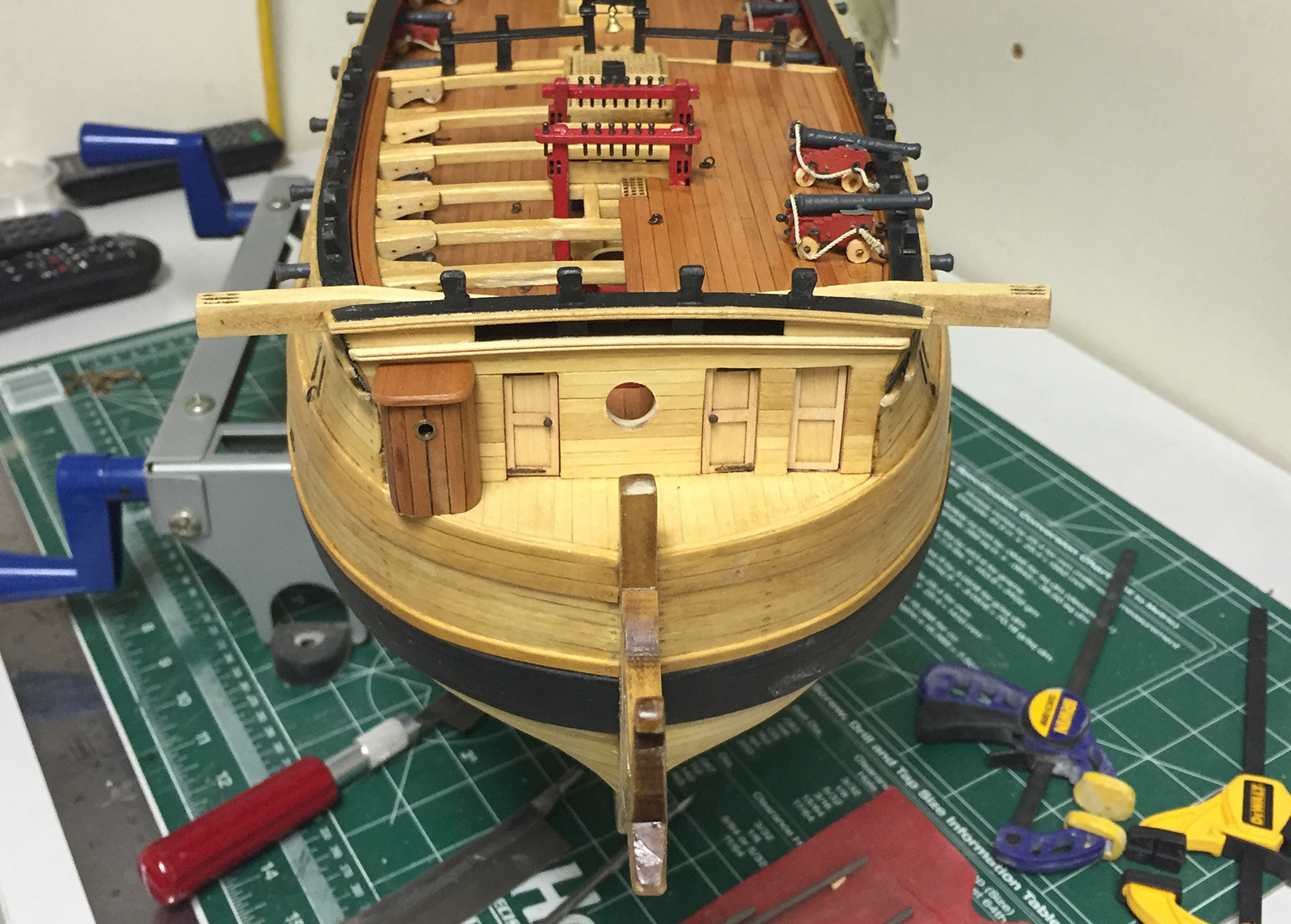
Finally, everything is gently sanded and evened out as much as possible. Then, the catheads are coated with a wood conditioner, natural wood stain, then finally a satin lacquer.
 The Lehman Shipyard