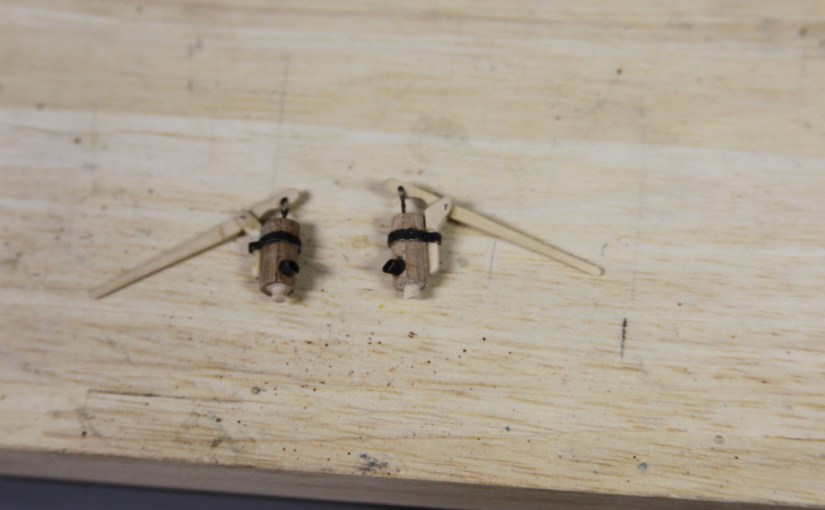
While the larger cisterns (pumps) were for stale bilge water that collected in the hull, there were also smaller brake pumps for pumping up water from the hull to be used for washing down decks, fire-firing, and providing water for distillers. Here’s an excerpt from plans available from the National Maritime Museum in Greenwich, London.

Regardless – there are no mention of these pumps int he Peg plans at all, which is certainly an oversight. Particularly since however detailed a builder chooses to (or not to) make them, these deck fixtures are almost always a cool addition.
My brake pumps consist of a wooden dowel that is drilled out then planked on the sides. I left a little knob on the bottom of the dowel so I could fit it into the deck. I chose to plank using the thin leftovers that were supposed to be used for deck planking to mix up the color a bit and simulate the elm with which they were typically built. Elm is notable as it is able to sustain continual immersion for long periods of time.
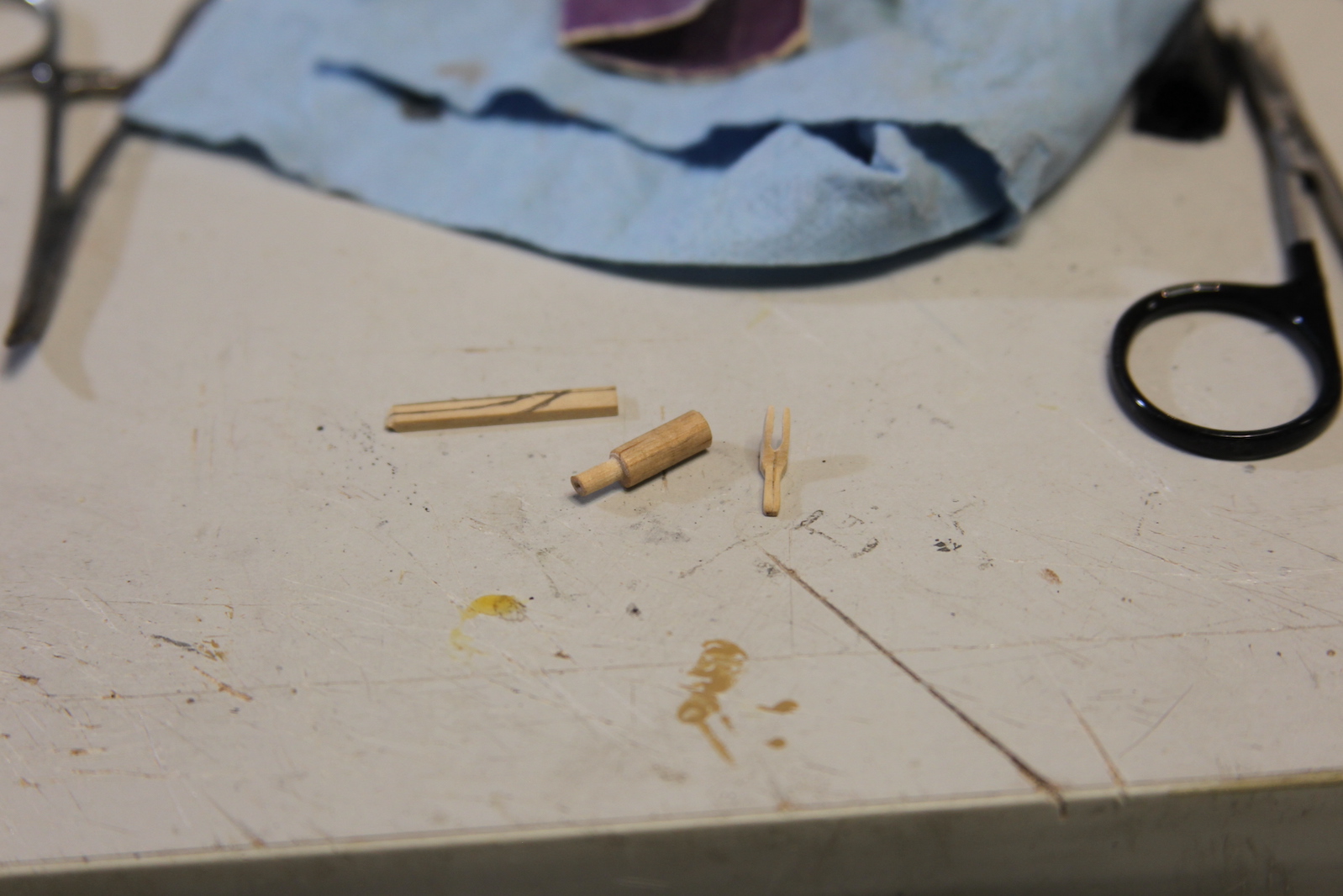


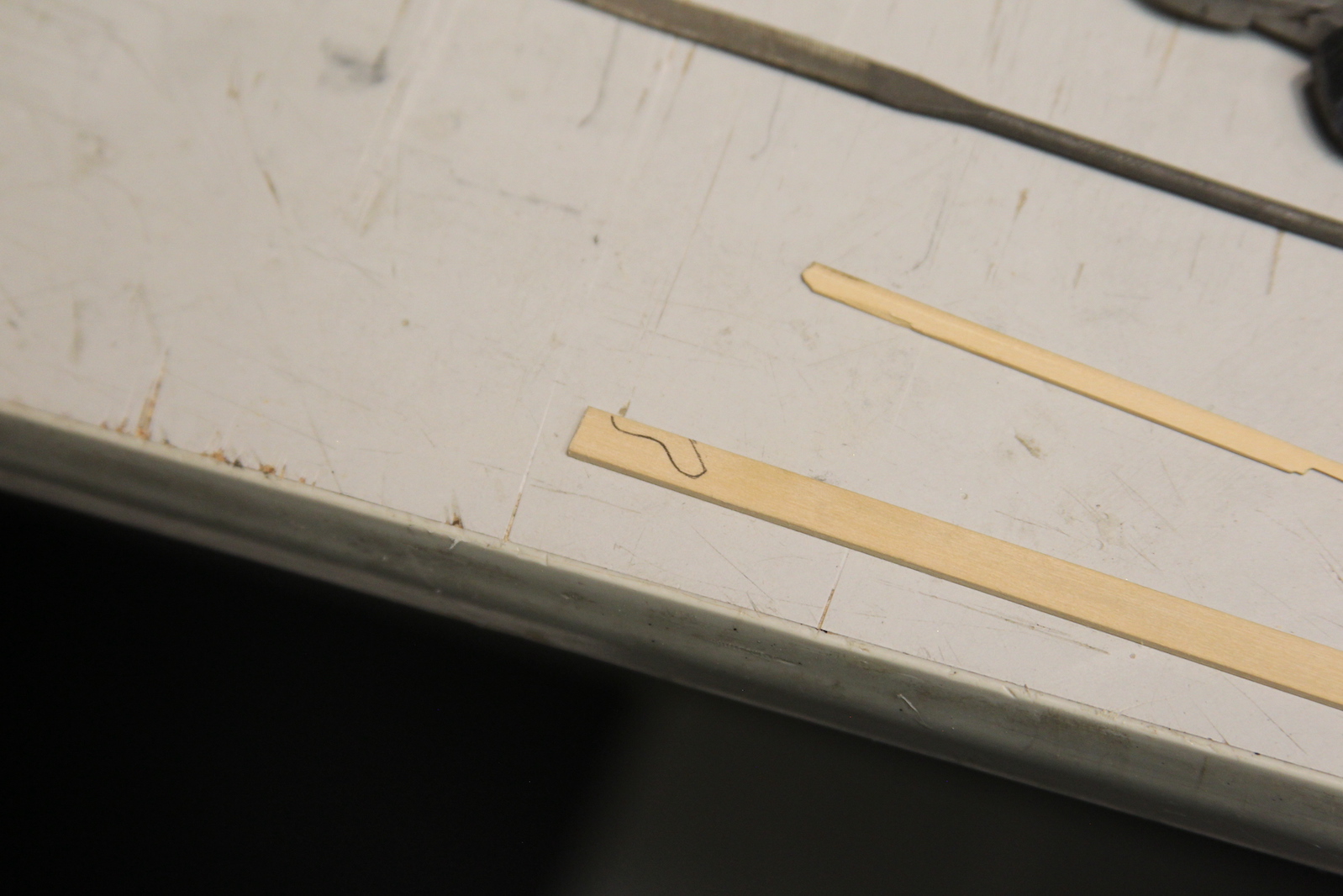
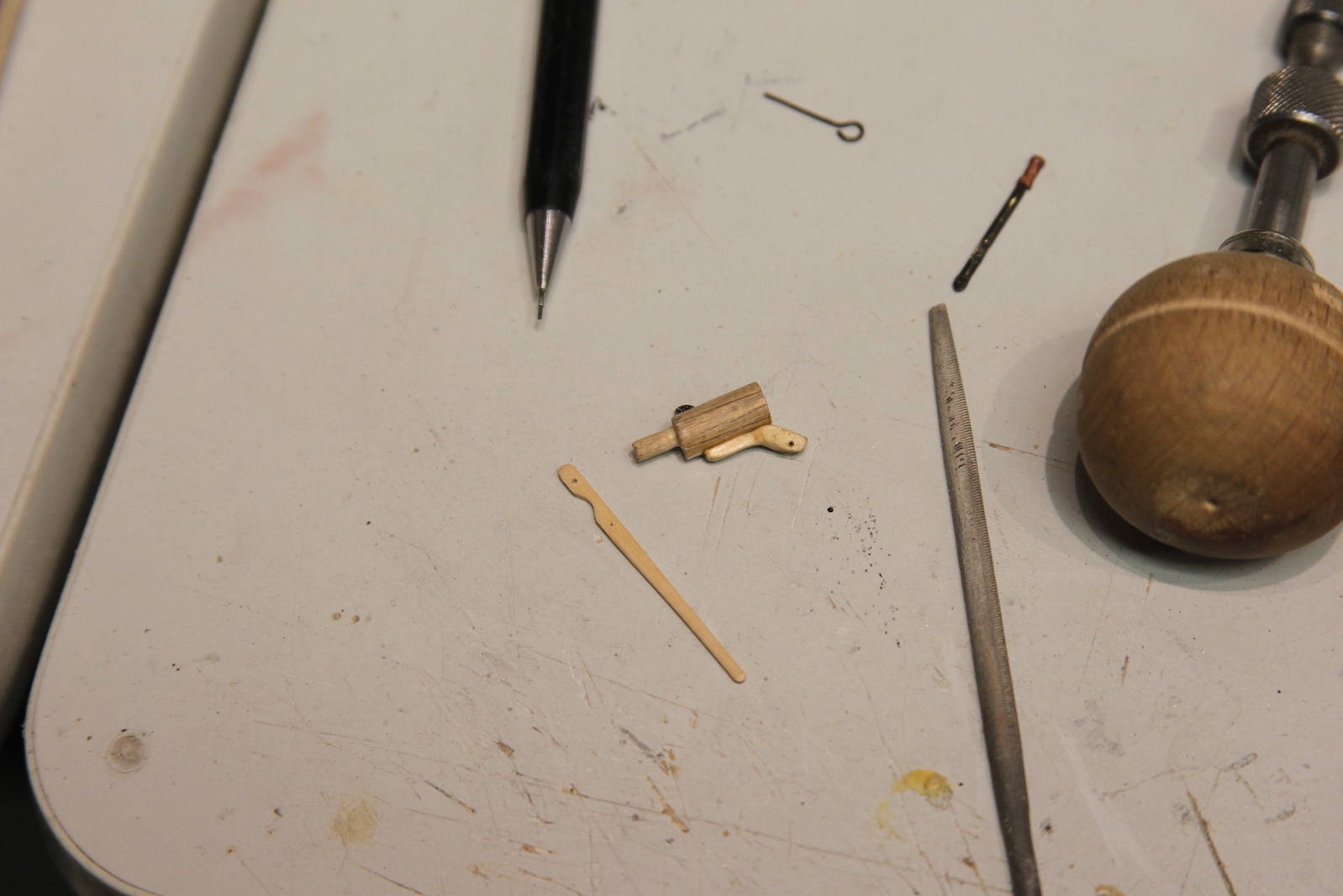
As you can see above, I cut one dowel for both pumps, split it in two, then drilled out the centers. The handles (called brakes) and the ‘cheeks’ which held the handles were shaped and carved from boxwood. After they were formed, I filed down the insides of the cheeks to create a slot in which the brakes could sit and form the lever for the pump.


Pumps are finished up with a brass tube for a spout, wire eyelet for spear (that goes down into the pump), and a metal strap to hold it all together. These will be set aside with the other deck fixtures ready to mount later.

 The Lehman Shipyard