
The rudder steers the ship of course. But as ships got larger and more modern (relatively speaking) rudders got a little more complicated, becoming pretty ingenious bits of engineering. In the case of the Peg, the rudder capped up through the decks, was attached to a tiller (the long arm that moves back and forth with the rudder), which was then attached to a ships wheel.
First, the inside of the rudder is tapered to allow for a turning radius as the rudder moves back and forth. Then, the rudder is copper plated below the waterline matching the rest of the hull. Although the copper plates used for the hull were just wide enough to fit the rudder, I wanted to maintain the same kind of bricklayer stagger I had with the hull, which present some challenge but is more accurate.
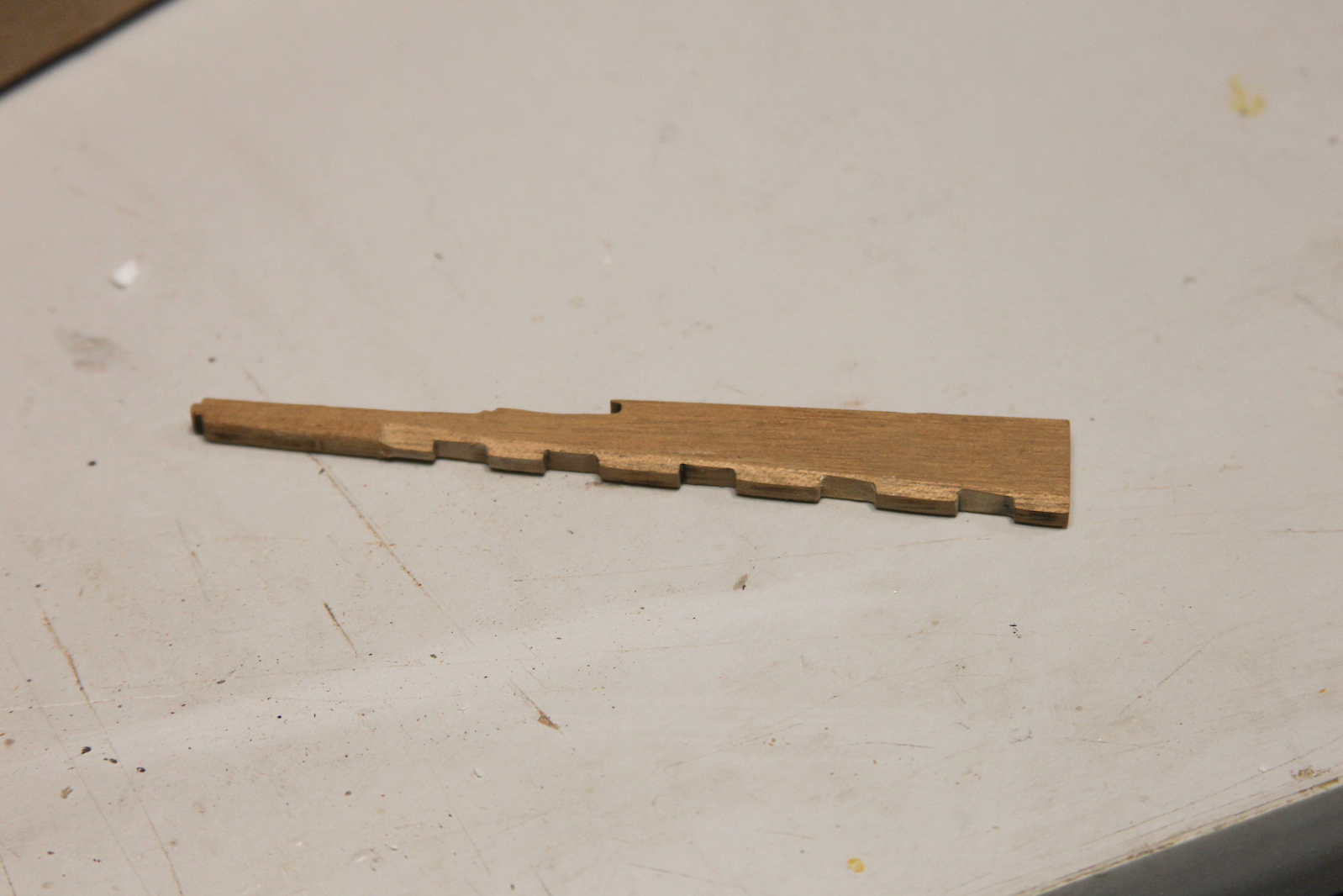
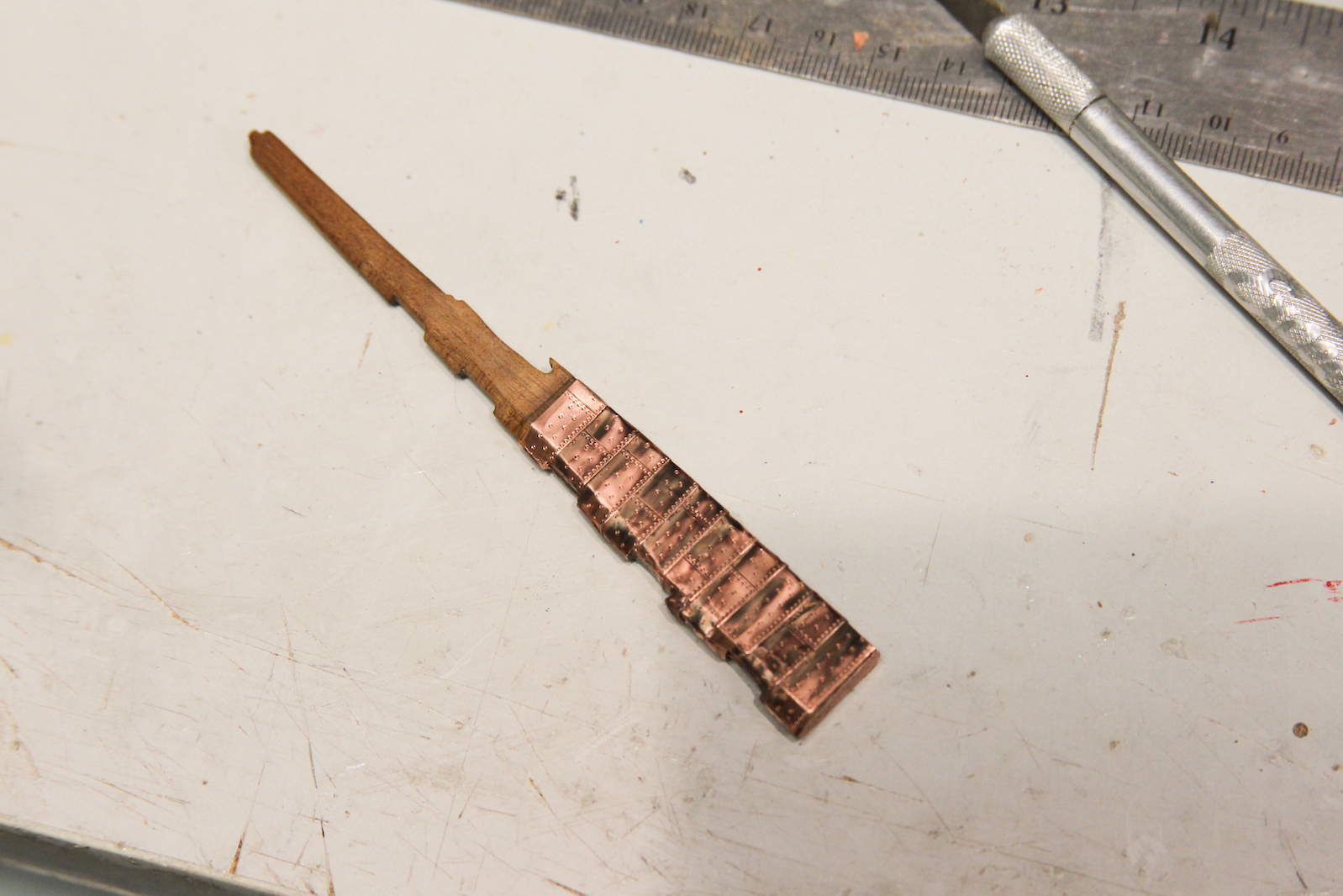
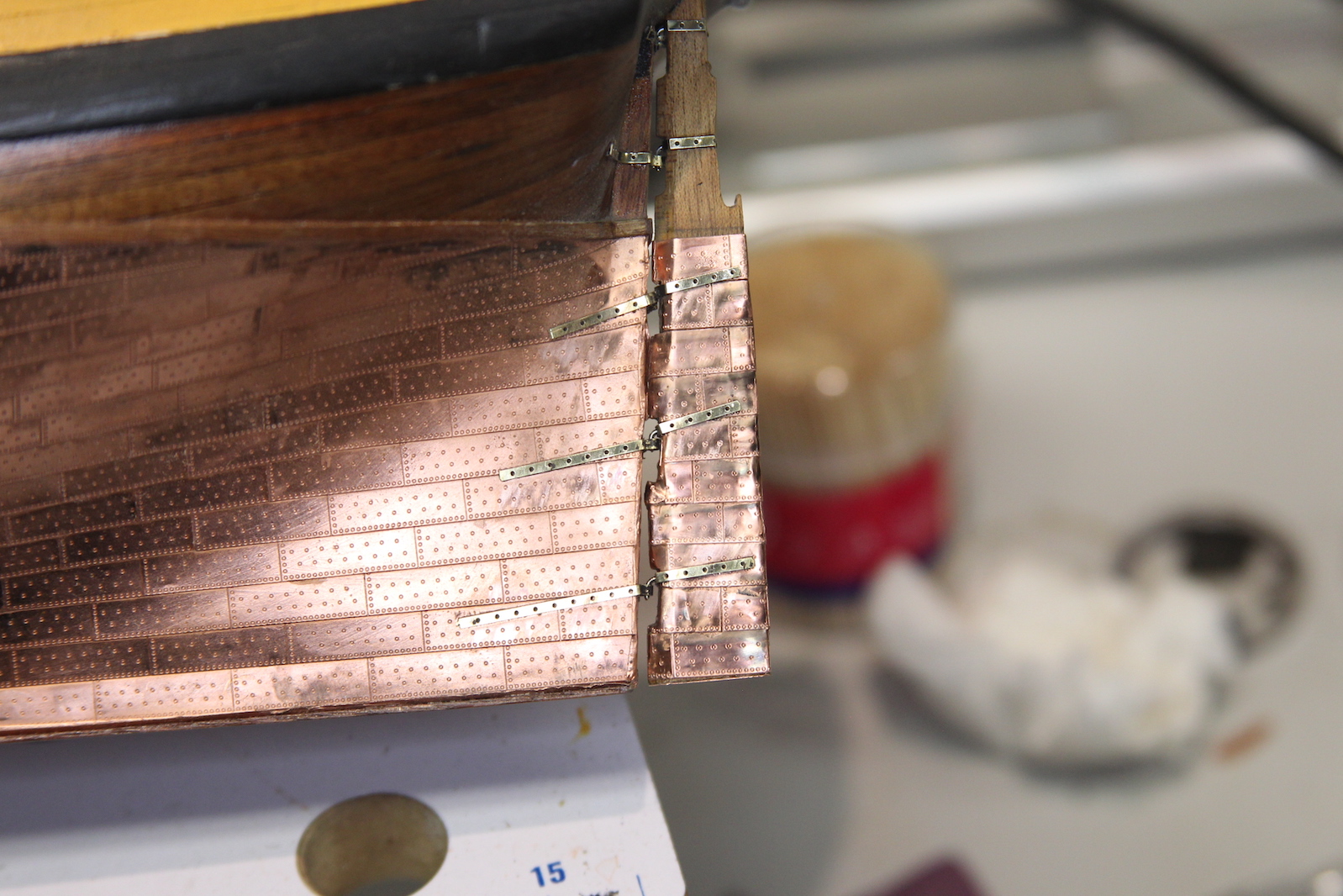
The rudder is attached to the hull with a basic hinge connection. The ‘pintles’ are strips bolted to the rudder with pins protruding. The ‘gudgeons’ are the corresponding strips bolted to the hull with a small eye hole that accepts the pintle. As you can see above, a small area is cut out from the rudder to facilitate this hinge while still allowing the rudder to be relatively flush with the stern post.

The rudder also contains a ‘spectacle plate’ mounted to the rear. This plate has a chain that will connect the rudder to the sides of the ship – this will be attached later in the build as it has a tendency to snag on tools and things during the build. The chain serves as both a limiter on how far the rudder can turn, as well as an emergency steering tool if the tiller or wheel are damaged.
Anyway – the spectacle plate is created using a square strip of brass that’s bent at two 90 degree angles then sanded down to fit a corresponding slot on the back of the rudder. Two brass rings are then soldered to the corners of the plate which will later accept the chains.


Everything is ‘bolted’ to the rudder and hull using miniature nails. I use a very specific .020 inch nail here from a company called “Micro-mark” because they have rounded heads that look great as bolts.

A feature that you rarely see on model ships is the “rudder coat.” This is a tarred piece of canvas that loops around the top of the rudder as it extends through the helm port to the decks. This canvas protects the upper areas from water that may slosh up from the stern of the ship. I’ve simulated my rudder coat with an old piece of simulated ‘leather’ that was left over from my Stagecoach build.


The piece is cut to fit then glued one side at a time as I wrap it around the rudder then stuff it up through the helm port.
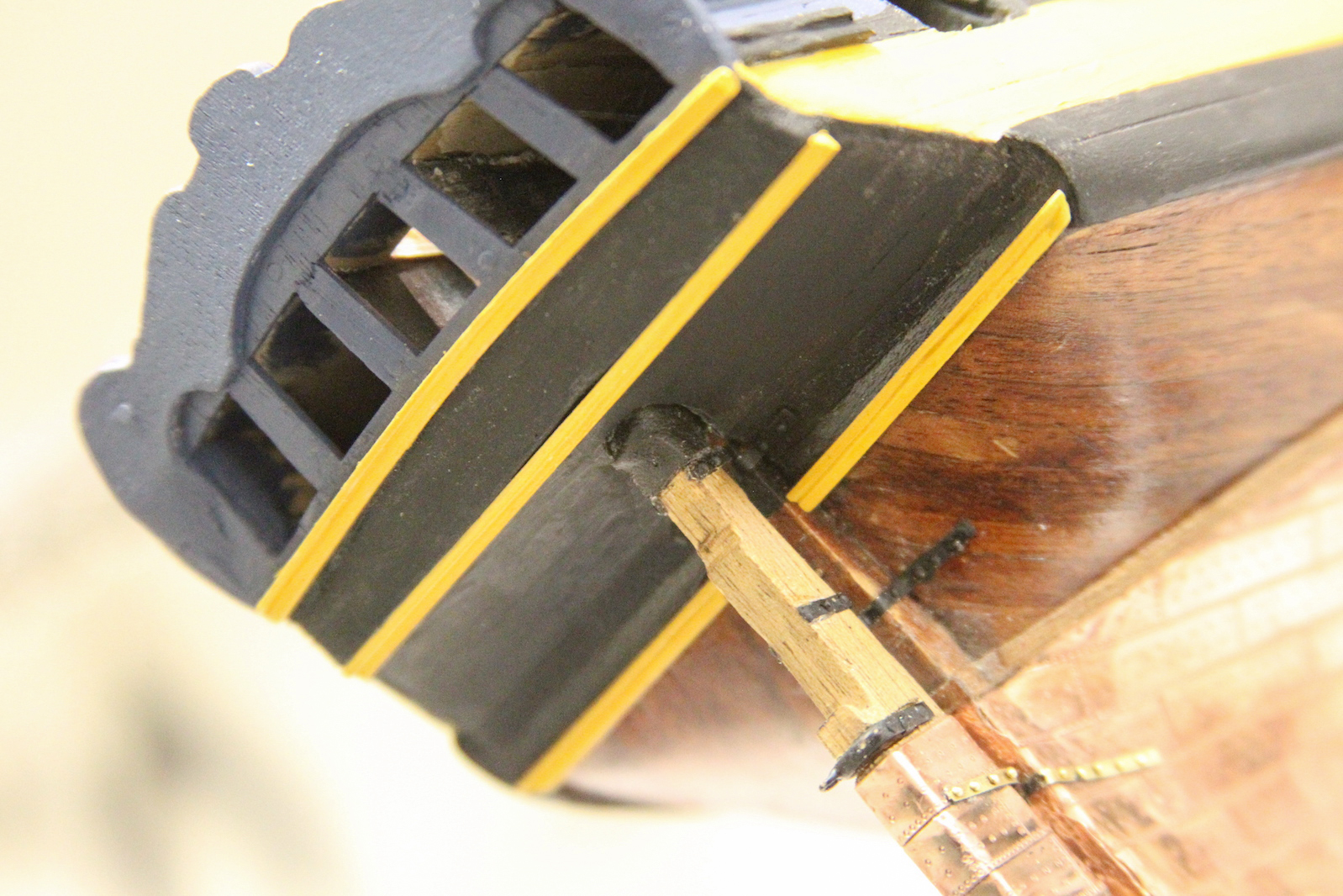
The rudder is finished off by blackening the top gudgeons and pintles and painting the bottom ones. The bottom ones were coated with copper much like the hull. However, since they were coated slightly differently than the full plates, the color is slightly different as well. I chose paint from a company called “The Army Painter” which specializes in medieval figures, etc. Their paints do a great job of simulating metal colors.

 The Lehman Shipyard