
The channels are planks of wood that form a ledge along the sides of the hull and house the “dead eyes” and form the base of the shrouds and ratlines; which in turn stabilize all the masts and form the bulk of the standing rigging.
Yup – it’s all pretty complicated. But in short, the channels need to be level, consistent with one another, and firmly mounted against the sides of the ship. The kit provided some decent pre-cut and shaped channels that are relatively easily mounted. I stained the pre-cut channels to more closely match the color scheme I’ve been going with. The technique is to insert pins in the edges that are used to keep them firmly in place.

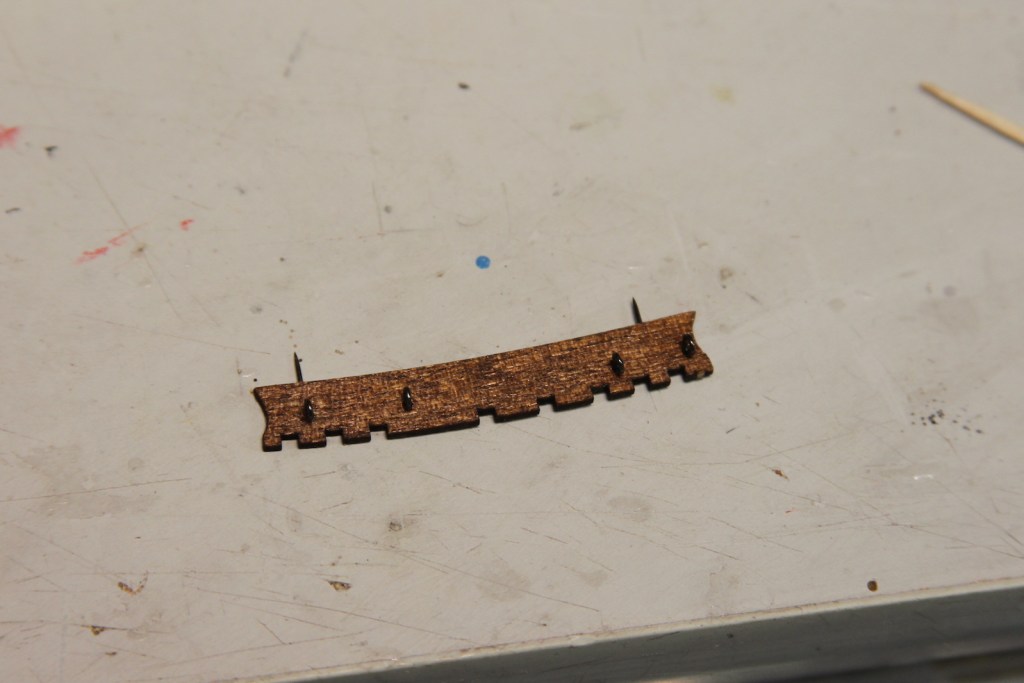
Things were going along fine – until I over sanded the edge of one of the channels trying to get it to fit snuggly against the sheer strake on the ship. Not only did I mess up the shape – but I made the channel too narrow. Problem is – they all have to match one another, and since I’m staining and not painting them them, that meant I had to re-cut ALL of the channels not just the one I botched. Using the patterns of the pre-cut ones, I re-cut all the channels using walnut.

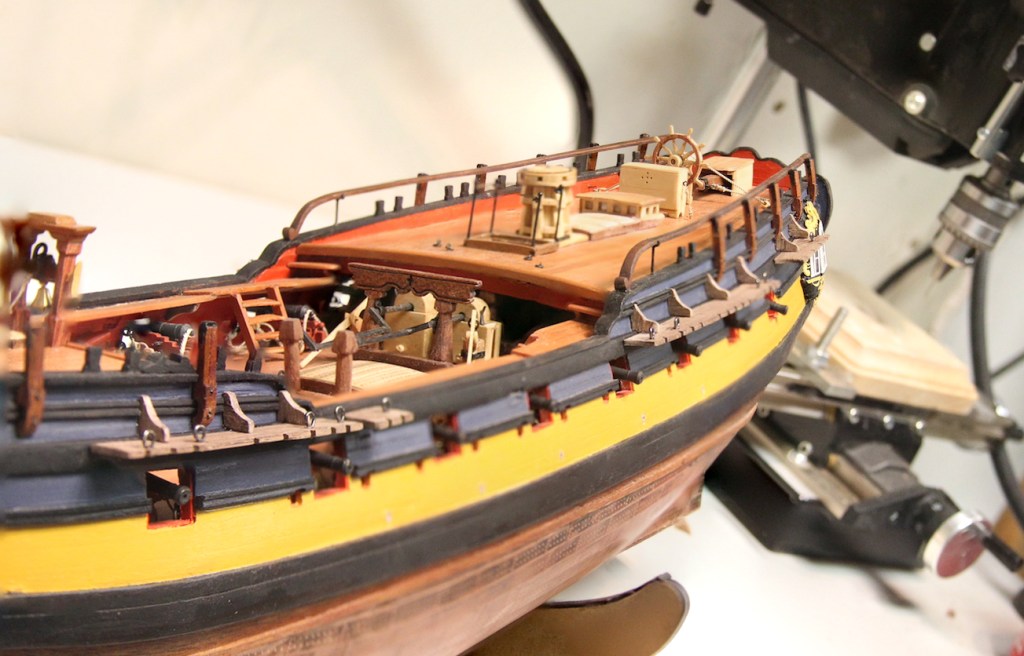
Using the technique mentioned above, the channels are all mounted along the top edge of the sheer strake.

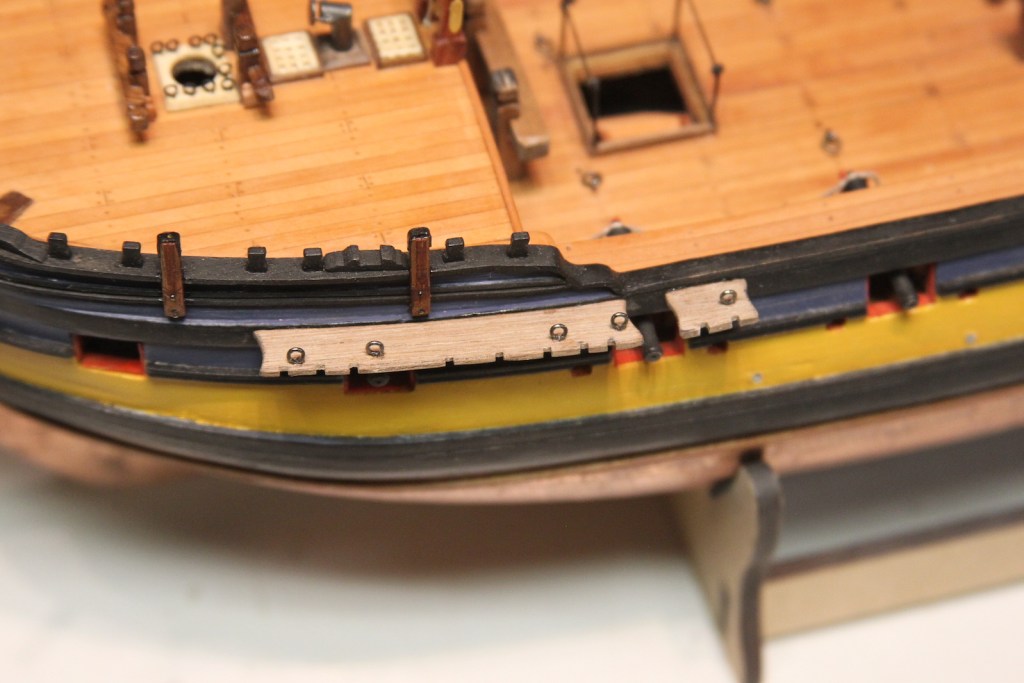
Once again, the channels serve as the foundation for the standing rigging – which is an enormous amount of tension. So it is vital that the channels hold their position, particularly if and when the ship goes through rough sailing. As such, the channels are held in place by “knees” or braces along the top. Interestingly, the plans do not account for these parts. Since they are such vital aspects of the channels, I felt it was a disservice not to include them. They are cut and shaped from the same walnut as the channels and mounted by cutting notches along the decorative drift rail.
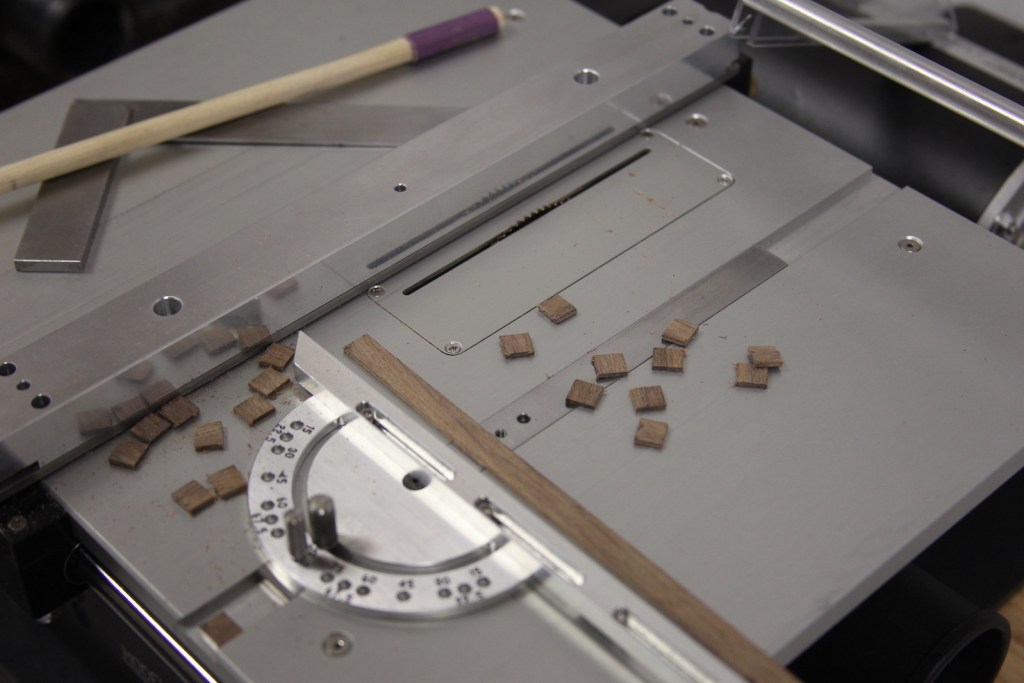
Side note: This also gives me a chance for a gratuitous picture of my snazzy miniature table saw from Jim Byrnes at Model Machines LLC.

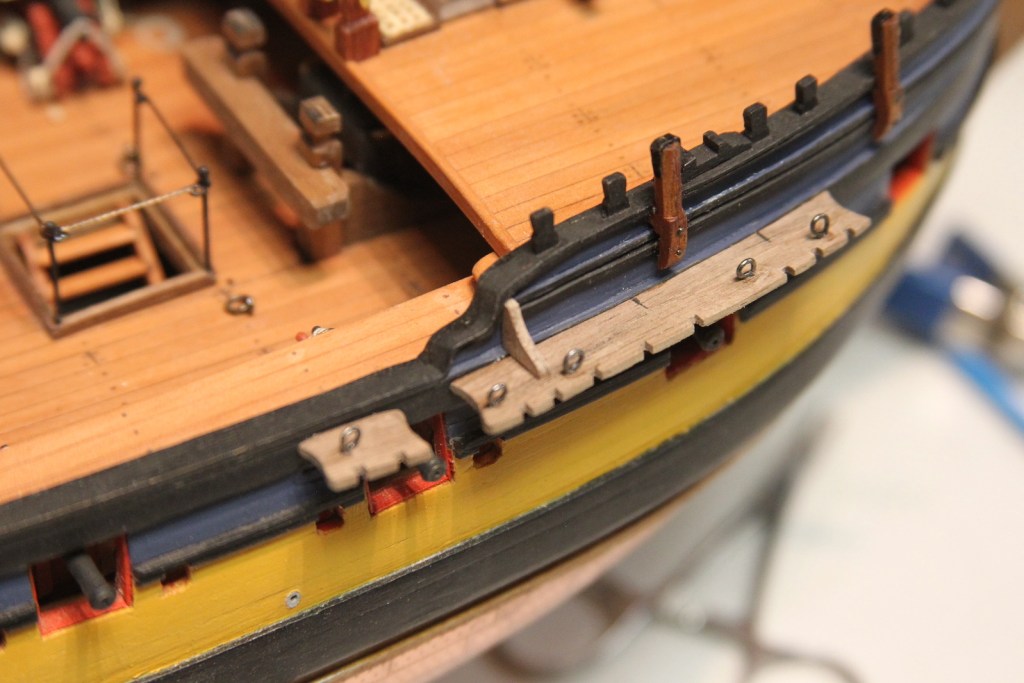

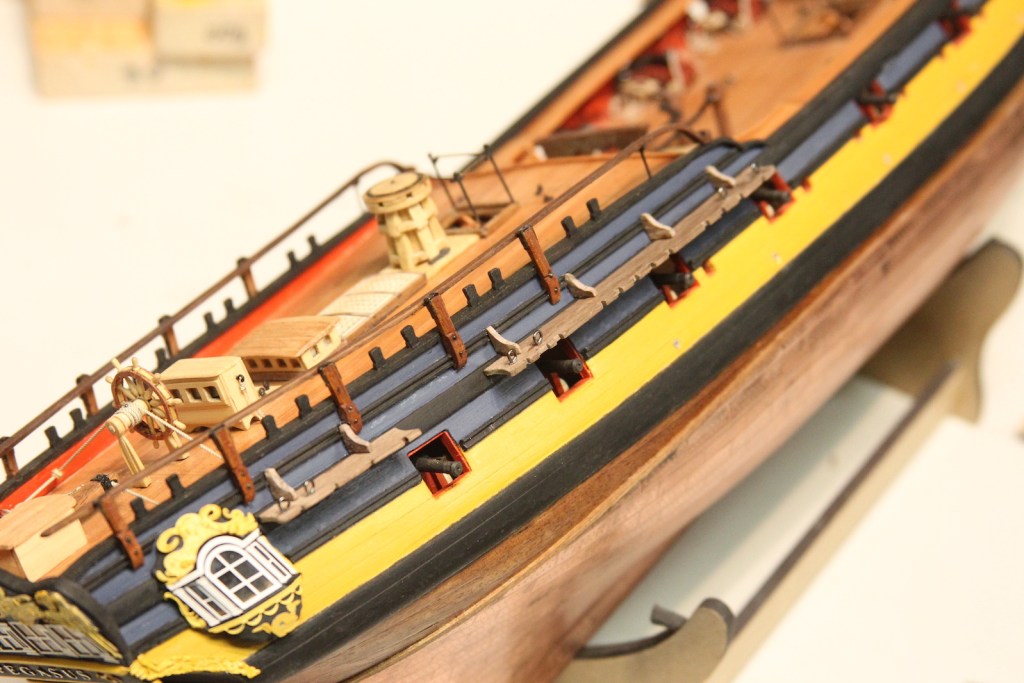
Once all the channels and knees are in place, I’ll wipe it all down with Tung oil then begin the process of lining up the decorative frieze works.
 The Lehman Shipyard