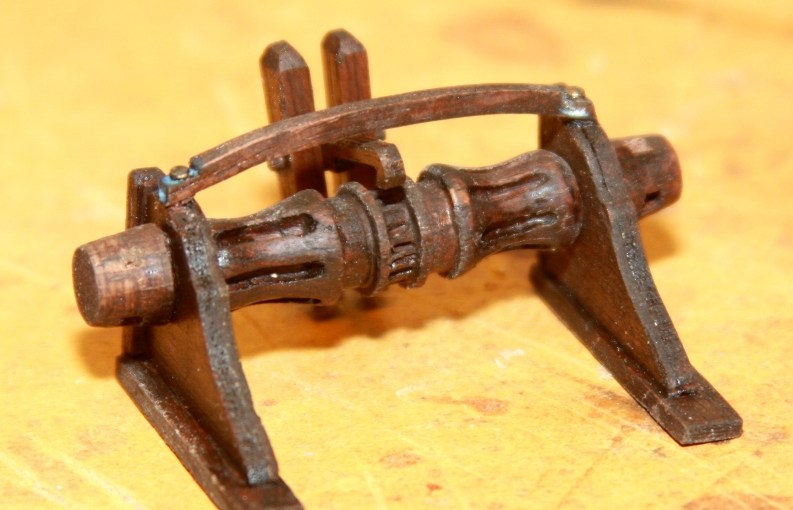
The windlass is a heavy duty crank that was used to lift and lower very heavy items, much like the capstan. The windlass however must most often specifically used to raise and lower the anchor(s) on most ships.
Again, much like the capstan, the windlass provided in the Santa Maria’s kit is less than impressive. A quick glance at Xavier Pastor’s book gave me the guide I needed to create my own.
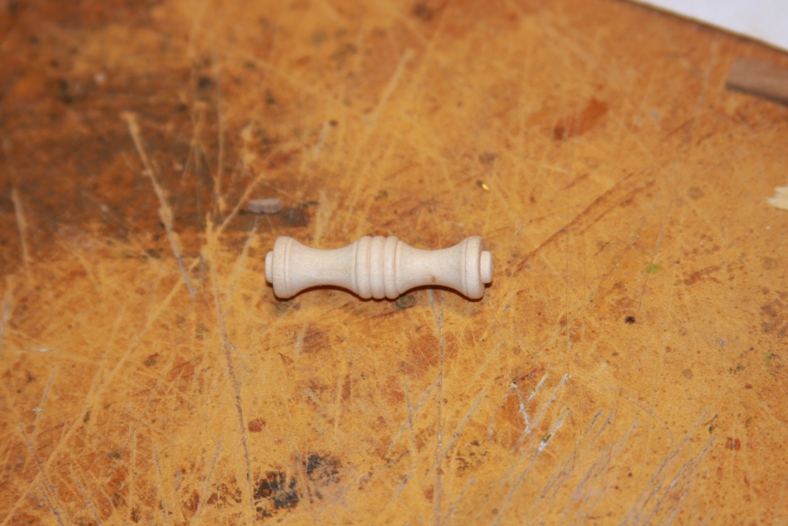

I started with my own version of a poor man’s laithe. I set a 10mm dowel into my trusty hand drill and began sanding it down. If this is something you end up trying, it’s VERY important that you wear gloves and eye protection. The wood gets very, very hot while spinning, as do the files and sandpaper. Also, little bits of wood are constantly flying off with potentially harmful consequences for your eyes.

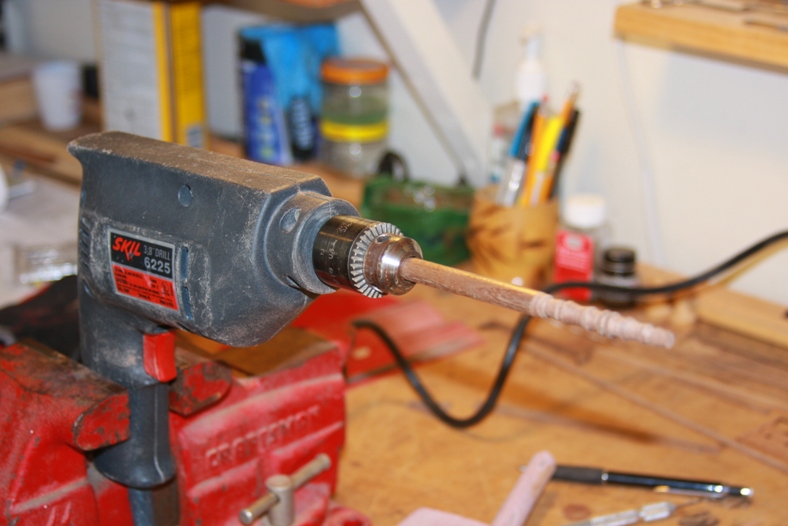
This process is very slow and requires a lot of patiences. One mistake and your entire piece can be ruined. Take your time and file off a small amount at a time. Measure out each section with a fine tip black pen. The mark shows up as a line when the dowel is rotating.
Shaving down the dowel on my ‘laithe’ took somewhere around two hours total. Each section then needed to be carved down to make the grooves for the windlass.
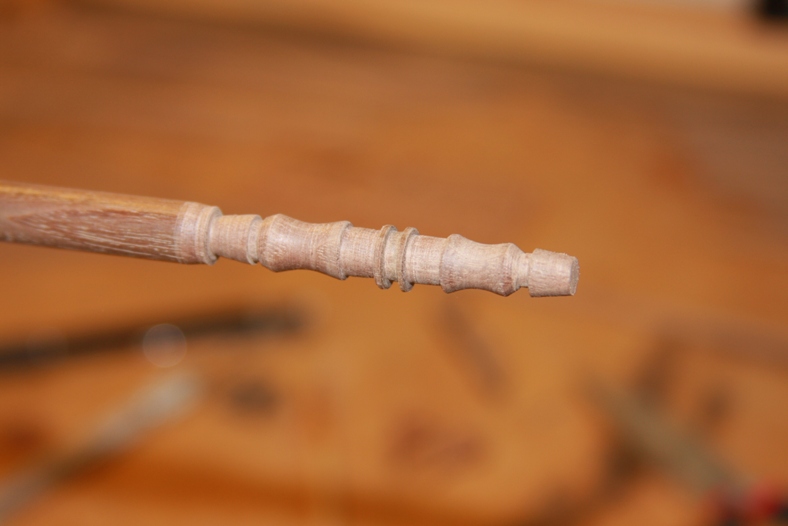


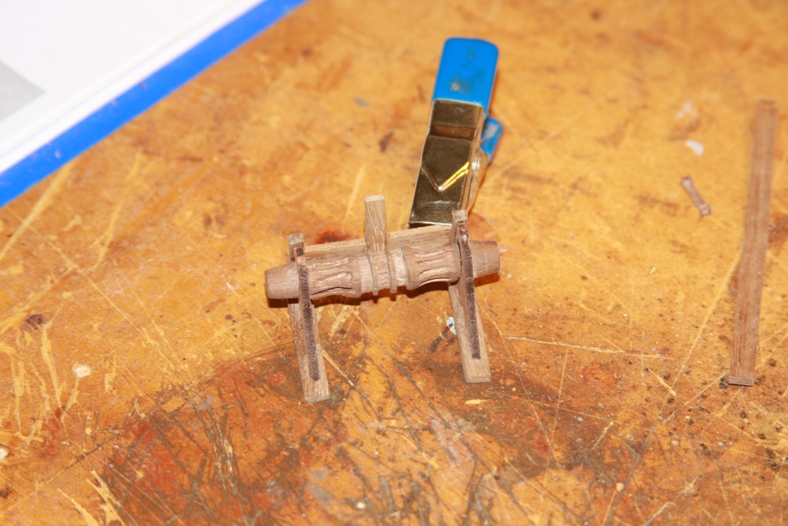
The sides and rear pieces of the windlass are carved out and fitted. The piece in the middle is essentially a stopper. This allowed the windlass to be cranked in one direction withing spinning backward.
The completed windlass is then stained and “aged” like the rest of the pieces. It will eventually be mounted near the bow of the ship and rigged to the anchors and headbeam. I wasn’t completely thrilled with the windlass, specifically the rear mount for the little lever. So looked up a few more versions that reflect that time.


First I squared off the holes on the ends for the levers and widened the base mounts on each side. Just looked too thin to me. Then I reworked the back side going with two independent posts instead of something attached to the windlass. It made more sense for the lever-lock to go in between those with a wooden dowel and cotter pin.
 The Lehman Shipyard